
Introduction
A clutch is an essential component in any vehicle that uses an internal combustion engine. It is responsible for transferring power from the engine to the transmission, allowing the driver to control the speed of the vehicle. Understanding how a clutch works is essential for anyone who wants to maintain their vehicle and keep it running smoothly.
In this article, we will explore how a clutch works by examining the different components of a clutch, the inner workings of a clutch, and the different types of clutches and their advantages. We will also provide a step-by-step guide to understanding the mechanics of a clutch and an illustrated guide to a clutch’s functionality. By the end of this article, you should have a comprehensive understanding of how a clutch works.
Step-by-Step Guide to Understanding the Mechanics of a Clutch
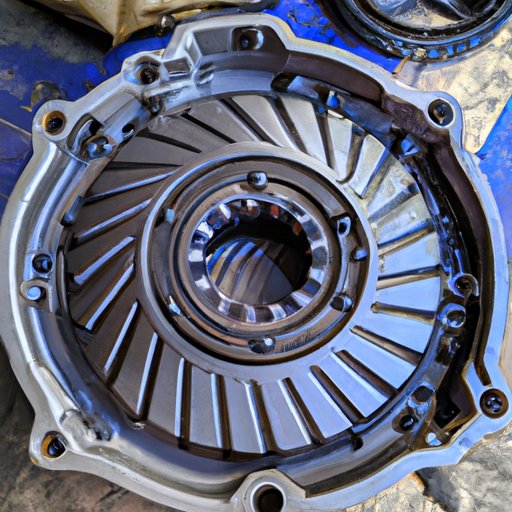
Before we dive into the details of how a clutch works, let’s first take a look at the basic components of a clutch. A typical clutch consists of a flywheel, pressure plate, friction disc, and release bearing. The flywheel is connected to the engine and the pressure plate is connected to the transmission. The friction disc is sandwiched between the flywheel and the pressure plate, while the release bearing is used to disengage the clutch when the clutch pedal is pressed.
Now that we understand the basic components of a clutch, let’s explore how these components work together. When the clutch pedal is pressed, the release bearing pushes against the pressure plate, which causes the friction disc to separate from the flywheel. This creates an air gap between the two components, which prevents the engine from transferring its power to the transmission. When the clutch pedal is released, the friction disc re-engages with the flywheel, allowing the engine to transfer its power to the transmission.
To illustrate the functionality of a clutch, imagine that you are driving a car and need to shift gears. When you press the clutch pedal, the release bearing pushes against the pressure plate, causing the friction disc to separate from the flywheel. This stops the engine from transferring its power to the transmission, allowing you to shift gears without the engine stalling. When you release the clutch pedal, the friction disc re-engages with the flywheel, allowing the engine to transfer its power to the transmission so you can continue driving.

Exploring the Inner Workings of a Clutch
Now that we understand the basics of how a clutch works, let’s take a closer look at the different parts of a clutch and how they interact with one another. The flywheel is a large, circular piece of metal that is connected to the crankshaft of the engine. As the engine rotates, the flywheel rotates as well, providing a smooth surface for the friction disc to grip onto. The pressure plate is a flat, circular piece of metal that is connected to the transmission. The pressure plate applies pressure to the friction disc, keeping it firmly engaged with the flywheel.
The friction disc is a thin, circular piece of metal that is sandwiched between the flywheel and the pressure plate. The friction disc has a rough outer surface that grips onto the flywheel, allowing the engine to transfer its power to the transmission. The release bearing is a small, cylindrical piece of metal that is connected to the clutch pedal. When the clutch pedal is pressed, the release bearing pushes against the pressure plate, causing the friction disc to separate from the flywheel.
When all of these components are operating properly, the engine is able to transfer its power to the transmission via the friction disc. This allows the driver to control the speed of the vehicle, as well as shift gears without the engine stalling. However, if any of these components become worn or damaged, the engine may not be able to transfer its power to the transmission, resulting in poor performance and an inability to shift gears.

A Comprehensive Overview of How a Clutch Works
Now that we have a better understanding of the inner workings of a clutch, let’s explore the different types of clutches and their advantages. There are two main types of clutches: manual and automatic. Manual clutches are operated by pressing and releasing the clutch pedal, while automatic clutches are operated by a hydraulic system. Both types of clutches offer a number of advantages, such as improved fuel efficiency and smoother shifting.
Manual clutches are generally more durable than automatic clutches and require less maintenance. However, they can be difficult to operate, especially for inexperienced drivers. Automatic clutches are easier to operate, but they require more frequent maintenance and can be prone to failure if not properly maintained. It is important to choose the right type of clutch for your specific driving needs, as each type offers different advantages.
When it comes to maintaining a clutch, there are a few things to keep in mind. One of the most important factors is the size of the clutch. A larger clutch will require more effort to operate, but it will be more durable and require less maintenance. Additionally, it is important to check the friction disc and other components for signs of wear and tear, as this can affect the clutch’s performance.

The Basics of a Clutch: What You Need to Know
At this point, you should have a good understanding of how a clutch works and the different types of clutches available. To recap, a clutch is an essential component of any vehicle that uses an internal combustion engine. It is responsible for transferring power from the engine to the transmission, allowing the driver to control the speed of the vehicle. A typical clutch consists of a flywheel, pressure plate, friction disc, and release bearing.
Understanding the basics of how a clutch works is essential for anyone who wants to maintain their vehicle and keep it running smoothly. It is important to choose the right type of clutch for your specific driving needs, as different types offer different advantages. Additionally, it is important to check the friction disc and other components for signs of wear and tear, as this can affect the clutch’s performance.
An Illustrated Guide to a Clutch’s Functionality
To help visualize the mechanics of a clutch, let’s take a look at an illustrated guide to a clutch’s functionality. In this diagram, you can see how the flywheel is connected to the engine and the pressure plate is connected to the transmission. The friction disc is sandwiched between the flywheel and the pressure plate, while the release bearing is used to disengage the clutch when the clutch pedal is pressed.
You can also see how the clutch pedal is connected to the release bearing, and how the release bearing pushes against the pressure plate when the pedal is pressed. This causes the friction disc to separate from the flywheel, creating an air gap between the two components. When the clutch pedal is released, the friction disc re-engages with the flywheel, allowing the engine to transfer its power to the transmission.
Examining the Components of a Clutch and How They Operate
Now that we’ve taken a look at the illustrated guide to a clutch’s functionality, let’s examine the different parts of a clutch and how they interact with one another. The flywheel is connected to the crankshaft of the engine and provides a smooth surface for the friction disc to grip onto. The pressure plate is connected to the transmission and applies pressure to the friction disc, keeping it firmly engaged with the flywheel.
The friction disc is a thin, circular piece of metal that is sandwiched between the flywheel and the pressure plate. The friction disc has a rough outer surface that grips onto the flywheel, allowing the engine to transfer its power to the transmission. The release bearing is a small, cylindrical piece of metal that is connected to the clutch pedal. When the clutch pedal is pressed, the release bearing pushes against the pressure plate, causing the friction disc to separate from the flywheel.
It is important to note that over time, these components can become worn or damaged due to normal wear and tear. This can lead to reduced performance, as the engine may not be able to transfer its power to the transmission. It is therefore important to regularly inspect and replace worn or damaged parts to ensure that your clutch is functioning properly.
Comparing Different Types of Clutches and Their Advantages
Finally, let’s compare the different types of clutches and their advantages. As mentioned earlier, there are two main types of clutches: manual and automatic. Manual clutches are operated by pressing and releasing the clutch pedal, while automatic clutches are operated by a hydraulic system. Both types of clutches offer a number of advantages, such as improved fuel efficiency and smoother shifting.
Manual clutches are generally more durable than automatic clutches and require less maintenance. However, they can be difficult to operate, especially for inexperienced drivers. Automatic clutches are easier to operate, but they require more frequent maintenance and can be prone to failure if not properly maintained. It is important to choose the right type of clutch for your specific driving needs, as each type offers different advantages.
Conclusion
In conclusion, understanding how a clutch works is essential for anyone who wants to maintain their vehicle and keep it running smoothly. We explored the different components of a clutch, the inner workings of a clutch, and the different types of clutches and their advantages. We also provided a step-by-step guide to understanding the mechanics of a clutch and an illustrated guide to a clutch’s functionality.
If you still have questions about how a clutch works, we encourage you to do further research or consult an expert. There are many resources available online, such as forums and videos, that can help you better understand the mechanics of a clutch. With the information we’ve provided in this article, you should now have a comprehensive understanding of how a clutch works.
(Note: Is this article not meeting your expectations? Do you have knowledge or insights to share? Unlock new opportunities and expand your reach by joining our authors team. Click Registration to join us and share your expertise with our readers.)