
Introduction
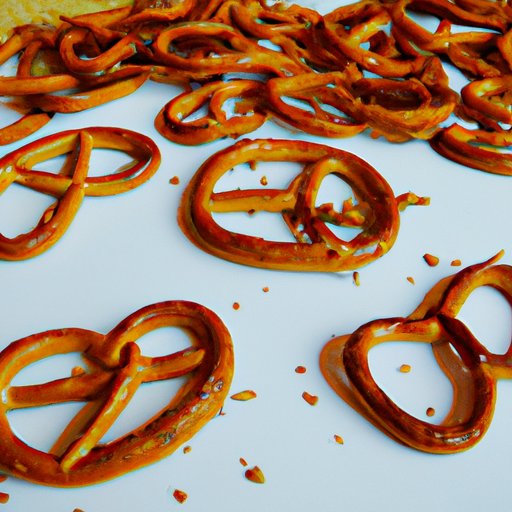
Pretzels are one of the most popular snack foods in the world. They’re crunchy, salty, and delicious – but are they actually good for you? This article will take a closer look at the health benefits and potential drawbacks of eating pretzels, so you can make an informed decision when it comes to snacking.

Exploring the Nutritional Benefits of Pretzels
First, let’s take a look at what makes up a pretzel. Pretzels are typically made with wheat flour, salt, water, and yeast. The dough is then shaped into a knot, boiled in a baking soda solution, and baked until crisp.
In terms of macronutrients, pretzels are low in fat and contain mainly carbohydrates. One ounce (28 grams) of pretzels contains about 110 calories, 21 grams of carbohydrates, and 1 gram of fat. They’re also a good source of dietary fiber, with 2 grams per serving.
When it comes to vitamins and minerals, pretzels are not particularly nutrient-dense. A single ounce of pretzels provides 10% of the daily recommended value of iron, 4% of calcium, and 2% of vitamin A. However, they don’t provide any other essential vitamins or minerals.
Pretzels: A Healthy Snack Choice?
Now that we’ve explored the nutritional profile of pretzels, let’s take a closer look at the pros and cons of eating them. On the one hand, pretzels are a convenient and affordable snack option. They’re easy to find and don’t require any preparation. Plus, they’re relatively low in calories and fat, making them a better choice than many other snacks.
On the other hand, pretzels are high in sodium. A single ounce of pretzels contains almost 400 milligrams of sodium, which is 17% of the recommended daily limit. Too much sodium can increase your risk of high blood pressure, heart disease, and stroke.
What’s in a Pretzel?
In addition to wheat flour, salt, water, and yeast, many brands of pretzels also contain additives such as preservatives, artificial colors, and flavorings. These ingredients are added to give the pretzels a longer shelf life and a more appealing taste and appearance. However, these additives are not necessarily healthy and may even be harmful in large quantities.
There are also different types of pretzels available on the market. Traditional pretzels are made from white flour, while whole grain pretzels are made with whole wheat flour. Whole grain pretzels have a higher fiber content and are generally healthier than traditional pretzels.
Are Pretzels an Ideal Health Food?
So, are pretzels an ideal health food? Not necessarily. While they’re low in fat and calories and provide some fiber, they’re also high in sodium and lack essential vitamins and minerals. They’re also often made with processed ingredients that may not be beneficial to your health.
However, pretzels can still be part of a healthy diet if eaten in moderation. When choosing pretzels, opt for whole grain varieties, and add toppings to reduce the sodium content. Avoid flavored pretzels, as they often contain added sugars and unhealthy fats. Be mindful of portion sizes, as pretzels can easily become a calorie-dense snack.

A Closer Look at the Pros and Cons of Eating Pretzels
Pros of Eating Pretzels
Nutritional Benefits: As mentioned earlier, pretzels are low in fat and calories and provide some dietary fiber. They’re also low in sugar, making them a better choice than many other snacks.
Convenience: Pretzels are widely available and don’t require any preparation. They’re a great option for busy days when you don’t have time to prepare a meal.
Low Cost: Pretzels are relatively inexpensive compared to other snack foods. They’re also often sold in bulk, which can help you save money.
Drawbacks of Eating Pretzels
High Sodium Content: As mentioned earlier, pretzels are high in sodium. If you’re trying to watch your sodium intake, pretzels may not be the best choice.
Lack of Essential Nutrients: Pretzels are not a good source of essential vitamins and minerals. To get the nutrients you need, you should include other nutrient-dense foods in your diet.
How to Make Healthier Pretzel Choices
If you’re looking for a healthier way to enjoy pretzels, there are a few things you can do. First, choose whole grain pretzels over traditional white flour pretzels. Whole grain pretzels are higher in fiber and provide more nutrients. Second, add toppings to reduce the sodium content. For example, you can top your pretzels with unsalted nuts or seeds. Finally, avoid flavored pretzels, as they often contain added sugars and unhealthy fats.

How to Incorporate Pretzels into a Balanced Diet
For a healthy diet, it’s important to include a variety of nutrient-dense foods. While pretzels can be part of a balanced diet, it’s important to consume them in moderation. Be sure to pair pretzels with other nutrient-dense foods, such as fruits, vegetables, lean proteins, and whole grains. Additionally, be mindful of portion sizes, as pretzels can quickly become a calorie-dense snack.
Conclusion
In conclusion, pretzels are a convenient and affordable snack option. While they’re low in fat and calories, they’re also high in sodium and lack essential vitamins and minerals. However, pretzels can still be part of a healthy diet if eaten in moderation. Choose whole grain varieties, add toppings to reduce the sodium content, and be mindful of portion sizes. With a few simple steps, you can make healthier pretzel choices and enjoy them as part of a balanced diet.
(Note: Is this article not meeting your expectations? Do you have knowledge or insights to share? Unlock new opportunities and expand your reach by joining our authors team. Click Registration to join us and share your expertise with our readers.)