
Introduction
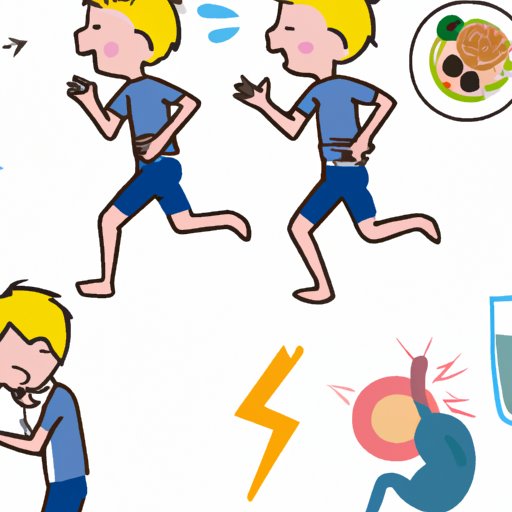
For many people, running is an important part of their daily routine. But when it comes to deciding when to head out for a run, there’s one question that often arises: How long should you wait after eating to go for a run?
Exercising on a full stomach has its benefits and drawbacks. On the one hand, it can provide you with extra energy and help you push harder during your workout. On the other hand, it can cause digestive issues and make it harder to perform at your best. Understanding the pros and cons of running after eating can help you make the best decision for your health and fitness goals.
In this article, we’ll explore how long to wait after eating to go for a run. We’ll look at what happens when you exercise on a full stomach, tips for exercising safely after eating, and guidelines for timing your run after meals. We’ll also discuss when is the best time to exercise after eating, offer an expert guide to working out after eating, and provide tips for running safely after meals.

Pros and Cons of Running After Eating
When it comes to deciding when to go for a run, it’s important to consider the pros and cons of running after eating. Here are some of the benefits and drawbacks to keep in mind.
Benefits of running after eating
One of the main benefits of running after eating is that it can provide you with extra energy. When you eat, your body breaks down carbohydrates into glucose, which is then used as fuel for your muscles. As a result, you may find that you’re able to push yourself harder and go further during your run if you’ve recently eaten.
In addition, running after eating can help you stay hydrated. According to a study published in the Journal of Athletic Training, drinking water before, during, and after exercise can help prevent dehydration and improve performance. So, if you’re planning to go for a run after eating, be sure to drink plenty of fluids.
Drawbacks of running after eating
Although there are some benefits to running after eating, there are also some drawbacks. One of the main concerns is that exercising on a full stomach can cause digestive issues, such as nausea, cramps, and indigestion. This is because your body is focused on digesting food rather than providing energy for exercise.
In addition, running after eating can reduce your performance. A study published in the Journal of Strength and Conditioning Research found that running after eating can lead to slower running speeds and decreased peak power output. As a result, you may not be able to reach your peak performance level if you run after eating.
Exercising on a Full Stomach: What You Need to Know
If you’re planning to exercise on a full stomach, there are a few things you need to know. First, it’s important to understand what happens when you exercise on a full stomach. During exercise, your body draws energy from both stored and circulating sources. When you eat, your body is focused on breaking down and digesting the food, which can reduce the amount of energy available for exercise.
In addition, exercising on a full stomach can cause digestive issues. To reduce the risk of these issues, it’s important to follow a few simple tips. For example, it’s best to avoid high-fiber foods and large meals before exercise. Additionally, it’s important to drink plenty of fluids to stay hydrated.
How Long Should You Wait Before Going for a Run After Eating?
So, how long should you wait before going for a run after eating? The answer depends on several factors, including the type and size of the meal, your overall fitness level, and the intensity of your workout. Generally speaking, it’s best to wait at least 30 minutes to an hour before running after eating.
According to a study published in the European Journal of Applied Physiology, the ideal time frame for running after eating is between 30 minutes and 2 hours. In the study, researchers found that running within this time frame resulted in better performance compared to running immediately after eating or waiting more than 2 hours.
In addition to the type and size of the meal, your overall fitness level and the intensity of your workout are two other important factors to consider. If you’re a beginner or have a low fitness level, it’s best to wait at least 30 minutes to an hour before running after eating. However, if you’re an experienced runner or have a higher fitness level, you may be able to wait less time before running.
When Is the Best Time to Exercise After Eating?
As mentioned above, the best time to exercise after eating is between 30 minutes and 2 hours. However, there are some considerations to keep in mind when weighing the pros and cons of running after eating. For example, if you’re planning to run a long distance, it’s best to wait at least an hour before running so that your body has time to digest the food.
In addition, it’s important to take into account your individual needs and goals. If you’re trying to lose weight, for example, it may be beneficial to wait longer before running so that your body has time to burn off the calories from the meal. On the other hand, if you’re trying to build muscle, it may be beneficial to wait less time before running so that you can take advantage of the energy boost provided by the food.

An Expert Guide to Working Out After Eating
When it comes to deciding when to exercise after eating, it’s important to get expert advice. According to nutritionist Dr. John Berardi, the ideal time frame for working out after eating is between 30 minutes and 2 hours. He suggests that beginners wait at least an hour before running and experienced runners wait about 45 minutes.
Dr. Berardi also recommends creating an individualized plan based on your goals and fitness level. For example, if you’re trying to lose weight, he suggests waiting at least an hour before running. On the other hand, if you’re trying to build muscle, he suggests waiting less time before running.

The Ideal Interval Between Eating and Exercising
When it comes to finding the perfect balance between eating and exercising, it’s important to understand the ideal interval between the two activities. As mentioned above, the ideal time frame for running after eating is between 30 minutes and 2 hours. However, it’s important to keep in mind that the exact time frame will vary depending on the type and size of the meal, your overall fitness level, and the intensity of your workout.
To find the ideal interval between eating and exercising, it’s important to experiment and track your results. For example, you could try running after eating a small snack and see how your body responds. If you feel good and are able to perform at your best, you could try eating a larger meal and running after waiting an hour. Over time, you’ll be able to determine the best time frame for your individual needs.
Tips for Running Safely After Eating
Finally, here are a few tips for running safely after eating. First, it’s important to eat the right types of foods. Stick to easily digestible foods such as fruits, vegetables, lean proteins, and complex carbohydrates. Avoid high-fiber foods and large meals, which can lead to digestive issues.
In addition, it’s important to stay hydrated. Be sure to drink plenty of fluids before, during, and after your run. Finally, if you experience any digestive issues while running, stop and take a break. Allow your body time to digest the food before continuing your run.
Conclusion
In conclusion, understanding how long to wait after eating to go for a run is essential for achieving your fitness goals. While there is no one-size-fits-all answer, the ideal time frame for running after eating is generally between 30 minutes and 2 hours. It’s also important to consider the type and size of the meal, your overall fitness level, and the intensity of your workout when determining the best time to run after eating.
By following the tips outlined in this article, you can ensure that you’re getting the most out of your workouts and staying safe while running after eating. With a little experimentation and expert guidance, you’ll be able to find the perfect balance between eating and exercising.
(Note: Is this article not meeting your expectations? Do you have knowledge or insights to share? Unlock new opportunities and expand your reach by joining our authors team. Click Registration to join us and share your expertise with our readers.)