
Introduction
Christmas is one of the most beloved holidays around the world. Every year, millions of people come together to celebrate the birth of Jesus Christ and enjoy the festivities that accompany the season. But who invented Christmas Day and how did it become the widely celebrated holiday we know today? This article aims to answer these questions by exploring the historical roots of Christmas, its religious significance, and the cultural traditions that have developed around it.

A Historical Look at the Origins of Christmas Day
The origin of Christmas dates back to ancient times. Long before Christianity was established, many cultures celebrated the winter solstice with festivals and rituals. These pagan celebrations were often centered around the worship of gods and goddesses associated with nature and fertility. One of the most prominent of these festivals was Saturnalia, an ancient Roman festival held in honor of the god Saturn.
When Christianity spread across Europe, many of these pagan practices were adopted and adapted into the Christian celebration of Christmas. For example, the Yule log, which was traditionally burned during the pagan winter solstice, became part of the celebration of Christmas. Similarly, the decorating of trees, which was believed to bring good luck and ward off evil spirits, was incorporated into Christmas traditions.

The Inventor of Christmas: A Biographical Overview
While there is no single inventor of Christmas Day, the holiday can be attributed to early Christian influence. According to historical records, the first recorded observance of Christmas took place in Rome in 336 AD. At the time, the Roman Emperor Constantine had recently converted to Christianity and declared December 25th as a day of celebration for Christians.
From there, church leaders began to develop the celebration of Christmas. Pope Julius I declared December 25th as the official date for celebrating the birth of Jesus, and later popes and bishops added additional elements to the holiday, such as the Feast of the Nativity and the Midnight Mass. By the Middle Ages, Christmas had become an important feast day in the Christian calendar.
Exploring the Religious Significance of Christmas
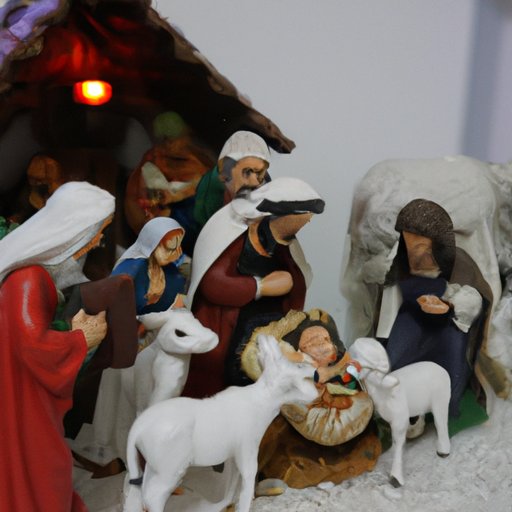
At its core, Christmas is a religious holiday that celebrates the birth of Jesus Christ. The Bible includes several references to the importance of this event, including the story of the three wise men who came to visit the baby Jesus in Bethlehem. Other scriptures also attest to the fact that Jesus was born “in the fullness of time” (Galatians 4:4).
For Christians, Christmas serves as a reminder of Jesus’s life and teachings. As the Bible states, “For unto us a child is born, unto us a son is given” (Isaiah 9:6). In other words, Jesus is the reason for the season and the celebration of his birth is an opportunity to remember and reflect on his message of love and hope.
How Christmas Became a National Holiday
Christmas slowly spread throughout Europe, becoming more widely observed as churches and governments adopted it as a national holiday. In England, for example, Christmas was declared a public holiday in 1647, though it wasn’t until 1834 that the Bank Holiday Act made it a legal holiday. Over time, other countries followed suit, adopting Christmas as a national holiday and introducing their own unique customs and traditions.
In the 19th century, Christmas began to spread to the United States and other parts of the world, due in part to the influence of Queen Victoria and her husband Prince Albert, who popularized the holiday in Britain. Eventually, Christmas was adopted by nearly every country in the world, becoming one of the most widely celebrated holidays.
Cultural Traditions Surrounding Christmas
As Christmas has evolved over the centuries, it has become increasingly associated with certain cultural traditions. Decorations, such as wreaths, trees, and lights, are popular components of the holiday, as are festive music and special foods. Gift-giving is another popular tradition, and exchanging presents is seen as a way to show appreciation for family and friends.
These traditions vary from country to country, but many of them are rooted in Christian beliefs. For example, the giving of gifts is said to represent the gifts given to Jesus by the three wise men, while decorations and lights are meant to symbolize the light of Jesus in the world.

Examining the Influence of Christmas on Popular Culture
Christmas has had a profound impact on popular culture, appearing in movies, television specials, advertising campaigns, and more. From classic films like “It’s a Wonderful Life” to modern-day blockbusters like “The Santa Clause,” Christmas has been featured prominently in entertainment media. Television networks also air countless Christmas specials each year, ranging from animated movies to live musical performances.
Advertisers have also capitalized on the popularity of Christmas, using it as an opportunity to promote their products with festive campaigns. From department stores to fast-food restaurants, companies have used Christmas to boost sales and create lasting brand identities.
Understanding the Impact of Christmas on Society Today
Today, Christmas has a significant impact on both the economy and the community. Economically speaking, Christmas is a major driver of consumer spending, with shoppers buying gifts, food, decorations, and more. This spending helps to stimulate the economy and support businesses, particularly those in the retail sector.
On a social level, Christmas brings people together in a spirit of joy and celebration. Families gather to exchange gifts and share meals, while communities come together to host holiday events and activities. Ultimately, Christmas is a time to appreciate the blessings of the past year and look forward to the promise of the future.
Conclusion
Christmas has come a long way since its ancient pagan roots, evolving into a widely celebrated holiday with deep religious and cultural significance. From its early beginnings as a Christian feast day to its modern-day status as a national holiday, Christmas has played an important role in shaping our world. While we may never know exactly who invented Christmas Day, its legacy will continue to live on in our hearts and minds.
(Note: Is this article not meeting your expectations? Do you have knowledge or insights to share? Unlock new opportunities and expand your reach by joining our authors team. Click Registration to join us and share your expertise with our readers.)