
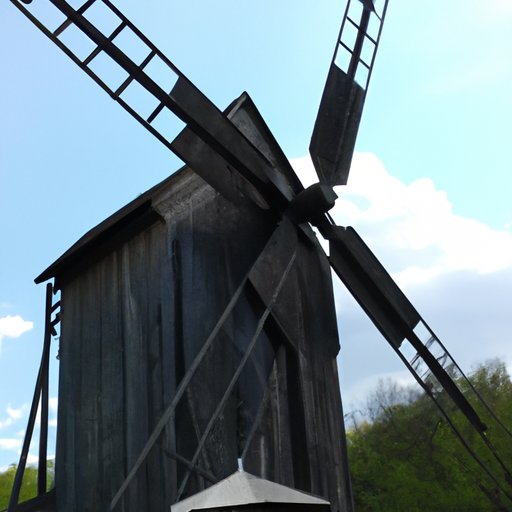
Introduction
A windmill is a device that harnesses the power of wind to generate electricity or mechanical energy. It consists of an engine, rotor, and blades, which are mounted on a tower or structure. The blades capture wind energy and convert it into usable power, which can be used for various purposes such as irrigation, pumping water, and generating electricity. Windmills have been around for centuries and have evolved over time to become a reliable source of energy in many parts of the world.
Exploring the Mechanics of a Windmill: How Does it Work?
Windmills are powered by the kinetic energy generated by the wind. The blades of a windmill are designed to capture the wind and convert it into useful energy. As the wind passes through the blades, they rotate, creating rotational force that is transferred to a generator to produce electricity or mechanical energy.
Parts of a Windmill
A typical windmill consists of several parts, including the blades, rotor, and generator. The blades are the most important part of a windmill, as they capture the wind and convert it into usable energy. The rotor is connected to the blades, and it is responsible for transferring the rotational force generated by the blades to the generator. The generator is then used to convert the energy into electricity or other forms of mechanical energy.
The Science Behind Windmills
The science behind windmills is based on the principle of aerodynamics. When the wind passes through the blades, it creates a pressure differential between the front and back of the blade. This pressure differential causes the blade to rotate, generating a rotational force that is transferred to the generator. The generator then converts the energy into electricity or other forms of usable energy.
An Overview of Windmill Construction and Operation
Windmills are typically constructed with a tower, foundation, and blades. The tower is usually made from steel or concrete, and it supports the blades and rotor. The foundation serves as the anchor point for the tower, and it is designed to withstand the forces generated by the wind. The blades are typically made from wood, metal, or plastic, and they are designed to capture the wind and convert it into useful energy.

Harnessing the Power of Wind: The Science Behind Windmills
The power of windmills lies in their ability to capture and convert wind into usable energy. The blades of a windmill act like a fan, capturing the wind and converting it into rotational force. This force is then transferred to a generator, which is used to convert the energy into electricity or other forms of mechanical energy.
How Windmills Capture and Convert Wind into Power
Windmills use the principles of aerodynamics to capture and convert wind into power. As the wind passes through the blades, it creates a pressure differential between the front and back of the blade. This pressure differential generates a rotational force, which is then transferred to the generator and converted into electricity or other forms of usable energy.
Different Types and Sizes of Windmills
Windmills come in a variety of shapes and sizes. Small-scale windmills, known as “micro-windmills”, are typically used to generate electricity for residential homes and businesses. Large-scale windmills, known as “wind turbines”, are typically used to generate electricity for larger areas and can generate enough power to power entire cities.
The History and Development of Windmills: How They Have Evolved Over Time
The first recorded use of windmills dates back to 200 B.C. in Persia. Since then, windmills have been used for centuries to generate power for various purposes. In the 19th century, advances in technology allowed windmills to be used to generate electricity, and by the 20th century, large-scale wind turbines were being used to generate electricity for entire cities.
Early Use of Windmills
Windmills were first developed in Persia as early as 200 B.C. They were used primarily for grinding grain and pumping water. Over time, windmills spread throughout Europe, where they were used for a variety of purposes such as milling grain, sawing timber, and grinding spices.
Modern-Day Windmills
Today, modern-day windmills are used to generate electricity for residential homes and businesses. They are typically constructed with a tower, foundation, and blades, and the blades capture the wind and convert it into usable energy. Wind turbines are now being used to generate enough electricity to power entire cities.
Conclusion
Windmills are a reliable source of energy that have been around for centuries. They capture the power of wind and convert it into usable energy, which can be used for a variety of purposes such as irrigation, pumping water, and generating electricity. Windmills have evolved over time, and today they are used to generate enough power to power entire cities. As technology continues to improve, windmills will continue to play an important role in the generation of clean and renewable energy.
(Note: Is this article not meeting your expectations? Do you have knowledge or insights to share? Unlock new opportunities and expand your reach by joining our authors team. Click Registration to join us and share your expertise with our readers.)