

Introduction
The definition of a “gay man” is someone who is attracted romantically and/or sexually to members of their own gender. In recent years, there has been an increased acceptance of LGBTQ+ individuals in society, which has allowed more people to openly identify as gay. But what exactly determines a person’s sexual orientation? This article seeks to explore this question by examining the role of biology, society, and identity in why people identify as gay men.
Role of Biology in Determining Sexual Orientation
Research suggests that genetics, hormones, and brain structures all play a role in determining a person’s sexual orientation. A study conducted by Bailey et al. (2000) found that there is a genetic component to sexual orientation, as the identical twins of gay men were more likely to also be gay than the fraternal twins. This suggests that there may be a genetic basis for homosexuality.
In addition to genetics, hormones are believed to influence one’s sexual orientation. Studies have shown that prenatal exposure to certain hormones can affect sexual orientation, such as testosterone being linked to same-sex attraction in women (Hines, 2004). Other research has found that the hypothalamus of gay men is different from that of heterosexual men (LeVay, 1991). This indicates that brain structures may also play a role in determining sexual orientation.
Society’s Attitudes Towards Homosexuality Over Time
Throughout history, society’s attitudes towards homosexuality have changed. In ancient societies, homosexual relationships were often accepted and even celebrated, while in other cultures they were considered taboo. In the modern era, views of homosexuality vary greatly around the world. In some countries, being openly gay is still punishable by law, while in others it is more widely accepted.
In the United States, attitudes towards homosexuality have shifted dramatically in recent decades. In the 1950s and 1960s, homosexuality was seen as a mental illness and was largely condemned by society. However, in the 1970s and 1980s, there was a growing acceptance of LGBTQ+ individuals, culminating in the legalization of same-sex marriage in 2015.
Coming Out Stories
For many gay men, coming out is a difficult yet empowering experience. Coming out involves publicly acknowledging one’s sexual orientation, which can be both liberating and frightening. Many gay men have shared their stories of coming out in order to provide support and encouragement to others who may be struggling with their own sexuality.
For some, coming out is a way to connect with others and find community. As one gay man put it, “Coming out was a way for me to finally feel like I was part of something bigger than myself. I felt like I belonged somewhere after so many years of feeling like an outsider.” (Garcia, 2016). Being part of the LGBTQ+ community can be a source of strength and solidarity for many gay men.
Creating Safe Spaces for LGBTQ+ Individuals
Creating safe spaces for LGBTQ+ individuals is essential for fostering acceptance and inclusion. These spaces can be physical or virtual, and should be free from discrimination and judgement. It is important for allies to join in this effort, as creating inclusive environments requires the participation of everyone. Strategies for creating safe spaces include providing resources and support, educating oneself and others, and advocating for LGBTQ+ rights.
Organizations such as The Trevor Project provide a range of services for LGBTQ+ youth, including crisis counseling, online chat and text support, and advocacy initiatives. By creating safe spaces and offering support, these organizations help to promote the well-being of young LGBTQ+ individuals.
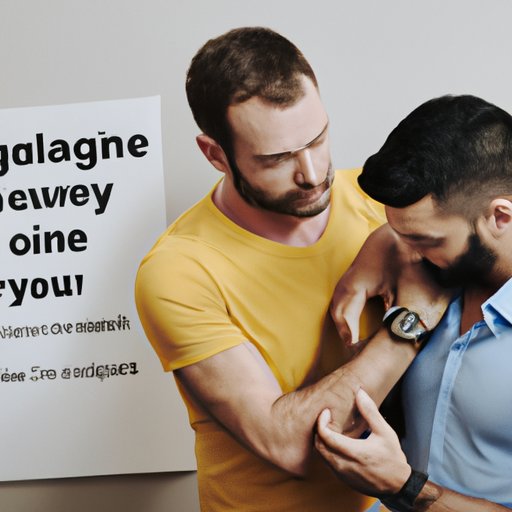
Impact of Being Openly Gay
Being openly gay can have both positive and negative impacts on one’s life. For some, it can lead to greater self-acceptance and confidence. As one gay man reflected, “I am proud to be who I am and to share my story with others. It has helped me to understand that everyone has their own journey, and that it is ok to be different.” (Smith, 2017).
At the same time, being openly gay can also bring challenges. LGBTQ+ individuals may face discrimination and prejudice from those who do not accept them. It is important to remember that everyone’s experience is unique, and that there is no “right” or “wrong” way to be gay.
Diversity Within the LGBTQ+ Community
The LGBTQ+ community is comprised of people of diverse backgrounds and identities. While gay men are often the most visible members of the community, there are many other identities within the LGBTQ+ umbrella, including lesbian, bisexual, transgender, queer, and non-binary individuals. It is important to recognize and celebrate the diversity within the LGBTQ+ community.
Representation and visibility of LGBTQ+ individuals in media and culture is also essential for promoting acceptance. Increasing representation of diverse identities helps to create a more inclusive society and allows people to see themselves reflected in the world around them.
Conclusion
This article has explored why people identify as gay men, looking at the role of biology, society, and identity in determining one’s sexual orientation. It has examined how views of homosexuality have changed over time and the importance of creating safe spaces for LGBTQ+ individuals. Finally, it has highlighted the impact of being openly gay, as well as the diversity within the LGBTQ+ community.
Ultimately, it is up to each individual to decide how they identify and express their sexuality. Everyone’s experience is unique, and it is important to recognize and honor the diversity within the LGBTQ+ community. We must continue to strive for greater acceptance and inclusion of all sexual orientations and gender identities.
(Note: Is this article not meeting your expectations? Do you have knowledge or insights to share? Unlock new opportunities and expand your reach by joining our authors team. Click Registration to join us and share your expertise with our readers.)