
Introduction
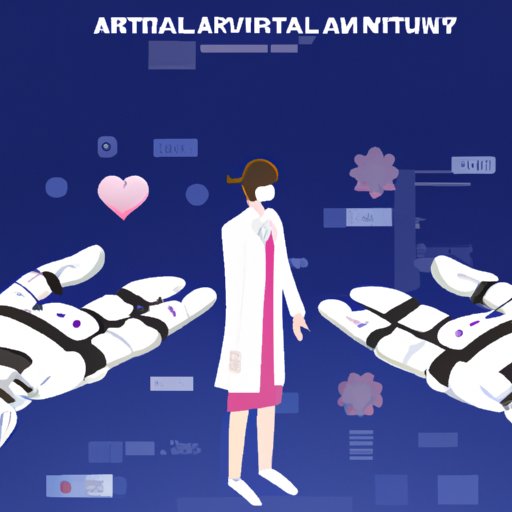
Artificial Intelligence (AI) is gaining traction in the healthcare industry as more organizations recognize its potential to improve patient care. From automated image analysis to natural language processing, AI is revolutionizing the way healthcare professionals diagnose and treat diseases. In this article, we will explore the role of AI in healthcare and examine how it can be used to reduce costs, improve accuracy and quality of care, and enhance patient experience.

Exploring How AI is Revolutionizing Healthcare
As AI technology continues to advance, its application in healthcare is becoming increasingly widespread. AI is being used to improve diagnosis and treatment of diseases, reduce healthcare costs, and enhance patient care. Let’s take a look at how these three areas are being impacted by AI.
Improved Diagnosis and Treatment of Diseases
AI-powered technologies are providing healthcare professionals with powerful tools for diagnosing and treating diseases. For example, AI-based algorithms are being used to analyze medical images such as X-rays, CT scans, and MRIs. This automated image analysis helps detect and monitor conditions such as cancer, heart disease, and stroke more accurately and efficiently than ever before. AI is also being used to develop personalized treatments for patients based on their individual genetic profiles.
AI-driven natural language processing (NLP) is another promising area for improving diagnosis and treatment. NLP involves teaching machines to interpret and understand human language, which can be used to extract meaningful insights from unstructured medical data such as doctor’s notes, lab results, and patient records. This can help healthcare providers identify patterns in data that may indicate potential health issues or treatments that could benefit patients.
Reduced Healthcare Costs
AI can also be used to reduce healthcare costs by streamlining workflows and automating administrative tasks. AI-enabled robotic process automation (RPA) can be used to automate mundane tasks such as scheduling appointments, filing paperwork, and billing patients. This reduces the need for manual labor and allows healthcare workers to focus on more important tasks. Additionally, AI-driven analytics can be used to identify inefficiencies in processes and suggest ways to optimize them.
Enhanced Patient Care
Finally, AI can be used to improve patient care by providing better access to information and services. AI-enabled chatbots, for example, can provide patients with 24/7 access to medical advice and answers to common questions. AI-powered virtual assistants can also be used to remind patients to take medications or schedule follow-up appointments. Additionally, AI can be used to personalize treatments and improve the overall patient experience.
Examining the Benefits of AI in Healthcare
Now that we’ve explored how AI is revolutionizing healthcare, let’s take a closer look at some of the potential benefits of using AI in healthcare.
Increased Efficiency
One of the most significant benefits of AI in healthcare is increased efficiency. By automating mundane tasks and streamlining workflows, AI can help healthcare providers save time and resources. According to a study published in the journal npj Digital Medicine, AI-based robots were able to improve the efficiency of hospital discharge processes by up to 40%.
More Accurate Diagnoses
AI can also be used to improve the accuracy of diagnoses. AI-driven algorithms can detect patterns and anomalies in medical images and data that may be difficult for humans to spot. This can help healthcare providers make more informed decisions and improve the quality of care they provide to patients.
Improved Quality of Care
Finally, AI can be used to improve the quality of care provided to patients. AI-enabled chatbots and virtual assistants can provide patients with timely and accurate information. AI-powered analytics can also be used to identify potential health issues and recommend treatments that are tailored to each patient’s individual needs.

Analyzing the Potential Risks of AI in Healthcare
As with any technology, there are potential risks associated with using AI in healthcare. One of the most significant risks is bias in machine learning algorithms. If an algorithm is trained on biased data, it can lead to inaccurate results and unfair treatment of certain groups of people. Additionally, security and privacy issues must be considered when using AI in healthcare, as sensitive patient data must be kept secure.
Investigating How AI Improves Diagnosis and Treatment of Diseases
Let’s take a closer look at how AI is being used to improve diagnosis and treatment of diseases. Two of the most promising areas are automated image analysis and natural language processing.
Automated Image Analysis
AI-based algorithms can be used to analyze medical images such as X-rays, CT scans, and MRIs. These algorithms can detect patterns and anomalies that may indicate potential health issues. For example, AI-driven algorithms can be used to detect and monitor cancer, heart disease, and stroke more accurately and efficiently than ever before.
Natural Language Processing
AI-driven natural language processing (NLP) is another promising area for improving diagnosis and treatment. NLP involves teaching machines to interpret and understand human language, which can be used to extract meaningful insights from unstructured medical data such as doctor’s notes, lab results, and patient records. This can help healthcare providers identify patterns in data that may indicate potential health issues or treatments that could benefit patients.

Assessing the Potential of AI to Reduce Healthcare Costs
AI can also be used to reduce healthcare costs by streamlining workflows and automating administrative tasks. AI-enabled robotic process automation (RPA) can be used to automate mundane tasks such as scheduling appointments, filing paperwork, and billing patients. This reduces the need for manual labor and allows healthcare workers to focus on more important tasks. Additionally, AI-driven analytics can be used to identify inefficiencies in processes and suggest ways to optimize them.

Evaluating the Impact of AI on Patient Care
AI can also be used to improve patient care by providing better access to information and services. AI-enabled chatbots, for example, can provide patients with 24/7 access to medical advice and answers to common questions. AI-powered virtual assistants can also be used to remind patients to take medications or schedule follow-up appointments. Additionally, AI can be used to personalize treatments and improve the overall patient experience.
Discussing the Challenges and Opportunities of AI in Healthcare
While AI has the potential to revolutionize healthcare, there are still challenges and opportunities that must be addressed. Ethical considerations must be taken into account when implementing AI in healthcare, as well as regulatory issues such as data privacy and security. Additionally, healthcare providers must ensure that AI-driven algorithms are trained on unbiased data in order to provide accurate and fair results.
Conclusion
In conclusion, AI is transforming the healthcare industry, revolutionizing diagnosis and treatment with improved accuracy and efficiency. Although there are still challenges and ethical considerations that must be addressed, AI offers tremendous potential for improving patient care and reducing costs. As AI technology continues to evolve, it is clear that it will play an increasingly important role in the future of healthcare.
(Note: Is this article not meeting your expectations? Do you have knowledge or insights to share? Unlock new opportunities and expand your reach by joining our authors team. Click Registration to join us and share your expertise with our readers.)