
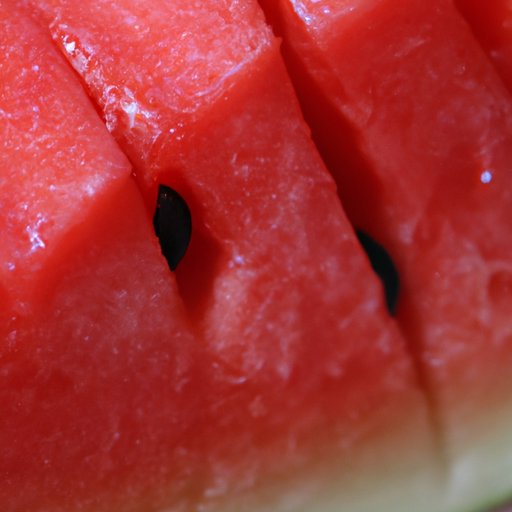
Introduction
Watermelon is a popular summer fruit that has been enjoyed around the world for centuries. It is low in calories and packed with essential vitamins and minerals. From heart health to weight loss, watermelon can offer many benefits to a healthy diet. Let’s explore the nutritional value of this sweet and refreshing fruit.

Exploring the Vitamins and Minerals in Watermelon
Watermelon is a good source of several essential vitamins and minerals. It is rich in vitamin C, which helps boost immunity, as well as vitamins A, B6, and thiamin. Watermelon also contains lycopene, an antioxidant that can reduce the risk of certain types of cancer. Additionally, it is high in potassium, which is important for muscle and nerve function.
The Health Benefits of Including Watermelon in Your Diet
The vitamins, minerals, and antioxidants found in watermelon can provide a variety of health benefits. Here are just a few of the ways that adding watermelon to your diet can help promote good health:
Heart Health
Watermelon is rich in lycopene, which is a powerful antioxidant that can help protect against heart disease. According to a study published in the Journal of Agricultural and Food Chemistry, eating watermelon can help reduce inflammation and oxidative stress, both of which are associated with an increased risk of heart disease.
Hydration
Watermelon is made up of 92% water, making it an excellent source of hydration. Eating watermelon can help you stay hydrated on hot days, while still providing essential vitamins and minerals. It can also help keep you feeling full and satisfied throughout the day.
Weight Loss
Watermelon is a low-calorie food that is high in fiber, making it an ideal choice for those looking to lose weight. According to a study published in the American Journal of Clinical Nutrition, eating watermelon can help reduce hunger and cravings, while still providing essential nutrients.
How Much Watermelon Should You Eat to Reap Its Nutritional Benefits?
In general, it is recommended to eat one to two cups of watermelon per day to reap its nutritional benefits. However, it is important to remember that everyone’s nutritional needs are different, so it is best to consult with a doctor or nutritionist to determine the best amount for you.
Tips for Eating More Watermelon
If you’re looking for ways to add more watermelon to your diet, here are some tips:
- Add diced watermelon to salads.
- Freeze cubes of watermelon for a refreshing snack.
- Blend watermelon into smoothies.
- Make a simple watermelon juice.
- Top toast with sliced watermelon.

Watermelon: A Superfood for Optimal Health
Watermelon is a nutrient-dense superfood that can provide a variety of health benefits. From heart health to weight loss, it is an excellent addition to any diet. With its sweet and refreshing taste, it is the perfect way to stay hydrated and get the vitamins and minerals your body needs for optimal health.
Conclusion
Watermelon is an incredibly nutritious and delicious fruit that can provide many health benefits. It is rich in vitamins, minerals, and antioxidants, making it a great choice for those looking to improve their overall health. With its sweet flavor and hydrating properties, watermelon is an excellent addition to any diet.
(Note: Is this article not meeting your expectations? Do you have knowledge or insights to share? Unlock new opportunities and expand your reach by joining our authors team. Click Registration to join us and share your expertise with our readers.)