
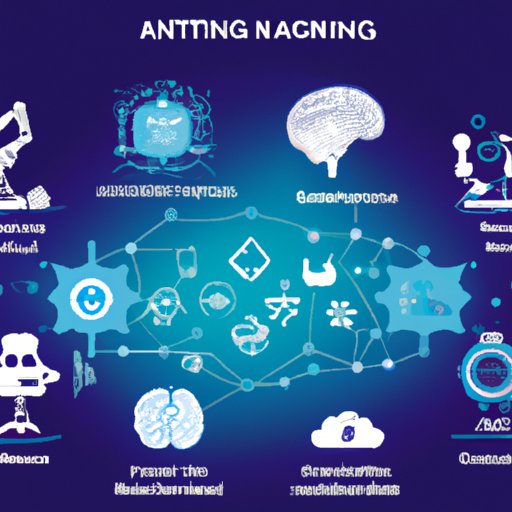
Introduction
The world of technology is constantly evolving, and the future of technology is filled with exciting possibilities. From artificial intelligence (AI) and robotics to 5G networks and cloud computing, the potential for technological advancement is limitless. In this article, we will explore some of the most promising areas of technology and examine how they may shape our lives in the years to come.

Exploring the Possibilities of Artificial Intelligence and Robotics
Artificial intelligence (AI) is a form of computer science that enables machines to learn from experience and perform tasks traditionally performed by humans. AI has been around for decades, but recent advances in technology have made it possible for machines to learn more quickly and accurately than ever before. AI can be used in many different applications, including autonomous vehicles, facial recognition systems, natural language processing, and robotics.
Robotics is the use of robots to automate tasks. Robots are machines that can be programmed to carry out specific tasks, such as manufacturing or cleaning. The future of robotics is likely to see even more advanced robots, capable of performing complex tasks with greater accuracy and efficiency than ever before. This could revolutionize the way we do many everyday activities, from manufacturing to healthcare.
By combining artificial intelligence and robotics, the possibilities are endless. Autonomous vehicles, for example, could use AI to navigate roads safely and efficiently, while robotic surgery could enable doctors to perform operations with greater precision and accuracy. AI and robotics could also be used to create smart homes and cities, where machines interact with people to provide enhanced safety and convenience.
Examining the Impact of 5G on Technology
5G is the fifth generation of wireless technology, designed to provide faster speeds and lower latency than previous generations. 5G is expected to revolutionize the way we use technology, offering faster download speeds and improved reliability. It could also enable new technologies, such as the Internet of Things (IoT), which would allow devices to communicate with each other in real-time.
5G could also have a huge impact on industries such as healthcare, transportation, and agriculture. High-speed connections could enable medical professionals to deliver remote patient care, while connected vehicles could make roads safer and more efficient. 5G also offers the potential for smarter farming, allowing farmers to monitor crops remotely.
However, there are some challenges associated with 5G. For example, concerns have been raised about the potential health risks posed by the higher frequencies used by 5G networks. There are also questions about the security of 5G networks and the potential for hackers to exploit them.
Analyzing the Evolving Role of Cloud Computing
Cloud computing is the practice of using remote servers to store, manage, and process data instead of local hardware. This allows businesses to access data and applications from any device, no matter where they are located. Cloud computing has become increasingly popular in recent years, due to its cost-efficiency and scalability.
Cloud computing is changing the way we use technology. By enabling businesses to store and access data from anywhere, it has opened up new opportunities for collaboration and innovation. It has also enabled businesses to reduce their overhead costs, as they don’t need to purchase and maintain expensive hardware.
However, there are some security risks associated with cloud computing. As data is stored remotely, it is vulnerable to malicious attacks. Businesses must ensure that their cloud provider has adequate security measures in place to protect their data.

Understanding the Potential of Blockchain Technology
Blockchain technology is a distributed ledger system that records transactions between two parties securely and permanently. It is used in cryptocurrencies, such as Bitcoin, but can also be used for other applications, such as smart contracts and digital identities. Blockchain offers advantages such as increased transparency, immutability, and security.
Blockchain technology could revolutionize many industries, from finance to healthcare. In the financial sector, it could enable faster and more secure payments, while in healthcare, it could be used to securely store and share patient data. It could also be used to create digital identities, allowing individuals to securely prove who they are online.
However, there are some challenges associated with blockchain technology. For example, it can be difficult to scale, and there are still questions about its security. Additionally, there is a lack of regulation and oversight of blockchain-based applications.

Investigating the Benefits of Virtual Reality and Augmented Reality
Virtual reality (VR) and augmented reality (AR) are two emerging technologies that offer new ways to interact with the world. VR is a computer-generated 3D environment that users can explore, while AR overlays digital content onto the real world. Both technologies allow users to interact with their environment in new and exciting ways.
VR and AR offer many potential applications, from gaming and entertainment to education and training. In the gaming industry, VR and AR could enable players to explore virtual worlds and interact with characters in new ways. In education, these technologies could be used to create immersive learning environments. They could also be used for medical purposes, such as helping surgeons practice complex procedures.
However, there are some challenges associated with VR and AR. For example, they can be expensive to develop, and there are questions about the long-term health implications of using these technologies.
Reviewing the Latest Innovations in Automation and Machine Learning
Automation and machine learning are two related technologies that are transforming the way we use technology. Automation is the use of computers to automate processes, such as manufacturing or customer service. Machine learning is a form of AI that enables machines to learn from data and make decisions without human intervention.
The latest innovations in automation and machine learning are making it easier and more efficient to carry out tasks. For example, automated customer service bots can answer customer inquiries quickly and accurately, while machine learning algorithms can detect fraud and suspicious activity. Automation and machine learning could also be used to optimize supply chains and improve industrial processes.
However, there are some challenges associated with automation and machine learning. For example, there are questions about the security of these technologies, and there is a risk that they could lead to job losses if not implemented responsibly.

Assessing the Growth of Big Data and Its Impact on Technology
Big data is a term used to describe large amounts of data that can be analyzed to reveal patterns and trends. Big data is being used in many different industries, from retail to healthcare, to gain insights into customer behavior and business performance. It is also being used to develop predictive models, which can be used to anticipate future events.
Big data offers many potential benefits, such as improved decision-making and better customer experiences. By analyzing large amounts of data, businesses can identify patterns and trends that can help them make more informed decisions. Big data can also be used to personalize services, providing customers with tailored experiences that meet their needs.
However, there are some challenges associated with big data. For example, businesses must ensure that their data is secure, and there are questions about the privacy implications of collecting and storing large amounts of data.
Conclusion
The future of technology is an exciting prospect, with many possibilities. From artificial intelligence and robotics to 5G networks and cloud computing, the potential for technological advancement is limitless. By exploring some of the most promising areas of technology, we can gain a better understanding of how they may shape our lives in the years to come.
In summary, the future of technology is filled with exciting possibilities. Artificial intelligence and robotics could revolutionize the way we do many everyday activities, while 5G networks could enable new technologies, such as the Internet of Things. Cloud computing could enable businesses to access data and applications from anywhere, while blockchain technology could be used to create digital identities. Virtual reality and augmented reality could offer new ways to interact with the world, while automation and machine learning could make it easier and more efficient to carry out tasks. Finally, big data could be used to gain insights into customer behavior and business performance.
As technology continues to evolve, it is important to stay informed of the latest developments. By staying abreast of the latest innovations, we can better prepare ourselves for the future of technology.
(Note: Is this article not meeting your expectations? Do you have knowledge or insights to share? Unlock new opportunities and expand your reach by joining our authors team. Click Registration to join us and share your expertise with our readers.)