

Introduction
Data science has become one of the most sought-after skills in the IT industry. With the rise of big data and the need to make sense of this vast array of information, data scientists have become increasingly important. But what is data science and how does it apply to the IT industry? This article will provide an overview of data science in the IT industry, exploring the processes and techniques used, the impact of data science on IT infrastructure, and how businesses in the IT industry can use data science to their advantage.
A Beginner’s Guide to Data Science in the IT Industry
Data science is an interdisciplinary field that combines mathematics, statistics, computer science, and other areas of expertise to collect and analyze data. As defined by the Harvard Business Review, “Data science is the process of extracting knowledge from data, using mathematical methods and algorithms.” In the IT industry, data science is used to gain insights from large amounts of data, identify trends, and develop predictive models.
Data science processes and techniques involve collecting and organizing data, cleaning and preprocessing data, feature engineering, model building, evaluation, and deployment. Feature engineering is a particularly important step in the data science process, as it involves transforming raw data into more meaningful features that can be used for analysis. Common tools used for data science include programming languages such as Python, R, and Java; statistical software such as SAS and SPSS; and machine learning libraries such as TensorFlow and Scikit-learn.
Exploring the Impact of Data Science on IT Infrastructure
Data science can have a significant impact on IT infrastructure. It can be used to improve the efficiency of IT operations, as well as to identify potential security threats. For example, data science can be used to analyze network traffic and detect malicious activity. Additionally, data science can be used to automate tasks such as patch management and system configuration, reducing the amount of manual work required.
Data science can also help IT departments better understand customer needs and preferences. By analyzing customer data, IT teams can design IT solutions that are tailored to specific customer requirements. Furthermore, data science can be used to develop predictive models that can anticipate customer demand and help optimize resource allocation.

Harnessing the Power of Data Science for Businesses in the IT Industry
Businesses in the IT industry can leverage data science to improve their operations. Data science can be used to identify patterns in customer behavior and optimize marketing campaigns. Additionally, data science can be used to streamline production processes and reduce costs. For example, data science can be used to analyze customer feedback and determine which products or services should be prioritized.
Data science can also be used to identify new business opportunities. Through data analysis, businesses can uncover new markets, identify potential partners, and develop new products and services. Many businesses have successfully implemented data science initiatives, resulting in improved customer experience, increased sales, and reduced costs.
How to Leverage Data Science for Improved IT Solutions
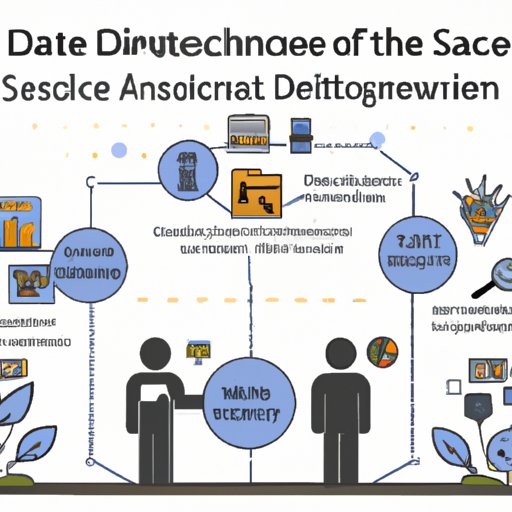
When incorporating data science into IT solutions, there are several steps to take. First, it is important to identify the goals of the project and determine how data science can help achieve those goals. Once the goals have been identified, the next step is to develop a plan for collecting, organizing, and analyzing data. Additionally, it is important to select the appropriate tools and techniques for the project. Finally, it is important to ensure that the data is secure and that all relevant laws and regulations are being followed.
When leveraging data science for IT solutions, it is also important to follow best practices. This includes ensuring that data is properly collected, organized, and analyzed, and that the results are interpreted correctly. Additionally, it is important to keep up with the latest developments in data science and to stay abreast of changes in the IT industry.
What Data Science Means for the Future of the IT Industry
Data science has the potential to revolutionize the IT industry. According to a recent study by McKinsey, “Data science can be used to create more intelligent, personalized products and services, optimize operations, and drive innovation.” The study also found that data science can be used to improve customer experience, increase efficiency, and reduce costs.
However, there are some challenges that may arise from the increasing use of data science. These include privacy concerns, data security issues, and the need to ensure ethical use of data. Additionally, there is the risk of bias in data analysis and the need to ensure that data science is used responsibly.
Conclusion
In conclusion, data science is a powerful tool that can be used to improve the efficiency and effectiveness of the IT industry. From improving IT infrastructure to helping businesses capitalize on new opportunities, data science can provide numerous benefits. However, it is important to be aware of the potential challenges that may arise from the increasing use of data science. As the IT industry continues to evolve, data science will remain an important part of the equation.
(Note: Is this article not meeting your expectations? Do you have knowledge or insights to share? Unlock new opportunities and expand your reach by joining our authors team. Click Registration to join us and share your expertise with our readers.)