
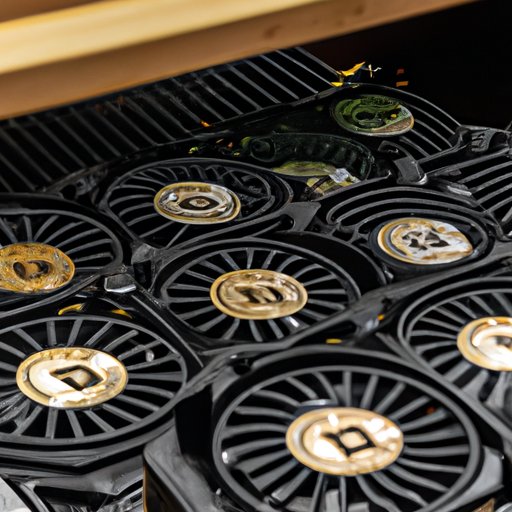
Introduction
Bitcoin mining is the process of verifying transactions on the Bitcoin blockchain and adding them to the public ledger. It is an integral part of the cryptocurrency ecosystem, allowing miners to earn rewards for their efforts. In this article, we will explore what is Bitcoin mining, how it works, and the economics behind it.
Explaining Bitcoin Mining: A Beginner’s Guide
Before we dive into the details of what is Bitcoin mining, it’s important to understand some basic concepts about the technology. Bitcoin is a digital currency that operates on a decentralized network, meaning there is no central authority or intermediary involved in the process. Transactions are verified by miners, who are rewarded with Bitcoin for their efforts.
What is Bitcoin Mining?
In simple terms, Bitcoin mining is the process of verifying transactions on the Bitcoin blockchain and adding them to the public ledger. Miners use specialized software and hardware to solve complex mathematical problems, which allows them to confirm and add new blocks of transactions to the blockchain. This process is known as “proof-of-work” mining, and it is designed to be secure, distributed, and difficult to manipulate.
How Does Bitcoin Mining Work?
When a new block of transactions is added to the blockchain, miners must first verify the transactions before they can be added. To do this, miners use specialized software to solve complex mathematical equations. When a miner solves the equation, they are rewarded with a certain amount of Bitcoin for their efforts. This process is known as “mining”.
What is Needed to Mine Bitcoin?
In order to mine Bitcoin, you will need specialized hardware and software. You will also need access to an adequate amount of electricity and an internet connection. In addition, you will need to join a mining pool, which is a group of miners who work together to mine Bitcoin.

How to Set Up a Bitcoin Mining Operation
Setting up a Bitcoin mining operation requires some technical knowledge and planning. Here are some tips to help you get started:
Selecting the Right Mining Hardware
The type of hardware you choose will depend on your budget and the amount of computing power you need. You can opt for a dedicated mining rig, or you can build your own using specialized components. It’s important to note that ASIC miners are the most efficient and cost-effective option for Bitcoin mining.
Choosing the Best Location for Your Mining Setup
It’s important to choose a location where you have access to cheap electricity. This is because mining requires a lot of energy, so the lower your electricity costs, the more profitable your mining operation will be. Additionally, you should consider the temperature of the environment, as mining rigs generate a lot of heat.
Installing and Configuring the Mining Software
Once you have chosen the right hardware, you will need to install and configure the mining software. This will involve downloading the necessary software, setting up your wallet, and joining a mining pool. You may also need to configure the software to optimize your mining performance.
Joining a Mining Pool
Mining pools allow miners to combine their resources and share the rewards. By joining a mining pool, you can increase your chances of earning rewards, as it increases your hashrate and reduces the difficulty of solving blocks. However, it’s important to research the different pools available and choose one that is reliable and trustworthy.

Understanding the Economics of Bitcoin Mining
Before investing in a Bitcoin mining operation, it’s important to understand the economics behind it. Here are some factors to consider:
Estimating Profitability
The profitability of Bitcoin mining depends on several factors, including the cost of electricity, the price of Bitcoin, and the cost of the hardware. You should also factor in the cost of cooling and other associated expenses. Additionally, it’s important to research the current trends in the industry to ensure your investment is profitable.
Calculating Electricity Costs
Electricity costs are one of the biggest expenses when running a Bitcoin mining operation. It’s important to calculate the cost of electricity per kilowatt-hour to determine how much it will cost to run your mining rig. Additionally, you should consider any additional fees charged by your electricity provider.
Measuring Mining Difficulty
Mining difficulty is a measure of how difficult it is to solve blocks on the Bitcoin network. The higher the difficulty, the more processing power is needed to solve blocks, and the less profitable mining becomes. It’s important to keep track of the mining difficulty to ensure your mining operations remain profitable.
The Pros and Cons of Bitcoin Mining
Like any other investment, there are both risks and benefits to consider when deciding whether or not to invest in Bitcoin mining. Here are some of the pros and cons of the activity:
Benefits of Bitcoin Mining
One of the main benefits of Bitcoin mining is the potential to earn rewards. Miners are rewarded with Bitcoin for verifying transactions, which can be sold for profit or used to purchase goods and services. Additionally, Bitcoin mining is a low-risk investment, as the cost of entry is relatively low and the rewards are predictable.
Risks of Bitcoin Mining
The main risk associated with Bitcoin mining is the cost of electricity. If the cost of electricity is too high, it could make mining unprofitable. Additionally, the price of Bitcoin is volatile, so there is no guarantee that the rewards earned from mining will be worth the investment.

Exploring the Potential of Bitcoin Mining Technology
Despite the risks associated with Bitcoin mining, the technology has great potential. Here are some of the current developments and future prospects in the industry:
Current Developments in Bitcoin Mining
Currently, the majority of Bitcoin miners use specialized Application Specific Integrated Circuits (ASICs) to mine Bitcoin. These devices offer better performance and efficiency compared to traditional CPUs or GPUs. Additionally, many miners have begun to utilize renewable energy sources to reduce their electricity costs.
Future Prospects in Bitcoin Mining
As the technology evolves, Bitcoin mining could become even more efficient and profitable. For example, the development of new algorithms and mining protocols could enable miners to achieve greater rewards for their efforts. Additionally, the use of renewable energy sources could further reduce the cost of electricity and make mining more viable.
Conclusion
Bitcoin mining is an essential part of the cryptocurrency ecosystem. It is the process of verifying transactions and adding them to the public ledger, and miners are rewarded with Bitcoin for their efforts. While there are some risks associated with mining, the technology has great potential and could become even more efficient and profitable in the future.
(Note: Is this article not meeting your expectations? Do you have knowledge or insights to share? Unlock new opportunities and expand your reach by joining our authors team. Click Registration to join us and share your expertise with our readers.)