
Introduction
Bitcoin is a digital currency that has been gaining traction across the world as an alternative form of payment. It is a decentralized platform that operates without the need for a third-party intermediary or central authority. The goal of Bitcoin is to provide a secure, transparent, and affordable way to transfer value between individuals or businesses without relying on traditional financial institutions.
The purpose of this article is to provide an in-depth exploration of Bitcoin, from its definition to its features, benefits, and risks. We will also discuss the future of Bitcoin and its potential impact on the global economy.
Explaining Bitcoin: A Comprehensive Guide to the Cryptocurrency
Before we dive into the specifics of Bitcoin, let us first take a look at what it is and how it works.
Overview of Bitcoin
Bitcoin is a peer-to-peer payment system and digital currency created in 2009 by an anonymous individual or group of individuals under the pseudonym “Satoshi Nakamoto”. Bitcoin is a form of digital money that can be used to pay for goods and services online, similar to other forms of payment such as cash, debit cards, or credit cards. However, unlike traditional currencies, Bitcoin does not rely on a central bank or government to regulate it, nor does it require a third-party intermediary to process payments. Transactions are instead verified by a network of computers that run complex algorithms to confirm the validity of each transaction.
How Bitcoin Works
To understand how Bitcoin works, it is important to first understand the concept of blockchain technology. Blockchain is a distributed ledger technology (DLT) that records transactions between two parties in a verifiable and permanent way. This data is stored on a public ledger, which is essentially a chain of blocks, and is secured using cryptography. Each block contains a cryptographic hash of the previous block, a timestamp, and transaction data. These blocks are linked together to form a chain, which is then replicated and shared among nodes in the network. The network is also secured through consensus protocols, which ensure that all nodes agree on the same version of the ledger.
In order for a transaction to be processed, it must first be validated by the miners in the network. Miners are responsible for verifying the authenticity of each transaction and adding them to the blockchain. In return, they are rewarded with newly minted Bitcoins. Once a transaction is added to the blockchain, it is immutable and cannot be altered or reversed.
Differences Between Bitcoin and Other Currencies
One of the main differences between Bitcoin and other currencies is that it is decentralized, meaning there is no single entity that controls it. As mentioned earlier, Bitcoin relies on a network of computers to validate transactions and ensure its security. This decentralization makes it more resilient to attacks and manipulation than traditional currencies, which are typically regulated by a central bank or government.
Another key difference between Bitcoin and other currencies is that it is not backed by any physical asset. Unlike traditional currencies, which are usually backed by gold or other precious metals, Bitcoin is not backed by anything tangible. This means that its value is determined solely by market forces and supply and demand.
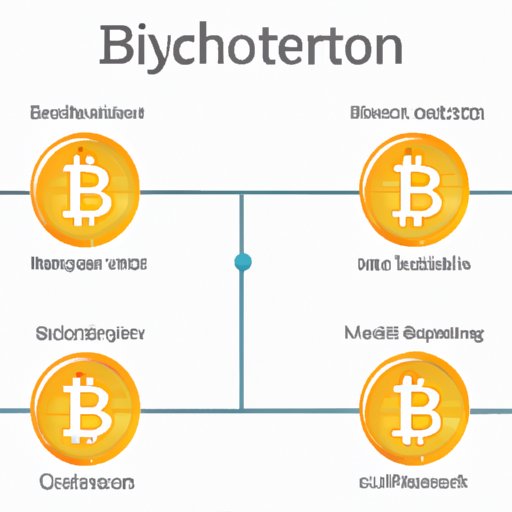
How Bitcoin Works: An Overview of the Digital Currency
Now that we have a basic understanding of what Bitcoin is and how it works, let us take a closer look at some of its key components.
The Blockchain Technology
As mentioned earlier, Bitcoin relies on blockchain technology to record and verify transactions. The blockchain is essentially a public ledger where all transactions are recorded and stored. It is constantly updated with new information and is maintained by a network of computers running complex algorithms to ensure its accuracy. The blockchain is also secured through consensus protocols, which ensure that all nodes agree on the same version of the ledger.
Mining Process
In order for a transaction to be processed, it must first be validated by the miners in the network. Miners are responsible for verifying the authenticity of each transaction and adding them to the blockchain. In return, they are rewarded with newly minted Bitcoins. The mining process is designed to be energy intensive, as it requires a lot of computing power to solve the complex mathematical puzzles that are required to add new blocks to the blockchain.
Security Measures
Bitcoin also employs several security measures to protect users and their funds. All transactions are encrypted using advanced cryptographic techniques, making it virtually impossible for hackers to steal funds or tamper with the blockchain. Additionally, Bitcoin utilizes multi-signature technology, which requires multiple signatures to authorize a transaction. This makes it much more difficult for malicious actors to access funds without authorization.
Bitcoin Basics: What is Bitcoin and How Does it Work?
Now that we have discussed the basics of Bitcoin, let us take a look at some of the questions that people often have when they first encounter the cryptocurrency.
What are Bitcoins?
Bitcoins are digital tokens that can be used to purchase goods and services online. They are created through a process called “mining”, which involves solving complex mathematical puzzles in order to add new blocks to the blockchain. In return for solving these puzzles, miners are rewarded with newly minted Bitcoins.
Who Controls Bitcoin?
Bitcoin is a decentralized platform, meaning there is no single entity that controls it. Instead, it is maintained by a network of computers running complex algorithms to verify transactions and ensure its security. All transactions are also recorded on a public ledger, which is constantly updated with new information.
Where Can You Get Bitcoin?
There are several ways to obtain Bitcoin, including buying it on an exchange, accepting it as payment for goods and services, or mining it. Many exchanges allow users to buy Bitcoin with traditional currencies such as US dollars or Euros. Additionally, merchants can accept Bitcoin as payment for goods and services. Finally, users can also mine Bitcoin by contributing their computing power to the network to help process transactions and earn new coins in return.
The Pros and Cons of Investing in Bitcoin
Like any investment, investing in Bitcoin comes with both advantages and disadvantages. Before investing, it is important to weigh the pros and cons to decide if it is right for you.
Advantages of Investing in Bitcoin
One of the main advantages of investing in Bitcoin is that it is decentralized, meaning there is no single entity that controls it. This makes it more resilient to manipulation and censorship than traditional currencies, which are typically regulated by a central bank or government. Additionally, Bitcoin is a borderless currency, meaning it can be used to make payments anywhere in the world without having to worry about exchange rates or international fees. Finally, Bitcoin is also seen as a store of value, as its price tends to increase over time due to its limited supply.
Disadvantages of Investing in Bitcoin
While there are many advantages to investing in Bitcoin, there are also some drawbacks to consider. For example, Bitcoin is highly volatile, meaning its price can fluctuate significantly over short periods of time. Additionally, Bitcoin is still relatively new, meaning it is not yet widely accepted as a form of payment. Finally, there is also the risk of losing your funds due to hacking, as Bitcoin is not insured by any government or financial institution.
Understanding Bitcoin: A Beginner’s Guide to the Cryptocurrency Revolution
Now that we have discussed the basics of Bitcoin and the pros and cons of investing in it, let us take a look at its history and potential impact on the global economy.
History of Bitcoin
Bitcoin was created in 2009 by an anonymous individual or group of individuals under the pseudonym “Satoshi Nakamoto”. Since then, it has grown in popularity and become one of the most widely used cryptocurrencies in the world. Since its creation, Bitcoin has faced numerous challenges and obstacles, but it has continued to remain resilient and remains a viable option for those looking for an alternative to traditional currencies.
Impact on the Global Economy
Bitcoin has had a profound impact on the global economy since its creation. It has provided a new way for people to transact without the need for a third-party intermediary or central authority. Additionally, it has opened up new opportunities for businesses to accept payments from customers around the world without having to worry about exchange rates or international fees. Finally, it has also enabled individuals to store and transfer value without having to rely on banks or other financial institutions.
Future of Bitcoin
Despite the challenges it has faced, Bitcoin continues to remain a viable option for those looking for an alternative to traditional currencies. As more people become aware of its potential, the demand for Bitcoin is likely to continue to grow, leading to increased adoption and further growth in its price. Additionally, many experts believe that Bitcoin and other cryptocurrencies could eventually replace traditional fiat currencies as the primary means of payment in the future.
Conclusion
In conclusion, Bitcoin is a revolutionary digital currency that has the potential to revolutionize the way we transact and store value. It is decentralized and secure, and is not controlled by any single entity. Furthermore, it offers numerous advantages over traditional currencies, including lower transaction costs, faster processing times, and greater resilience to manipulation. While there are some risks associated with investing in Bitcoin, it is still a viable option for those looking for an alternative to traditional currencies.
This article has provided a comprehensive overview of Bitcoin, from its definition to its features, benefits, and risks. We have also discussed the history of Bitcoin and its potential impact on the global economy. We hope that this article has helped to clarify any confusion you may have had about Bitcoin and that you now have a better understanding of this revolutionary digital currency.
(Note: Is this article not meeting your expectations? Do you have knowledge or insights to share? Unlock new opportunities and expand your reach by joining our authors team. Click Registration to join us and share your expertise with our readers.)