

Introduction
Bitcoin mining is the process of verifying and adding transaction records to the public ledger known as the blockchain. This ledger of past transactions is called the block chain because it is a chain of blocks. The block chain serves to confirm transactions to the rest of the network as having taken place. Bitcoin nodes use the block chain to distinguish legitimate Bitcoin transactions from attempts to re-spend coins that have already been spent elsewhere.
In this article, we will provide an overview of what is covered in this article, explain the step-by-step process of bitcoin mining, discuss how it works, explore why it is necessary, introduce different types of mining hardware, break down difficulty levels, provide strategies for beginners looking to profit from mining, and determine the most efficient bitcoin mining method.
Explaining Bitcoin Mining – A Step-by-Step Guide
To begin mining bitcoin, the first step is to acquire bitcoins. This can be done through various methods such as buying them on an exchange, accepting them as payment for goods or services, or mining them. Once you have acquired your bitcoins, you will need to set up a mining rig in order to start mining.
The next step is to understand the processes involved in bitcoin mining. The main goal of a miner is to verify and add transaction records to the blockchain. This is done by solving a cryptographic puzzle which requires powerful computing power. Once a successful solution is found, the miner is rewarded with newly created bitcoins as well as transaction fees. The more powerful the hardware, the faster the miner can solve the problem and the more rewards they receive.
The third step is to set up a mining rig. This consists of specialized computers that are designed to mine bitcoin. The mining rig typically consists of a processor, graphics card, memory, storage, and power supply. Depending on the type of mining hardware being used, the setup process may vary.
How Does Bitcoin Mining Work?
The bitcoin network consensus is maintained by miners who use their computing power to solve cryptographic puzzles. When a solution is found, the miner is rewarded with newly created bitcoins as well as transaction fees. This process is known as proof-of-work (PoW). As more miners join the network, the difficulty of finding a solution increases, making it harder for miners to earn rewards.
Mining rewards are designed to incentivize miners to continue contributing to the network. The rewards are halved every few years in order to control inflation. Additionally, the difficulty level of the puzzles is adjusted periodically in order to maintain a steady rate of new bitcoins entering circulation.
Mining pools and cloud mining are two popular methods of bitcoin mining. In a mining pool, miners combine their computing power and share the rewards. Cloud mining enables users to rent mining hardware and pay for a certain amount of hashing power. Both methods require little to no technical knowledge and are relatively low risk.
What is Bitcoin Mining and Why is it Necessary?
Bitcoin mining is essential to the security of the bitcoin network. Without miners, there would be no way to verify and secure transactions on the blockchain. Miners also ensure that new bitcoins are released at a steady rate and prevent the currency from being subject to hyperinflation.
There are several benefits to bitcoin mining, including: earning rewards, increasing the security of the network, and providing support for the development of new technologies. However, there are also risks associated with mining, such as electricity costs, hardware failures, and the possibility of fraudulent activity.
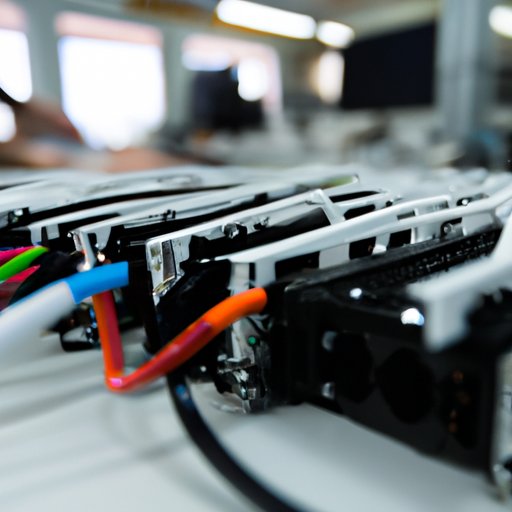
An Introduction to Bitcoin Mining Hardware
When it comes to mining bitcoin, the most important factor is the type of hardware being used. There are three main types of mining hardware: Application Specific Integrated Circuit (ASIC) miners, Graphics Processing Unit (GPU) miners, and Field Programmable Gate Array (FPGA) miners.
ASIC miners are purpose-built to perform specific tasks and are much more efficient than GPUs and FPGAs. They are also more expensive and consume more power. GPUs are generally cheaper and more versatile than ASICs, but are not as efficient. FPGAs are also less efficient than ASICs, but offer greater flexibility.
Understanding Bitcoin Mining Difficulty Levels
Difficulty levels refer to the complexity of the mathematical problems that miners need to solve in order to receive rewards. As more miners join the network, the difficulty level increases, making it harder to earn rewards. It is important to understand how difficulty levels affect profitability before investing in bitcoin mining.
Profiting from Bitcoin Mining – Strategies for Beginners
For those looking to profit from bitcoin mining, there are several strategies that can be used. Choosing the right mining pool is important, as some pools have higher fees or offer lower rewards. Additionally, it is important to find the best mining hardware for the task. Optimization techniques such as overclocking and undervolting can help increase efficiency.
Determining the Most Efficient Bitcoin Mining Method
The most efficient bitcoin mining method depends on several factors, such as cost, availability of hardware, and desired return on investment. It is important to compare different methods in order to determine which one is most suitable for your needs. It is also important to assess the risks associated with each method and weigh them against the potential rewards.
Conclusion
In conclusion, bitcoin mining is a process of verifying and adding transaction records to the public ledger known as the blockchain. It is an essential part of the bitcoin network, as it ensures the security of transactions and prevents hyperinflation. Various types of hardware can be used for mining, and miners must understand difficulty levels in order to maximize profitability. For those looking to profit from mining, it is important to choose the right mining pool and optimize efficiency. Ultimately, the most efficient bitcoin mining method depends on individual needs and goals.
(Note: Is this article not meeting your expectations? Do you have knowledge or insights to share? Unlock new opportunities and expand your reach by joining our authors team. Click Registration to join us and share your expertise with our readers.)