

Introduction
India is a country with a diverse and vibrant culture. With over 1.3 billion people living in the country, it is one of the most populous nations in the world. This article will explore the various aspects of Indian culture, from religion and language to cuisine, art, and festivals. It will also examine the impact of social media on contemporary Indian culture.
Exploring the Role of Religion in Indian Culture
Religion plays an important role in Indian culture. According to the 2011 Census, 79.8% of the population identify as Hindu, 14.2% as Muslim, 2.3% as Christian, and 1.7% as Sikh. These religions have shaped the values and beliefs of the Indian people and continue to be influential today.
Hinduism
Hinduism is the oldest religion in India, with roots that can be traced back to prehistoric times. It is often referred to as Sanātana Dharma, which translates to “eternal law” or “universal truth.” Hinduism is an amalgamation of various religious practices, including polytheism and monotheism. It is based on the idea of karma, or cause and effect, and emphasizes the importance of dharma, or righteousness.
Islam
Islam is the second-largest religion in India, with approximately 172 million adherents. It was introduced to India by Arab traders in the 7th century, and has since become an integral part of Indian culture. Its influence can be seen in the cuisine, architecture, and literature of the Indian people.
Buddhism
Buddhism is another major religion in India, with approximately 8 million followers. It originated in India during the 6th century BCE, and is based on the teachings of Siddhartha Gautama, also known as the Buddha. Buddhism focuses on the idea of enlightenment and emphasizes the importance of compassion and non-violence.
Sikhism
Sikhism is the fifth-largest religion in India, with approximately 20 million adherents. It was founded in the 15th century by Guru Nanak Dev Ji, and is based on his teachings and the holy book, the Guru Granth Sahib. Sikhism emphasizes the importance of living a life of honesty and service to others.
The Influence of Language on Indian Culture
Language is an essential part of Indian culture, and there are hundreds of languages spoken in the country. The official language of India is Hindi, but there are 22 other official languages, including Bengali, Tamil, Telugu, Marathi, and Urdu. Regional languages vary from state to state, and many of them are derived from Sanskrit.
Official Languages
Hindi is the official language of India, and it is spoken by 41% of the population. English is also an official language, and it is used in government, business, and education. Other official languages include Bengali, Telugu, Marathi, Tamil, Gujarati, and Urdu.
Regional Languages
In addition to the official languages, there are hundreds of regional languages spoken in India. These languages are influenced by local dialects, and many of them are derived from Sanskrit. Popular regional languages include Punjabi, Assamese, Oriya, Kannada, and Malayalam.
Impact of English
English is widely spoken in India, and it has had a significant impact on the culture. English is used for education, business, and government, and it is often used as a lingua franca for communication between different linguistic groups. Additionally, English has influenced the vocabulary and syntax of many regional languages.
Traditional Cuisine and its Impact on Indian Culture
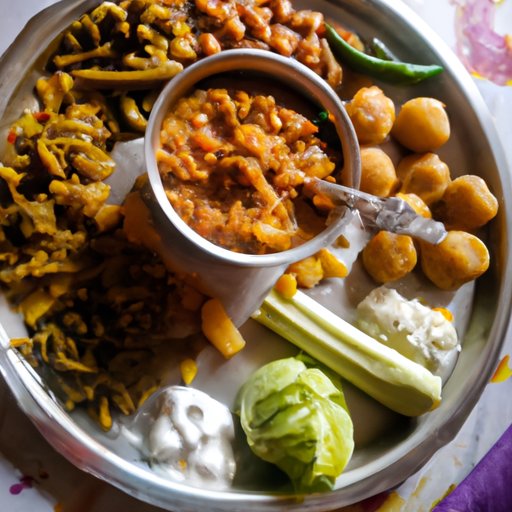
Indian cuisine is renowned for its flavor and diversity. Due to the country’s large size and cultural diversity, there are numerous regional variations. Popular dishes include curries, dals, chapatis, samosas, and biryani. Additionally, vegetarianism is common in India, and many dishes are prepared without meat.
Regional Variations
Indian cuisine varies from region to region. In the south, meals tend to be spicier and use more coconut milk, while in the north, dishes are usually milder and use more dairy products. Additionally, coastal regions tend to use more seafood, while inland areas rely more on vegetables and meat.
Popular Dishes
Some of the most popular dishes in India include curries, dals, chapatis, samosas, and biryani. Curries are typically made with a combination of spices and vegetables, while dals are lentil-based stew dishes. Chapatis are flatbreads, samosas are fried pastries, and biryani is a rice dish cooked with spices, vegetables, and meat or fish.
Impact on Health
Indian cuisine is known for its health benefits. Many dishes are prepared with fresh ingredients and healthy spices, such as turmeric and ginger. Additionally, vegetarianism is common in India, and many dishes are prepared without meat. As a result, Indian cuisine is lower in fat and cholesterol than other cuisines.
Artistic Expression in India: Music, Dance, and Visual Arts
Artistic expression plays an important role in Indian culture. Music, dance, and visual arts provide a way for people to express themselves and connect with their heritage. From classical music to folk dances, these forms of art have been passed down through generations and remain popular today.
Music
Music is an integral part of Indian culture, and there are numerous genres and styles. Popular genres include classical, folk, and devotional music. Classical music is typically performed on traditional instruments, such as the sitar and tabla. Folk music is more informal and often involves singing and dancing. Devotional music is religious in nature and is used in temples and shrines.
Dance
Dance is a popular form of artistic expression in India. There are numerous traditional dances, each with its own unique style and origin. Popular dances include Bharatanatyam, Kathak, and Bhangra. These dances typically involve intricate hand and foot movements, and they are often accompanied by music and singing.
Visual Arts
Visual arts are also an important part of Indian culture. Traditional art forms include painting, sculpture, pottery, and jewelry. Many of these art forms feature intricate designs and vibrant colors, and they often reflect the spiritual beliefs of the artists. Additionally, contemporary art forms, such as digital art and photography, are becoming increasingly popular in India.
Exploring the Unique Festivals of India
Festivals are an important part of Indian culture, and they are celebrated throughout the year. These festivals are often religious in nature, but they can also be cultural celebrations. Popular festivals include Diwali, Holi, and Eid.
Religious Festivals
Diwali is one of the most popular festivals in India. It is a five-day celebration of lights that honors the victory of good over evil. Holi is another popular festival that celebrates the arrival of spring. It is marked by the throwing of colored powder and water, and it is often accompanied by feasting and music. Eid is a three-day festival that marks the end of Ramadan and is celebrated by Muslims around the world.
Cultural Celebrations
In addition to religious festivals, there are also numerous cultural celebrations in India. One of the most popular is Durga Puja, a ten-day festival that celebrates the goddess Durga. Another popular festival is Raksha Bandhan, which is celebrated by Hindus and Sikhs and honors the bond between brothers and sisters. Additionally, Pongal is a four-day harvest festival that is celebrated in the southern states of India.
The Impact of Social Media on Indian Culture
Social media has had a profound impact on Indian culture. It has changed the way people communicate and interact, and it has facilitated the spread of ideas and information. Additionally, social media has exposed Indians to global trends, such as fashion and music, and it has allowed them to connect with people around the world.
Changes in Communication
Social media has changed the way people communicate in India. It has allowed people to connect with friends and family who live far away, and it has made it easier to share news and updates. Additionally, social media has enabled people to join online communities and engage in conversations with people from all walks of life.
Effects of Globalization
Social media has also had an impact on globalization in India. It has exposed people to new ideas and cultures, and it has made it easier for businesses to operate internationally. Additionally, social media has helped to bridge the gap between rural and urban areas, allowing people to access information and resources regardless of where they live.
Conclusion
India is a country with a rich and vibrant culture. Its culture is shaped by its religious diversity, languages, traditional cuisine, and artistic expression. Additionally, festivals play an important role in Indian culture, and social media has had a profound impact on the way people communicate and interact. India’s culture is unique and fascinating, and it continues to evolve and adapt in the modern world.
(Note: Is this article not meeting your expectations? Do you have knowledge or insights to share? Unlock new opportunities and expand your reach by joining our authors team. Click Registration to join us and share your expertise with our readers.)