
Introduction
A supply chain is a network of organizations, people, activities, information and resources involved in supplying a product or service to customers. From raw materials to finished products, it includes all the steps necessary to create and deliver goods and services to the end user. Supply chain management (SCM) is the process of managing the flow of goods and services from production to delivery.
The purpose of this article is to provide an overview of supply chain management and explore how it can help businesses increase efficiency, reduce costs and improve customer satisfaction.
Exploring the Basics of Supply Chains: A Comprehensive Overview
To better understand the complexities of supply chain management, let’s start by defining the term. Supply chain management is the coordination of multiple stakeholders across a range of activities to ensure that products are produced and delivered to customers in the most efficient and cost-effective way possible. It involves planning, sourcing, producing, storing, moving and delivering goods and services.
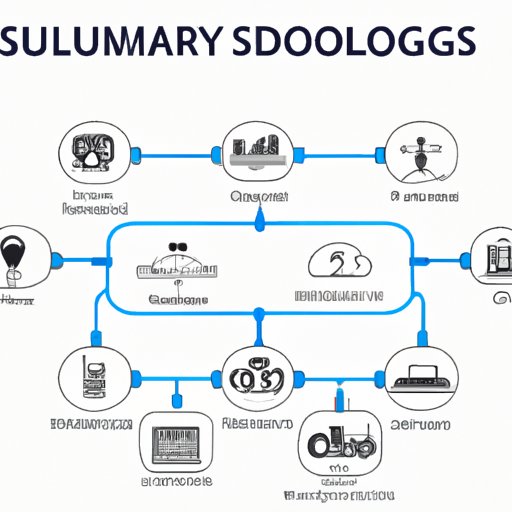
At its core, a supply chain consists of four fundamental elements: suppliers, manufacturers, distributors and customers. These four components form the basis of the supply chain and work together to produce, store and deliver goods and services to customers. The goal of SCM is to minimize costs while maximizing customer satisfaction.
There are several types of supply chains, each with its own unique characteristics. The most common type of supply chain is the linear supply chain, which follows a straight path from supplier to manufacturer to distributor to customer. Another type of supply chain is the circular supply chain, which involves a looping process where products are recycled after they have been used. Finally, there is the reverse supply chain, which focuses on collecting and disposing of used products.

How Supply Chains Drive Business Success
An effective supply chain can be a major source of competitive advantage for businesses. Let’s take a look at some of the ways supply chains can help drive business success:
Cost Savings: By streamlining processes and reducing waste, businesses can save money on production costs. Additionally, efficient supply chains can reduce inventory costs, as companies need less storage space and fewer materials.
Improved Efficiency: An optimized supply chain increases operational efficiency, allowing businesses to get products to market faster and more efficiently. This can lead to improved customer satisfaction, as customers receive their orders sooner.
Enhanced Customer Satisfaction: An efficient supply chain can also lead to improved customer satisfaction. By optimizing the process, businesses can ensure that customers are receiving the highest quality products in a timely manner.
The Role of Technology in Modern Supply Chains
Technology has become increasingly important in today’s supply chains. Let’s take a look at some of the ways technology is being used to improve supply chain operations:
Automation and Robotics: Automation and robotics are being used to streamline manufacturing processes and reduce labor costs. Automated systems can automate repetitive tasks, such as packaging and labeling, reducing the time and cost associated with manual labor.
Data Analytics: Data analytics can be used to analyze supply chain data and identify areas of improvement. By understanding customer demand and trends, businesses can optimize their supply chain operations and reduce costs.
Cloud Computing: Cloud computing can be used to store and share supply chain data securely. By storing data in the cloud, businesses can access it from anywhere at any time, making it easier to manage their supply chains.

Understanding the Complexity of Global Supply Chains
Global supply chains present a unique set of challenges. Here are some of the most common issues faced by businesses when dealing with cross-border transactions:
Challenges of Cross-Border Transactions: Cross-border transactions can be complicated due to differences in regulations, taxes and currency exchange rates. Businesses must be aware of these differences and plan accordingly to ensure smooth operations.
Regulatory Complications: Different countries have different regulations when it comes to the import and export of goods. Companies must be aware of these regulations and comply with them to avoid costly delays and penalties.
Managing Currency Exchange Rates: Fluctuations in currency exchange rates can have a significant impact on businesses. Companies must monitor these changes and adjust their pricing accordingly to remain competitive in global markets.

Analyzing the Benefits of Optimizing Supply Chains
By streamlining processes and leveraging the latest technologies, businesses can optimize their supply chains and reap a number of benefits:
Reduced Costs: Optimizing the supply chain can lead to reduced costs, as businesses can eliminate unnecessary steps and streamline processes. Additionally, businesses can reduce inventory costs by using just-in-time inventory management.
Improved Quality Control: An optimized supply chain can also lead to improved quality control, as businesses can leverage technologies such as data analytics to ensure that products meet customer expectations.
Increased Visibility: Leveraging technologies such as cloud computing can give businesses greater visibility into their supply chain operations. This can help them identify potential problems before they occur and take corrective action.
Conclusion
In conclusion, supply chain management is a complex and ever-evolving field. By understanding the fundamentals of SCM and leveraging the latest technologies, businesses can optimize their supply chains and reap a number of benefits, including cost savings, improved efficiency and enhanced customer satisfaction.
By taking the time to understand the complexities of supply chain management and exploring the potential of modern technologies, businesses can position themselves to succeed in today’s global marketplace.
Summary
This article provided a comprehensive overview of supply chain management and explored how it can help businesses increase efficiency, reduce costs and improve customer satisfaction. It examined the four fundamental elements of a supply chain, the various types of supply chains, and the role of technology in modern supply chains. It also discussed the complexity of global supply chains and the benefits of optimizing supply chains. Ultimately, this article demonstrated the importance of supply chains and their potential to drive business success.
Final Thoughts
As businesses continue to expand into global markets, it is essential that they understand the complexities of supply chain management and leverage the latest technologies to optimize their operations. By doing so, businesses can position themselves to maximize profits, reduce costs and improve customer satisfaction.
(Note: Is this article not meeting your expectations? Do you have knowledge or insights to share? Unlock new opportunities and expand your reach by joining our authors team. Click Registration to join us and share your expertise with our readers.)