
Introduction
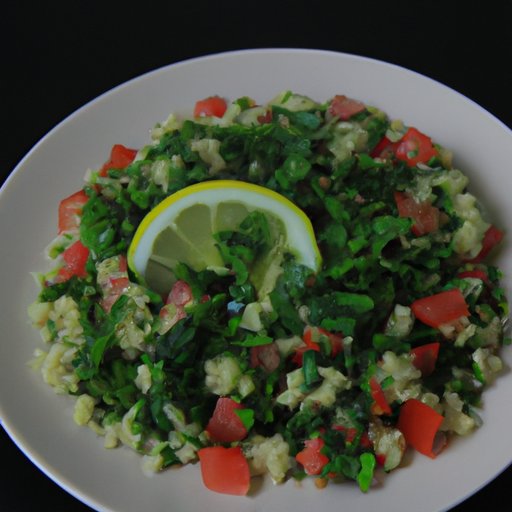
Tabbouleh is a traditional Middle Eastern dish that’s becoming increasingly popular around the world. It’s a salad made of bulgur wheat, chopped parsley, tomatoes, cucumbers, onion, mint, and lemon juice, among other ingredients. It’s usually served with lettuce leaves and eaten as an appetizer or side dish. But is tabbouleh healthy? In this article, we’ll explore the nutritional benefits of eating tabbouleh, as well as the potential drawbacks. We’ll also look at how to make a healthy and delicious tabbouleh at home.
Exploring the Nutritional Benefits of Tabbouleh
Tabbouleh is a nutrient-dense food. It’s high in fiber, vitamins, minerals, and antioxidants. Here’s a look at some of the macronutrients and micronutrients found in tabbouleh:
Macronutrients in Tabbouleh
Tabbouleh contains a variety of macronutrients, including protein, carbohydrates, and fats. Here’s a breakdown of the macronutrients in a typical serving of tabbouleh:
- Protein: 5 grams
- Carbohydrates: 19 grams
- Fats: 2.5 grams
Vitamins and Minerals in Tabbouleh
Tabbouleh is also a good source of several essential vitamins and minerals. Here are some of the vitamins and minerals found in a typical serving of tabbouleh:
- Vitamin A: 12% of the RDI
- Vitamin C: 7% of the RDI
- Vitamin K: 28% of the RDI
- Iron: 4% of the RDI
- Potassium: 6% of the RDI
- Magnesium: 3% of the RDI
Is Tabbouleh a Healthy Choice for Your Diet?
Tabbouleh is a healthy choice for your diet. It’s low in calories and fat, but high in fiber and other essential nutrients. Plus, it’s easy to make and can be enjoyed as part of a balanced meal or snack. There are, however, a few potential drawbacks to consider.
Benefits of Eating Tabbouleh
Eating tabbouleh may offer several potential health benefits. Here are some of the most notable benefits of adding tabbouleh to your diet:
- It’s high in fiber, which can help support healthy digestion.
- It’s rich in antioxidants, which can help reduce inflammation and protect against disease.
- It’s low in calories and fat, making it a good choice for weight management.
- It’s a good source of plant-based protein, which can help you meet your daily protein needs.

Potential Drawbacks of Eating Tabbouleh
Though tabbouleh is generally considered a healthy food, there are a few potential drawbacks to consider. First, it’s high in sodium, so it’s important to watch your salt intake if you’re trying to reduce your sodium consumption. Second, it’s made with bulgur wheat, which is a type of whole grain that can cause digestive issues in some people. If you have a sensitive stomach, you may want to avoid tabbouleh or opt for a gluten-free alternative.

The Health Benefits of Eating Tabbouleh
Eating tabbouleh may offer a variety of health benefits. Here are some of the most notable ones:
Heart Health
Tabbouleh is a good source of dietary fiber, which has been linked to a lower risk of heart disease. Fiber helps reduce cholesterol levels and keep blood sugar levels stable, both of which are important for maintaining a healthy heart.
Weight Management
Tabbouleh is low in calories and fat, but high in fiber. This makes it a great choice for those trying to lose or maintain their weight. The fiber content in tabbouleh will help you feel full longer, which can help you avoid overeating or snacking too much throughout the day.
Improved Digestion
The high fiber content in tabbouleh can help improve digestion by increasing the number of beneficial bacteria in the gut. This can help reduce symptoms of bloating, constipation, and other digestive issues.

How to Make a Healthy and Delicious Tabbouleh
Making tabbouleh is easy and only takes a few minutes. Here’s what you’ll need:
- 1 cup of bulgur wheat
- 2 cups of boiling water
- 1/4 cup of olive oil
- 1/4 cup of lemon juice
- 1/4 cup of chopped parsley
- 1/4 cup of chopped mint
- 1/2 cup of diced tomatoes
- 1/2 cup of diced cucumber
- 1/4 cup of chopped onion
- Salt and pepper to taste
Here’s how to make tabbouleh:
- Combine the bulgur wheat and boiling water in a large bowl. Cover the bowl and let it sit for 20 minutes.
- Add the olive oil, lemon juice, parsley, mint, tomatoes, cucumber, onion, salt, and pepper to the bowl and mix until everything is evenly combined.
- Serve the tabbouleh with lettuce leaves or as a side dish.

A Look at the Macronutrients in Tabbouleh
Tabbouleh is a good source of several macronutrients, including protein, carbohydrates, and fats. Here’s a closer look at the macronutrients in tabbouleh:
Protein
Tabbouleh contains 5 grams of protein per serving. Protein is an important nutrient for building muscle, maintaining energy levels, and keeping your immune system strong.
Carbohydrates
Tabbouleh contains 19 grams of carbohydrates per serving. Most of these carbohydrates come from the bulgur wheat, which is a whole grain. Whole grains are an important source of energy and can help you feel fuller longer.
Fats
Tabbouleh contains 2.5 grams of fat per serving. Most of this fat comes from the olive oil, which is a healthy source of monounsaturated fat. Monounsaturated fat is linked to a lower risk of heart disease and can help reduce inflammation.
Comparing Nutrition in Traditional vs. Modern Tabbouleh Recipes
Tabbouleh recipes vary depending on the region and culture. Traditional tabbouleh recipes typically use fewer ingredients, while modern recipes often include additional ingredients such as nuts, seeds, and dried fruit. Here’s a comparison of the nutrition in a traditional tabbouleh recipe versus a modern tabbouleh recipe:
Traditional Tabbouleh Recipe
This traditional tabbouleh recipe includes bulgur wheat, parsley, tomatoes, cucumbers, onion, olive oil, and lemon juice. It contains 125 calories, 4.5 grams of fat, 21 grams of carbohydrates, and 4 grams of protein per serving.
Modern Tabbouleh Recipe
This modern tabbouleh recipe includes bulgur wheat, parsley, tomatoes, cucumbers, onion, almonds, dried cranberries, olive oil, and lemon juice. It contains 212 calories, 8 grams of fat, 32 grams of carbohydrates, and 6 grams of protein per serving.
Conclusion
Tabbouleh is a nutrient-dense food that can be a healthy addition to your diet. It’s low in calories and fat, but high in fiber, vitamins, minerals, and antioxidants. Eating tabbouleh may offer a variety of health benefits, including improved heart health, weight management, and digestion. However, it’s important to watch your sodium intake if you’re trying to reduce your sodium consumption, and it may not be suitable for those with sensitive stomachs. Making a healthy and delicious tabbouleh at home is easy and only takes a few minutes. Give it a try and see if you enjoy it!
Final Thoughts
Tabbouleh is a delicious and nutritious Middle Eastern dish that can be a healthy addition to your diet. Eating tabbouleh may offer a variety of health benefits, including improved heart health, weight management, and digestion. If you’re looking for a flavorful and nutritious way to add more vegetables to your diet, give tabbouleh a try.
(Note: Is this article not meeting your expectations? Do you have knowledge or insights to share? Unlock new opportunities and expand your reach by joining our authors team. Click Registration to join us and share your expertise with our readers.)