
Introduction
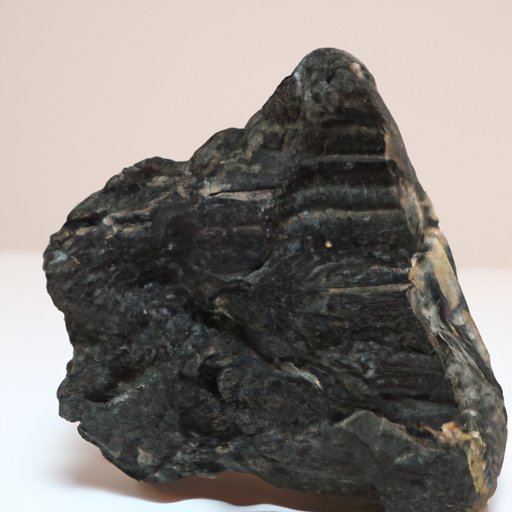
Rocks and minerals are two distinct categories of natural resources that have been studied by humans since antiquity. While they may appear similar to the untrained eye, there are several key differences between them. This article will explore the characteristics of rocks and minerals, examine how geology impacts rock formation, and provide an overview of the history of mineralogy and its relation to these two resources. Additionally, this article will discuss the impact of mining on rocks and minerals, as well as current conservation efforts for each.
An Overview of Rocks and Minerals: What is the Difference?
In order to understand the distinction between rocks and minerals, it is important to first define each term. According to the United States Geological Survey (USGS), “a rock is any naturally occurring solid mass or aggregate of minerals or mineraloids.” In other words, a rock is a combination of one or more minerals, which are defined as “naturally occurring inorganic solids that have a definite chemical composition and ordered internal structure.”
To further explain the difference between rocks and minerals, let’s look at some common examples. Granite is a type of igneous rock that is made up of three minerals – quartz, feldspar, and mica. On the other hand, diamond is a mineral composed of pure carbon atoms. While granite is a combination of different minerals, diamond is simply a single mineral.
A Comparison of Rocks and Minerals: Unique Properties and Uses
The physical and chemical properties of rocks and minerals determine their various uses. For instance, rocks such as granite and marble are often used as building materials due to their strength and durability. Minerals such as quartz and diamond, on the other hand, have optical and electrical properties that make them valuable in the electronics industry. Additionally, some minerals, such as gold and silver, can be used as currency.
In terms of physical properties, rocks and minerals have different luster, color, and hardness. Luster describes the way a substance reflects light, while color refers to the hue of the material. The Mohs scale of hardness is used to measure the relative hardness of rocks and minerals, with talc being the softest and diamond being the hardest.
Chemical properties also differ between rocks and minerals. Rocks are composed of two or more minerals, so their chemical makeup is determined by the individual minerals that make up the rock. Minerals, on the other hand, have a consistent chemical composition, which allows them to be identified easily.
How Geology Impacts Rock Formation: Exploring the Types of Rocks
Geology is the study of the Earth’s surface, including the processes that shape it. Rocks form through a variety of geological processes, including volcanic activity, weathering, and erosion. Depending on the conditions under which they form, rocks can be categorized into three main types: igneous, sedimentary, and metamorphic.
Igneous rocks form when molten rock (magma) cools and solidifies. Examples of igneous rocks include basalt and granite. Sedimentary rocks are formed by the accumulation and cementation of sediment, such as sand and pebbles. Examples of sedimentary rocks include limestone and sandstone. Metamorphic rocks form when existing rocks are altered by extreme pressure or temperature, such as heat from magma. Examples of metamorphic rocks include slate and marble.

Examining the History of Mineralogy: The Role of Rocks and Minerals
The study of rocks and minerals has a long and rich history. Ancient civilizations believed that rocks and minerals had special properties that could be used for medicinal, religious, and magical purposes. As advances in science and technology were made, modern approaches to mineralogy emerged.
Today, mineralogy is an important field of study in geology. It is used to identify and classify minerals, as well as to study the properties of rocks and minerals and their formation. Mineralogists use microscopes, X-ray diffraction, and other tools to analyze the structure and composition of minerals.

Investigating the Impact of Mining on Rocks and Minerals
Mining is the process of extracting rocks and minerals from the ground. While mining can be beneficial in terms of providing economic opportunities, it can also have a negative impact on the environment. Mining can disrupt ecosystems, contaminate water sources, and cause air pollution.
Mining also has social and economic impacts. It can lead to displacement of local communities and increased inequality. Additionally, many workers in the mining industry are vulnerable to exploitation due to lack of labor protections.

Understanding Conservation Efforts for Rocks and Minerals
Conservation efforts for rocks and minerals focus on sustainable practices in the mining industry, as well as protecting endangered species. Sustainable practices involve using renewable energy sources, reducing waste, and recycling materials. Additionally, governments and organizations are working to protect endangered rocks and minerals, such as certain types of coral and gemstones.
Conclusion
This article has explored the similarities and differences between rocks and minerals, as well as the history of mineralogy and its role in today’s society. Additionally, this article has examined the impact of mining on rocks and minerals, and discussed the importance of conservation efforts for both. Through this exploration, it is clear that rocks and minerals are two distinct categories of natural resources with unique properties and uses.
(Note: Is this article not meeting your expectations? Do you have knowledge or insights to share? Unlock new opportunities and expand your reach by joining our authors team. Click Registration to join us and share your expertise with our readers.)