

Introduction: What is Ethereum?
Ethereum is a decentralized, open source blockchain network that allows users to create and execute smart contracts and decentralized applications (dApps). It was launched in 2015 by Vitalik Buterin, a Russian-Canadian programmer, and has since become one of the most popular and widely used blockchain platforms. Ethereum stands out from other blockchain networks mainly due to its ability to create smart contracts, which are self-executing pieces of code that can carry out predetermined actions when certain conditions are met. Ethereum’s native cryptocurrency, Ether (ETH), is also used to pay for transaction fees on the network.
Unlike Bitcoin, which is designed to be a digital currency and store of value, Ethereum is a more versatile platform with a wider range of use cases. Ethereum is often referred to as a “world computer” because of its ability to host dApps and run smart contracts. This makes it an attractive platform for developers and businesses looking to build decentralized applications and services.
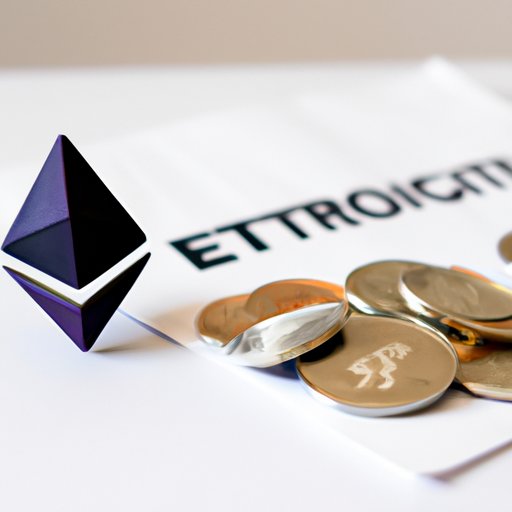
Investing in Ethereum: What You Need to Know
Ethereum has become one of the most popular investments in the crypto space. But before investing in Ethereum, it’s important to understand the risks and rewards associated with this type of investment. Here are some key points to consider.
Advantages and disadvantages of investing in Ethereum
The primary advantage of investing in Ethereum is that it offers potential for high returns. Ethereum is one of the top cryptocurrencies by market cap and has seen tremendous growth over the past few years. Furthermore, the Ethereum network is constantly evolving and new features are being added on a regular basis, which could further drive up the price of ETH.
On the other hand, there are several risks associated with investing in Ethereum. The cryptocurrency market is highly volatile, meaning that prices can rise and fall rapidly. This makes it difficult to predict the future price of Ethereum and other cryptocurrencies. Additionally, Ethereum is still a relatively new technology, so there is always the risk of unforeseen issues or bugs that could affect the price.
Understanding Ethereum’s market cap and price volatility
It’s important to understand Ethereum’s market cap and price volatility before investing. Ethereum’s market cap is the total value of all Ether tokens in circulation, and it gives investors an idea of how much the entire network is worth. Ethereum’s price volatility refers to how quickly the price of ETH changes over time. Ethereum tends to be more volatile than other cryptocurrencies, which means that prices can rise and fall quickly.
Exploring Ethereum’s potential as an investment option
Although Ethereum is a risky investment, it has the potential to offer high returns. Many investors view Ethereum as a long-term investment, as opposed to a short-term “get rich quick” scheme. Investing in Ethereum requires research and due diligence, but the rewards can be significant if done correctly.

The Benefits and Risks of Ethereum Trading
Ethereum trading can be a lucrative way to generate profits, but it comes with its own set of risks. Here’s a look at the benefits and risks of trading Ethereum.
Benefits of trading Ethereum
One of the main benefits of trading Ethereum is that it can be done 24/7. Ethereum is traded on a variety of exchanges around the world, so traders can take advantage of price movements regardless of the time of day. Additionally, Ethereum trading can be done with leverage, meaning that traders can borrow money to increase their buying power. This can potentially lead to higher profits.
Risks associated with trading Ethereum
As with any form of investing, trading Ethereum carries certain risks. The cryptocurrency market is highly volatile and prices can fluctuate quickly. This means that traders can potentially lose money if they don’t properly manage their positions. Additionally, Ethereum trading involves margin trading, which can amplify both gains and losses. Therefore, it’s important to have a firm understanding of the risks involved before trading Ethereum.
Exploring Ethereum’s Smart Contract Technology
Ethereum’s smart contract technology is one of its most powerful features. It enables developers to create self-executing pieces of code that can carry out predetermined actions when certain conditions are met. This has opened up a world of possibilities for developers and businesses looking to automate processes and reduce costs.
Overview of smart contracts
Smart contracts are automated contracts that are written in code. They are stored on the Ethereum blockchain and can be executed when certain conditions are met. For example, a smart contract can be used to automatically send funds from one person to another when a specific event occurs. Smart contracts are secure, transparent, and immutable, making them ideal for automating complex processes.
Advantages of using Ethereum’s smart contract technology
Ethereum’s smart contract technology offers several advantages for developers and businesses. It eliminates the need for third parties, reduces costs, and increases efficiency. Additionally, since smart contracts are stored on the blockchain, they are secure and immutable, ensuring that the terms of the agreement are enforced.
Potential pitfalls of using Ethereum’s smart contract technology
Although Ethereum’s smart contract technology offers many benefits, there are some potential pitfalls that should be considered. Smart contracts are prone to errors and bugs, which can have serious consequences if not addressed quickly. Additionally, since smart contracts are stored on the blockchain, they are immutable and cannot be changed once deployed. This means that mistakes cannot be undone unless the contract is completely rewritten.

An Overview of Ethereum Mining
Ethereum mining is the process of verifying transactions on the Ethereum blockchain and adding them to the blockchain ledger. Miners use specialized hardware to solve complex mathematical problems in order to validate transactions and earn rewards in the form of Ether (ETH).
Overview of Ethereum mining process
Ethereum mining is done using specialized computers called miners. Miners use their computing power to solve complex cryptographic puzzles in order to verify transactions and add them to the blockchain. When a miner successfully verifies a transaction, they receive a reward in the form of Ether (ETH).
Pros and cons of Ethereum mining
Ethereum mining offers several advantages. Miners can earn rewards in the form of Ether (ETH) and can potentially profit from rising ETH prices. Additionally, mining provides an incentive for users to participate in the Ethereum network and helps to secure it against malicious actors. On the other hand, Ethereum mining can be costly and energy-intensive, so it’s important to weigh the pros and cons before deciding to mine.
Strategies for successful Ethereum mining
Successful Ethereum mining requires careful planning and the right hardware. Miners should consider factors such as hardware and electricity costs, mining difficulty, and potential rewards before deciding to mine. Additionally, miners should monitor the Ethereum network for changes that may affect their mining strategy.
How to Buy and Store Ethereum Safely
Buying and storing Ethereum safely is an important step in becoming an Ethereum investor. Here’s what you need to do to buy and store Ethereum securely.
Options for buying Ethereum
There are several ways to buy Ethereum. Popular options include cryptocurrency exchanges, peer-to-peer marketplaces, and over-the-counter (OTC) brokers. Each option has its own advantages and disadvantages, so it’s important to do your research before choosing the best option for you.
Security considerations for storing Ethereum
Once you’ve bought Ethereum, it’s important to store it securely. The safest way to store Ethereum is in a hardware wallet, which is an offline device that stores your private keys. Additionally, it’s important to keep your private keys secure and backed up in case you lose access to your wallet.
Understanding Ethereum’s Role in the Future of Blockchain Technology
Ethereum has the potential to revolutionize the way we use blockchain technology. Here’s a look at Ethereum’s role in the future of blockchain.
Overview of Ethereum’s role in the blockchain landscape
Ethereum is one of the leading platforms for developing decentralized applications and services. It’s also one of the most popular blockchain networks, with a large and growing community of developers and users. As Ethereum continues to evolve, it will likely play an increasingly important role in the development of blockchain technology.
Potential applications of Ethereum’s technology
Ethereum’s technology has the potential to be used in a wide range of industries. It can be used to create decentralized versions of existing services, such as banking and finance, as well as entirely new types of services that were not previously possible. Additionally, Ethereum’s smart contract technology can be used to automate complex processes and reduce costs. The possibilities are virtually limitless.
Conclusion
In conclusion, Ethereum is a powerful and versatile blockchain network that has the potential to revolutionize the way we use blockchain technology. It offers a wide range of use cases, from investing and trading to mining and building decentralized applications. It’s an exciting technology to watch, and one that is sure to continue to evolve in the years to come.
(Note: Is this article not meeting your expectations? Do you have knowledge or insights to share? Unlock new opportunities and expand your reach by joining our authors team. Click Registration to join us and share your expertise with our readers.)