
Introduction
Artificial intelligence (AI) and machine learning (ML) have become commonplace terms in today’s technology world. As AI and ML continue to be developed and applied across various industries, it is essential to understand the differences between these two concepts. This article will explore the differences between AI and ML, provide examples of both, and discuss how they are used in different industries.

Exploring the Difference Between AI and Machine Learning
Before diving into the core differences between AI and ML, let’s first define each term. AI is an umbrella term that covers a range of technologies such as natural language processing (NLP), robotics, and computer vision. According to IBM Watson, AI “encompasses anything that would enable machines to perceive, learn, reason, or act in a manner that we would consider ‘intelligent’.”
Machine learning, on the other hand, is a subset of AI. It involves using algorithms to parse data, learn from it, and then make decisions with minimal human intervention. According to McKinsey & Company, machine learning “enables computers to improve their accuracy and performance over time without being explicitly programmed.”
When making decisions between utilizing AI or machine learning, there are pros and cons to each. AI can process large amounts of data quickly and accurately, but it can also be expensive and time-consuming to develop. Machine learning, on the other hand, can be more cost-efficient and faster to develop, but it requires a lot of data and can be prone to errors if the data is incomplete or inaccurate.
A Comprehensive Guide to Understanding the Difference Between AI and Machine Learning
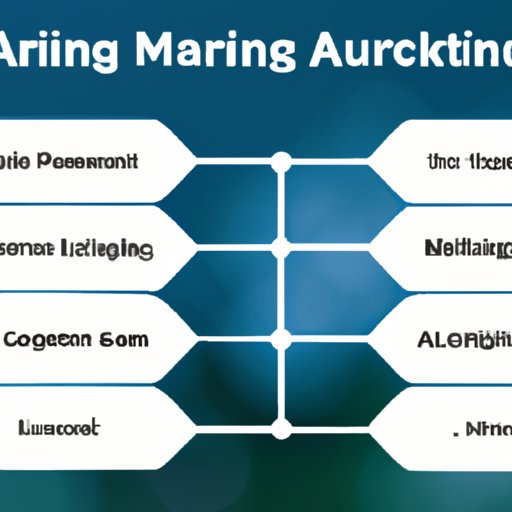
Now that we’ve explored the definitions of AI and machine learning, let’s take a look at how they differ. At their core, AI is focused on creating intelligent systems that can perform tasks like humans, while machine learning is focused on creating systems that can learn from data and make predictions or decisions based on that data.
Let’s look at some examples of AI and machine learning. AI can be seen in applications such as chatbots, which can understand natural language and respond accordingly. Machine learning can be seen in applications such as facial recognition software, which uses algorithms to detect faces in images.
How AI and Machine Learning are Used in Different Industries
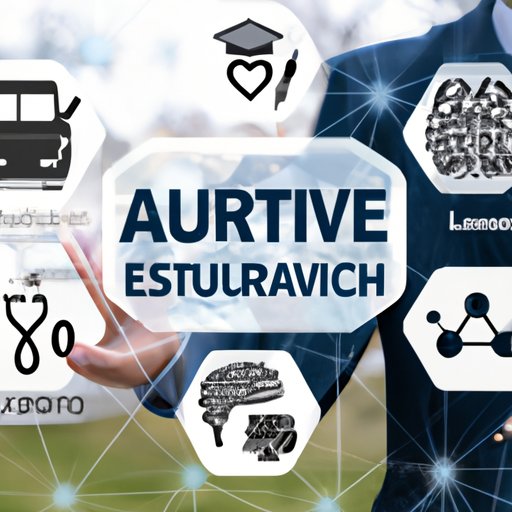
AI and machine learning are being used in a variety of industries, from healthcare to autonomous vehicles. In healthcare, AI and machine learning are being used to diagnose diseases and develop personalized treatments for patients. In business, AI and machine learning are being used to automate processes and improve customer service. And in autonomous vehicles, AI and machine learning are being used to help the cars navigate safely and efficiently.
According to a study by Accenture, “AI-driven automation could increase labor productivity by up to 40 percent, while machine learning could reduce costs by up to 30 percent and increase revenues by up to 10 percent.” The study also found that “AI and machine learning could create $14 trillion in additional economic value by 2035.”
Conclusion
In conclusion, AI and machine learning are two distinct yet related concepts that are being used in a variety of industries to improve efficiency, accuracy, and productivity. While AI focuses on creating intelligent systems that can perform tasks like humans, machine learning focuses on creating systems that can learn from data and make decisions based on that data. AI and machine learning have the potential to generate enormous economic value, but it is important to understand the differences between the two concepts in order to maximize their potential.
(Note: Is this article not meeting your expectations? Do you have knowledge or insights to share? Unlock new opportunities and expand your reach by joining our authors team. Click Registration to join us and share your expertise with our readers.)