
Introduction
Beer is one of the oldest alcoholic beverages in the world. Its origins can be traced back thousands of years to ancient civilizations and it has had a profound impact on human culture and society. But how exactly was beer invented? In this article, we will explore the history and science of beer brewing, investigate the cultural significance of beer, and debunk some common myths about the invention of beer.
Historical Perspective: Tracing the Origin of Beer
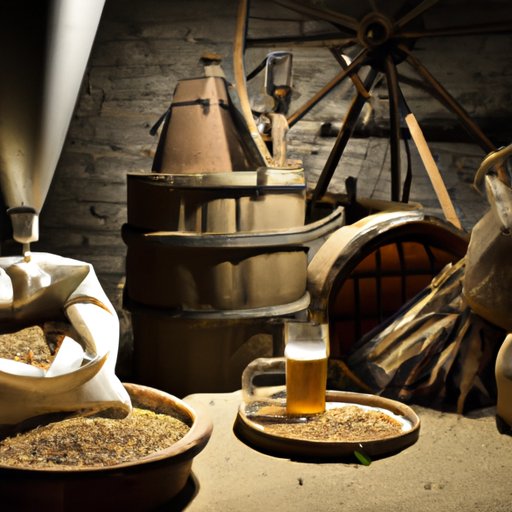
Before delving into the details of beer brewing, let’s take a look at the historical perspective. Archeological evidence suggests that beer-like beverages were being brewed as early as 10,000 BC. The earliest known written records of beer date back to Mesopotamia in 1800 BC. This ancient civilization used beer in religious rituals, and it was also consumed for sustenance.
Beer was also popular in ancient Egypt, where it was brewed from barley and consumed by both the upper and lower classes. The Egyptians used beer as a form of currency and even had their own beer gods.
In medieval Europe, beer became an important part of daily life. Monasteries began to brew beer as a way to provide sustenance to their monks, and it quickly spread to the general population. As beer production increased, so did the complexity of beer recipes. By the 16th century, hops had become a regular ingredient in beer brewing.

Exploring the Science Behind Beer Brewing
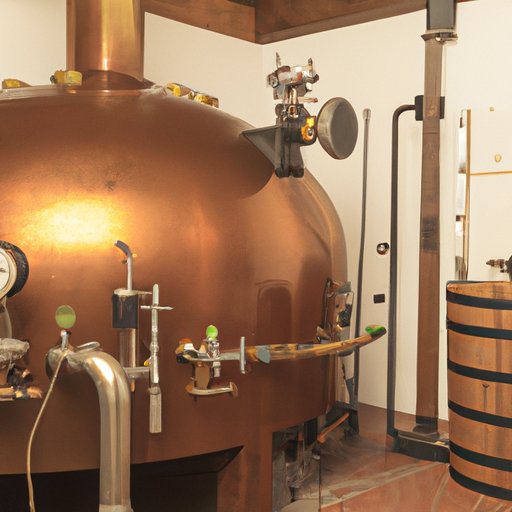
Now that we have an understanding of the history of beer, let’s explore the science behind beer brewing. Beer is made up of four main ingredients: malt, yeast, hops, and water. Malt is a grain, usually barley, that is malted and crushed to release the sugars needed for fermentation. Yeast is added to the mixture to convert the sugars into alcohol. Hops are added for flavor, aroma, and bitterness, and water makes up the majority of the beer.
The brewing process involves boiling the mixture of malt, hops, and water to extract the flavor and aroma from the hops. This is followed by cooling the mixture and adding the yeast, which begins the fermentation process. During fermentation, the yeast consumes the sugars and produces alcohol and carbon dioxide. The resulting liquid is then filtered and bottled or canned.
Fermentation plays an important role in the flavor and aroma of beer. Different types of yeast produce different flavors, and different levels of fermentation create different styles of beer. For example, a lager beer is fermented at a low temperature for a longer period of time, while an ale is fermented at a higher temperature for a shorter period of time.
Examining the Cultural Significance of Beer Throughout History
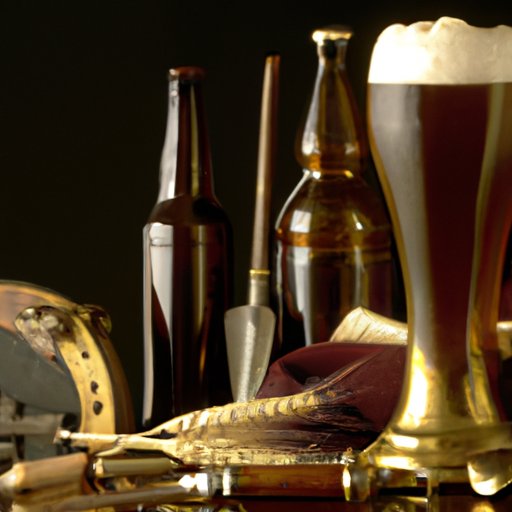
Beer has had a huge impact on human culture and society. It has been used as a social lubricant since ancient times, when it was consumed in large quantities during festivals and other celebrations. Beer was also an important part of religious ceremonies, particularly in ancient Egypt.
Beer has played a prominent role in popular culture as well. From Homer’s Odyssey to modern day films and television shows, beer has been a constant presence in literature and entertainment. Beer commercials are a staple of advertising, and beer festivals and tasting events are popular all around the world.
Investigating the Different Styles and Flavors of Beer
There are two main categories of beer – ales and lagers. Ales are fermented at a higher temperature and for a shorter period of time, resulting in a sweeter, fuller-bodied beer. Lagers are fermented at a lower temperature and for a longer period of time, resulting in a crisp, clean taste.
In addition to the two basic styles, there are also many regional differences in beer. Different regions have their own unique styles and flavors, such as German wheat beers, English bitters, and Belgian saisons. There are also specialty beers, such as fruit beers, sour beers, and barrel-aged beers.
Debunking Common Myths About the Invention of Beer
There are several myths and misconceptions about the origin of beer. One popular myth is that beer was first brewed in Babylon. In reality, beer was first brewed in ancient Mesopotamia, which is now part of Iraq.
Another popular myth is that beer was invented by the Sumerians. While the Sumerians did play an important role in the development of beer, they did not invent it. Beer was likely invented independently by multiple cultures around the world.
Finally, there is the myth that the only way to make a good beer is to use the best ingredients. While quality ingredients are important, the most important factor in making a good beer is the skill of the brewer. A skilled brewer can make a delicious beer with simple ingredients.
Conclusion
In conclusion, beer is one of the oldest alcoholic beverages in the world and its history stretches back thousands of years. We have explored the science behind beer brewing, examined the cultural significance of beer throughout history, and investigated the different styles and flavors of beer. Finally, we debunked some common myths about the invention of beer.
Beer has played an important role in human culture and society for centuries. Whether you’re enjoying a pint at your local pub or brewing your own beer at home, there’s no denying the power of beer and its impact on history.
(Note: Is this article not meeting your expectations? Do you have knowledge or insights to share? Unlock new opportunities and expand your reach by joining our authors team. Click Registration to join us and share your expertise with our readers.)