
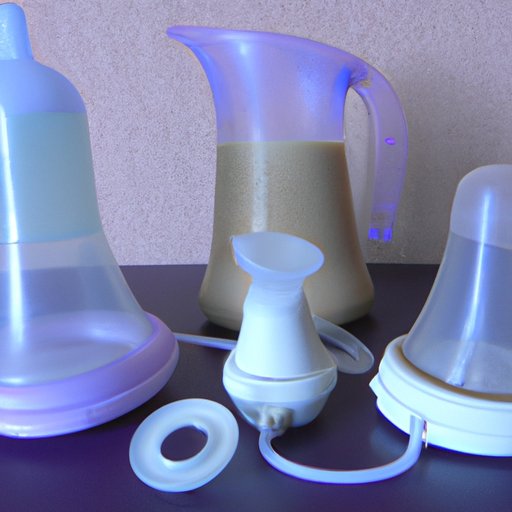
Introduction
Pumping is an important part of breastfeeding, as it allows moms to provide milk for their baby even when they are not able to be there. In this article, we will explore the benefits of pumping, how to identify the right equipment, learning the basics of pumping, timing, tips for success, and common challenges.
Benefits of Pumping
Pumping has many benefits for both baby and mom. One study found that pumping can improve milk production and supply, making it easier for mothers to exclusively breastfeed their babies for a longer period of time. Additionally, pumping can make breastfeeding easier, as it allows for more flexibility in terms of scheduling and location. It also provides more bonding time for mom and baby, as the two can still be together while mom is pumping. Finally, pumping can provide more convenience for parents, as it allows them to store expressed milk and feed their baby when necessary.
Identifying the Right Equipment
When it comes to choosing the right equipment for pumping, there are several things to consider. First, you need to decide what type of pump is best for you. Manual pumps are less expensive and more portable, but require more effort from the user. Electric pumps are more efficient and often come with more features, but can be more expensive. You also need to choose the right bottles and accessories, such as collection containers and storage bags.
Learning the Basics of Pumping
Once you have chosen the right pump and bottles, it is time to learn the basics of pumping. This includes setting up and using the pump properly, cleaning the pump regularly, and storing expressed milk safely. It is important to follow all manufacturer instructions carefully in order to ensure proper use of the pump.
Timing
When it comes to timing, it is important to know when and how often to pump. Generally, it is recommended to pump at least 8 times per day in order to maintain a good milk supply. You should also try to pump at least once every 3-4 hours during the day, and at least once at night.
Tips for Success
There are several tips that can help increase the success of your pumping journey. First, it is important to relax and take deep breaths before and during pumping, as this can help increase milk production. Additionally, it is important to properly store expressed milk in order to maintain its quality and safety. Finally, it is important to drink plenty of water and eat a balanced diet in order to keep up your energy levels and maintain a good milk supply.
Common Challenges
While pumping can be a great experience, there are some common challenges that may arise. Low milk supply is one of the most common issues, and can be caused by a variety of factors, such as stress or dehydration. Engorgement can also occur, which is when the breasts become swollen and tender due to too much milk. Finally, sore nipples can be a problem, as the pumping process can cause irritation.
Conclusion
In conclusion, pumping can be a great way to provide milk for your baby, even when you are not able to be there. There are many benefits of pumping, including improved milk production, easier breastfeeding, more bonding time with baby, and increased convenience for parents. When starting out, it is important to identify the right equipment, learn the basics of pumping, and understand when and how often to pump. Additionally, there are some tips and tricks that can help you succeed, as well as some common challenges that you may face. With the right knowledge and support, pumping can be a rewarding and successful experience.
(Note: Is this article not meeting your expectations? Do you have knowledge or insights to share? Unlock new opportunities and expand your reach by joining our authors team. Click Registration to join us and share your expertise with our readers.)