
Introduction
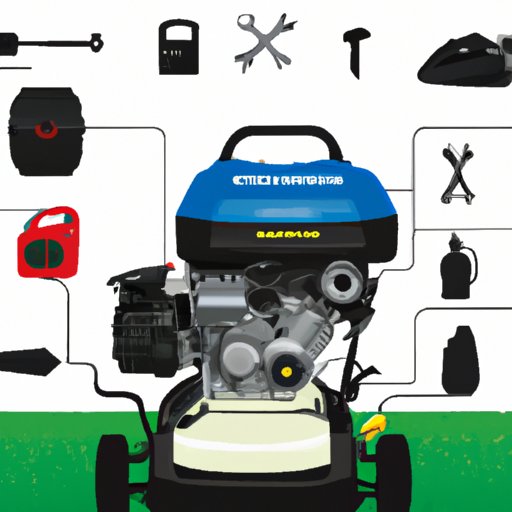
If you’re having trouble getting your lawn mower to start, you’re not alone. This is a common problem that many homeowners face, but it is usually quite easy to fix. In this article, we will provide a step-by-step guide on how to get your lawn mower to start so that you can get back to mowing your lawn in no time.

Step 1: Check the spark plug and replace if necessary
The first thing you should do when trying to get your lawn mower to start is to check the spark plug. The spark plug is responsible for delivering an electric spark to the combustion chamber of the engine, which helps to ignite the air/fuel mixture and start the engine. To check the spark plug, remove it from the engine and inspect it for signs of damage or wear. If it looks worn or damaged, you should replace it with a new spark plug.
Step 2: Inspect the air filter and clean or replace if needed
The air filter plays an important role in the functioning of your lawn mower’s engine. It filters out dirt and debris from the air entering the engine, ensuring that only clean air is used for combustion. To inspect the air filter, remove it from the engine and inspect it for signs of wear or damage. If it looks dirty or clogged, you should clean it using a vacuum cleaner or compressed air. If it looks worn or damaged, you should replace it with a new one.
Step 3: Make sure the fuel tank is full of fresh gasoline
The next step you should take is to make sure that the fuel tank is full of fresh gasoline. To check the fuel tank, open the tank and inspect the fuel level. If the fuel level is low, you should top it up with fresh gasoline. It is also important to note that gasoline can go bad over time, so you should make sure that you are using fresh gasoline for your lawn mower.

Step 4: Check the oil level and add more if needed
The oil level in your lawn mower’s engine is also important for proper functioning. To check the oil level, remove the dipstick from the engine and inspect it for the correct oil level. If the oil level is low, you should top it up with the recommended type of oil for your lawn mower. It is also important to note that oil can go bad over time, so you should make sure that you are using fresh oil in your lawn mower.

Step 5: Check the battery and charge it if necessary
If your lawn mower has an electric starter, you should also check the battery to make sure it is charged. To check the battery, use a multimeter to measure the voltage of the battery. If the voltage is below 12 volts, you should charge the battery before attempting to start the engine. You can use a battery charger or jumpstart the battery using another vehicle.

Step 6: Test the ignition switch and replace if not working
The ignition switch is responsible for sending an electric current to the spark plug, which helps to start the engine. To test the ignition switch, turn the key and listen for a clicking sound. If there is no clicking sound, you should replace the ignition switch.
Step 7: Prime the carburetor before attempting to start the engine
Finally, it is important to prime the carburetor before attempting to start the engine. Priming the carburetor ensures that the engine receives the correct amount of fuel and air, which helps to get the engine started. To prime the carburetor, locate the primer button and press it several times until fuel starts to flow from the carburetor. Once you have primed the carburetor, you should be able to start the engine.
Conclusion
In conclusion, getting your lawn mower to start is usually quite easy. All you need to do is check the spark plug, air filter, fuel tank, oil level, battery, ignition switch, and carburetor. If any of these components are not working correctly, you should take the necessary steps to repair or replace them. By following these steps, you should be able to get your lawn mower to start in no time.
(Note: Is this article not meeting your expectations? Do you have knowledge or insights to share? Unlock new opportunities and expand your reach by joining our authors team. Click Registration to join us and share your expertise with our readers.)