

Introduction
Artificial Intelligence (AI) is a rapidly evolving field that has the potential to revolutionize many aspects of our lives. From self-driving cars to intelligent assistants like Alexa and Siri, AI technologies are becoming increasingly prevalent in our everyday lives. If you’re interested in pursuing a career in AI, it’s important to understand the fundamentals of the technology and develop an expertise in related fields such as machine learning, natural language processing, robotics, and computer vision.

Research the History of Artificial Intelligence
Before diving into the technical details of AI, it’s important to understand the history of the technology. AI was first proposed by mathematician Alan Turing in 1950, who proposed the idea of “thinking machines” that could simulate the behavior of human intelligence. Since then, AI research has progressed rapidly, with many notable milestones along the way such as the development of the first neural networks in the 1960s and the development of the first expert systems in the 1970s.
It’s also important to understand the preceding technologies that made AI possible. Advances in computer hardware and software have been essential for the development of AI, as well as advances in mathematics, linguistics, and other related fields.

Understand the Basics of Machine Learning
Machine learning is a branch of AI that deals with algorithms that can learn from data without being explicitly programmed. These algorithms are designed to find patterns in large datasets and make predictions based on those patterns. Machine learning algorithms can be divided into three main categories: supervised learning, unsupervised learning, and reinforcement learning. Popular machine learning frameworks include TensorFlow, Scikit-learn, and Keras.
Develop an Understanding of Neural Networks
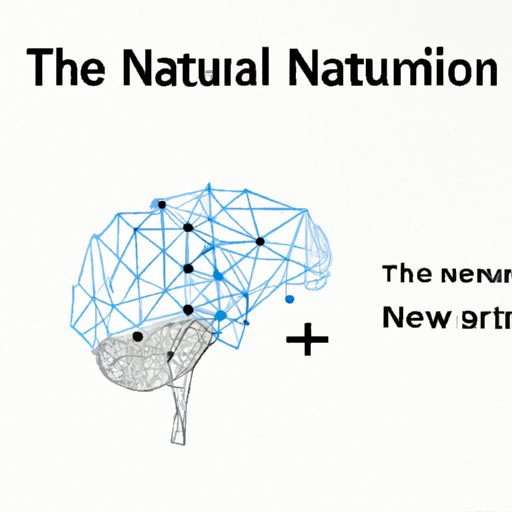
Neural networks are a type of machine learning algorithm that is inspired by the structure and functioning of biological neurons. They are composed of interconnected nodes that process information and use their connections to learn from data. Popular models and architectures include convolutional neural networks (CNNs) and recurrent neural networks (RNNs).
Explore Natural Language Processing
Natural language processing (NLP) is a field of AI that deals with understanding and generating human languages. This includes tasks such as text classification, sentiment analysis, and machine translation. NLP relies heavily on techniques such as tokenization, stemming, and part-of-speech tagging. Popular tools and techniques used in NLP include spaCy and NLTK.
Learn Robotics and Autonomous Systems
Robotics and autonomous systems are a major application of AI. These systems are designed to perform tasks autonomously, such as navigating a room or operating a vehicle. Common examples include self-driving cars, delivery robots, and agricultural drones. Popular development tools and frameworks include ROS, OpenCV, and Gazebo.
Familiarize Yourself with Computer Vision
Computer vision is a field of AI that deals with recognizing and understanding digital images and videos. Popular algorithms used in computer vision include object detection, image segmentation, and facial recognition. Practical applications of computer vision include autonomous vehicles, biometric security systems, and medical imaging.
Investigate Advanced AI Technologies
Advanced AI technologies such as deep learning, generative adversarial networks (GANs), and evolutionary algorithms are pushing the boundaries of what is possible in AI. These technologies are being used in a wide range of applications, from drug discovery to autonomous navigation. The benefits of using advanced AI technologies include improved accuracy, faster training times, and greater scalability.
Conclusion
Becoming an AI expert requires a thorough understanding of the fundamentals of AI, as well as knowledge of related fields such as machine learning, natural language processing, robotics, computer vision, and advanced AI technologies. By researching the history of AI, understanding the basics of machine learning, exploring neural networks, and familiarizing yourself with other related fields, you will be well on your way to becoming an AI expert.
For further resources on learning about AI, check out the following websites: AI & Machine Learning Resource Guide, Towards Data Science, and edX.
(Note: Is this article not meeting your expectations? Do you have knowledge or insights to share? Unlock new opportunities and expand your reach by joining our authors team. Click Registration to join us and share your expertise with our readers.)