
Introduction
Exercise is an important part of any weight-loss program. It not only helps you burn calories, but also helps build muscle and increase your metabolism. But how much exercise do you need to lose weight? The answer depends on several factors, including your current fitness level, the type of exercise you choose, and your overall goals.
Different Types of Exercise and How Much You Should Do to Lose Weight
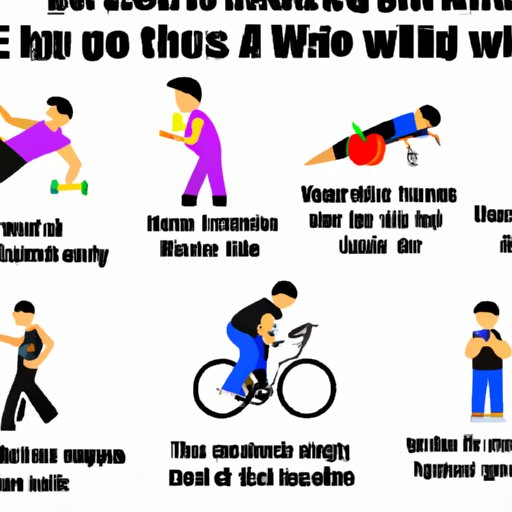
When it comes to exercising to lose weight, there are three main types: cardio, strength training, and high intensity interval training (HIIT). Each type of exercise has its own benefits, and the amount you should do each week depends on your fitness level and goals.
Cardio Exercises
Cardio exercises are activities that involve sustained movement, such as walking, running, cycling, or swimming. These activities require more energy than strength training or HIIT, so they can help you burn more calories in a shorter amount of time. To lose weight, adults should aim for at least 150 minutes of moderate-intensity aerobic activity each week. That’s about 30 minutes a day, five days a week. Examples of moderate-intensity activities include brisk walking, jogging, biking, and swimming.
Strength Training
Strength training is an important part of any exercise regimen. Not only does it help build muscle, which boosts your metabolism, but it also helps you lose fat and keep it off. Adults should aim to do strength training two to three times a week, with at least one set of eight to 12 repetitions of each exercise. Examples of strength training exercises include push-ups, pull-ups, squats, and lunges.
High Intensity Interval Training (HIIT)
HIIT is an intense form of exercise that combines short bursts of high-intensity activity with periods of rest. This type of exercise is great for burning calories and increasing your heart rate. It also helps build muscle and increases your metabolic rate. To get the most out of HIIT, aim for two to three sessions per week, with each session lasting 20 to 30 minutes.
Create a Customized Exercise Plan for Weight Loss
Creating a customized exercise plan can help you reach your weight-loss goals. Here are some tips for creating a successful plan:
Consider Your Fitness Level
The first step in creating an exercise plan is to assess your current fitness level. This will help you determine the types of exercises you should be doing and the intensity of those exercises. If you’re new to exercise, start with low-impact activities like walking or swimming. As you become more comfortable with exercise, you can add more challenging activities like running and HIIT.
Establish Goals
Setting realistic goals is essential to any successful exercise plan. Think about what you want to achieve and then create achievable goals that will help you reach those objectives. For example, if your goal is to lose 10 pounds, set smaller goals, such as losing 1 pound a week. This will help keep you motivated and make it easier to stay on track.
Set Realistic Expectations
It’s important to remember that weight loss takes time. Aiming for too much too soon can lead to frustration and disappointment. Set realistic expectations for yourself and focus on making small changes that will eventually lead to big results.
Choose the Right Exercises
When choosing exercises, pick activities that you enjoy and that fit into your lifestyle. If you don’t like running, don’t force yourself to do it. Instead, try something else, like biking or swimming. Try to mix up your routine by adding new activities every few weeks to keep things interesting.
Monitor Your Progress
Regularly monitoring your progress is key to staying motivated. Keep track of your workouts and how many calories you’ve burned. You can also track your weight, body measurements, and body fat percentage to see your progress over time.
Calculate the Number of Calories Burned with Exercise and How That Affects Weight Loss
To lose weight, you must create a calorie deficit, meaning you must burn more calories than you consume. Knowing how many calories you burn with exercise can help you calculate how much you need to cut from your diet in order to create a deficit. Here’s how to calculate the number of calories you burn and how that affects weight loss.
The Number of Calories Burned During Exercise
The number of calories you burn during exercise depends on several factors, including your weight, age, gender, and intensity of the activity. Generally, a person who weighs 150 pounds will burn around 200 calories in 30 minutes of moderate-intensity exercise. To find out how many calories you burn during exercise, use an online calculator or talk to your doctor.
Understanding Your Basal Metabolic Rate
Your basal metabolic rate (BMR) is the number of calories your body needs to function at rest. This number can vary based on age, gender, height, and weight. To calculate your BMR, use an online calculator or talk to your doctor.
Calculating Your Calorie Target
Once you know your BMR and the number of calories you burn during exercise, you can calculate your calorie target. To do this, subtract the number of calories you burn during exercise from your BMR. This number is your calorie target, meaning the amount of calories you need to consume each day to achieve your weight-loss goals.
Understanding the Role of Diet and Exercise in Weight Loss
Diet and exercise both play an important role in weight loss. Eating a healthy, balanced diet and getting regular exercise can help you reach your goals. Here’s how diet and exercise can work together to promote weight loss:
Dietary Changes
Making changes to your diet is an important part of any weight-loss plan. Eating a balanced diet that includes plenty of fruits, vegetables, lean proteins, and whole grains can help you feel full and energized. Cutting back on processed foods, sugar, and refined carbohydrates can also help you lose weight.
Exercise
Regular exercise helps you burn calories and build muscle. Aim for at least 150 minutes of moderate-intensity aerobic activity each week, plus two to three days of strength training. High intensity interval training is also beneficial for weight loss.
Combining Diet and Exercise
Combining diet and exercise is the best way to lose weight and keep it off. Eating a healthy diet and getting regular exercise can help you reach your goals and maintain your weight in the long run.
Review Popular Exercise Programs and How They Promote Weight Loss
There are many popular exercise programs that can help you lose weight. Here are four of the most popular:
CrossFit
CrossFit is a high-intensity exercise program that focuses on functional movements. It combines elements of weightlifting, gymnastics, and cardiovascular exercises to challenge your body in new ways. CrossFit is great for boosting your metabolism and building muscle. It can also help you lose weight quickly.
P90X
P90X is a home fitness program that includes a variety of exercises, such as weightlifting, yoga, plyometrics, and cardio. It’s designed to help you lose weight and build muscle. P90X is great for people who want to get in shape quickly but don’t have access to a gym.
Insanity
Insanity is a high-intensity interval training (HIIT) program that combines short bursts of intense activity with periods of rest. It’s designed to help you burn calories quickly and build muscle. Insanity is great for people who want to lose weight quickly and get in shape.
T25
T25 is a 25-minute workout program that combines cardio, strength training, and core exercises. It’s designed to help you lose weight and get in shape quickly. T25 is great for busy people who want to get in shape without spending hours at the gym.
Conclusion
Exercise is an important part of any weight-loss program. Different types of exercise can help you burn calories and build muscle, which leads to weight loss. Depending on your fitness level and goals, you should aim for at least 150 minutes of moderate-intensity aerobic activity each week, plus two to three days of strength training. Understanding the role of diet and exercise in weight loss and reviewing popular exercise programs can also help you reach your goals.
(Note: Is this article not meeting your expectations? Do you have knowledge or insights to share? Unlock new opportunities and expand your reach by joining our authors team. Click Registration to join us and share your expertise with our readers.)