
Introduction
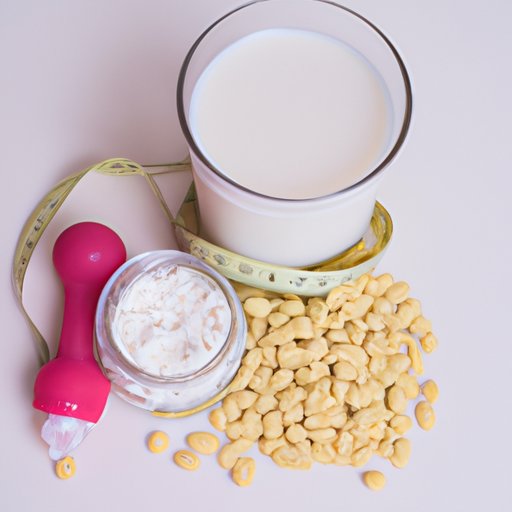
Breastfeeding is a powerful way to nourish and bond with your baby, but it can also be challenging, especially when it comes to understanding what and how much you should eat. As a nursing mother, you are “eating for two” — caring for both yourself and your baby — so it is important to ensure that you are getting adequate nutrition and enough calories to support your needs and those of your growing baby. This article provides a comprehensive guide to estimating your calorie requirements when breastfeeding and offers tips for optimizing your diet for successful breastfeeding.

A Comprehensive Guide to Estimating Calorie Requirements When Breastfeeding
When trying to determine how many calories to consume while breastfeeding, there are several factors to consider, including your basal metabolic rate (BMR), activity levels, and the amount of energy expended during breastfeeding. Let’s take a closer look at each of these.
Calculating Your Basal Metabolic Rate (BMR)
Your BMR is the number of calories your body requires to maintain normal bodily functions, such as breathing, digestion, and circulation. To calculate your BMR, you will need to know your height, weight, age, and gender. There are numerous online calculators available to help you determine your BMR, such as the Harris-Benedict Calculator or the Katch-McArdle Formula.
Considering Activity Levels
Once you have calculated your BMR, you will need to factor in your activity level. According to registered dietitian nutritionist Elizabeth Ward, MS, RDN, “If you are moderately active, meaning you exercise three to five days per week, add an additional 300 to 500 calories to your BMR. If you are very active — meaning you exercise six to seven days per week — add an additional 600 to 800 calories to your BMR.”
Adjusting for Breastfeeding
You will also need to adjust your calorie intake for the extra energy needed for breastfeeding. The exact amount of additional calories depends on the frequency and duration of feedings. According to the American College of Obstetricians and Gynecologists, “Most women should increase their caloric intake by approximately 500 calories per day during lactation.” This means that if your BMR is 2,000 calories per day and you are moderately active, you should aim for 2,800 calories to meet your nutritional needs while breastfeeding.
Understanding the Link Between Nutrition and Breastfeeding: How Many Calories Do You Need?
In addition to determining how many calories you should eat while breastfeeding, it is also important to understand which nutrients are essential for successful breastfeeding. Let’s take a look at some of these key nutrients.
Nutrients Essential for Breastfeeding
According to the Centers for Disease Control and Prevention (CDC), proteins, fats, carbohydrates, vitamins, minerals, and fluids are all important for optimal breastfeeding. Protein is especially important, as it helps to build and repair cells in both mother and baby. Good sources of protein include lean meats, eggs, beans, nuts, and dairy products. Fats are another important nutrient; they provide energy and help with the absorption of certain vitamins. Healthy sources of fat include avocados, olive oil, nuts, and seeds. Additionally, carbohydrates provide energy and fuel for milk production, and can be found in whole grains, fruits, and vegetables.
Calorie Needs for Optimal Breastfeeding
The CDC recommends that pregnant and breastfeeding women get at least 150 minutes of moderate-intensity aerobic activity every week. Additionally, they suggest consuming an additional 300–500 calories per day to support milk production. However, the exact amount of calories needed will vary depending on your individual needs and lifestyle.

Eating for Two: Tips for Healthy Calorie Intake While Breastfeeding
For optimal health, it is important to make sure you are eating a variety of nutrient-rich foods. Eating a balanced diet that includes plenty of fruits, vegetables, whole grains, lean proteins, and healthy fats will help you to meet your nutritional needs and provide essential nutrients for your baby. Additionally, there are several supplements that can help you reach your recommended calorie intake while breastfeeding.
Foods That Provide Quality Nutrition
It is important to focus on foods that provide quality nutrition when you are breastfeeding. Aim to include a variety of fruits, vegetables, whole grains, lean proteins, and healthy fats in your diet. Additionally, foods rich in calcium and iron, such as dairy products, dark leafy greens, and fortified cereals, are especially important for breastfeeding mothers. Foods high in omega-3 fatty acids, such as salmon, flaxseed, and walnuts, can also help to promote healthy brain development in your baby.
Supplements for Adequate Calorie Intake
If you are having difficulty meeting your recommended daily calorie intake, there are several supplements that can help. Iron supplements, prenatal vitamins, and fish oil supplements can help to meet your nutritional needs. Additionally, drinking a cup of herbal tea after each feeding can help to increase your fluid intake and boost your calorie intake.
Optimizing Your Diet: What and How Much Should You Eat While Breastfeeding?
Now that you know the basics of calculating your calorie needs when breastfeeding, let’s take a look at how to optimize your diet for successful breastfeeding. It is important to pay attention to macronutrient balance and portion sizes when trying to meet your calorie needs.
Macronutrient Balance
It is important to make sure you are getting the right balance of macronutrients in your diet. According to the Academy of Nutrition and Dietetics, the recommended macronutrient breakdown for breastfeeding women is 45–65% carbohydrates, 10–35% protein, and 25–35% fat. Eating a variety of nutrient-rich foods from each food group can help you to achieve this balance.
Portion Sizes
It is also important to pay attention to portion sizes when trying to meet your calorie needs. Aim to make half of your plate vegetables and one-quarter of your plate lean protein. Additionally, choose whole grain options whenever possible and limit added sugars, saturated fats, and processed foods. Eating smaller meals and snacks throughout the day can also help to ensure that you are getting enough calories without feeling overly full.
Fueling Your Body for Breastfeeding: An Overview of Recommended Calorie Intake
So how many calories should you be eating while breastfeeding? The amount of calories you need will depend on your individual needs and lifestyle, but the average woman should aim to consume 2,200–2,800 calories per day. Factors such as age, weight, height, and activity levels can affect your calorie needs, so it is important to talk to your healthcare provider to determine the best calorie intake for you.
Calorie Recommendations for the Average Woman
For the average woman, the recommended calorie intake is 2,200–2,800 calories per day. This includes an additional 300–500 calories for moderate activity levels and 300–500 extra calories for breastfeeding. For example, if your BMR is 2,000 calories and you are moderately active, your recommended calorie intake would be 2,800 calories per day.
Factors That Affect Calorie Needs
Keep in mind that your calorie needs may differ depending on your age, weight, height, and activity levels. Additionally, if you are overweight or obese, you may need fewer calories than someone of a healthy weight. It is important to consult with your doctor or a registered dietitian to determine the best calorie intake for you.
Balancing Your Diet for Optimal Breastfeeding Success: How Many Calories Should You Eat?
To ensure that you are getting enough calories while breastfeeding, it is helpful to evaluate your current diet and make any necessary adjustments. Here are some tips for balancing your diet and optimizing your calorie intake while breastfeeding.
Evaluating Your Current Diet
Take some time to assess your current diet and make any necessary changes. Track your meals for a few days and note what foods you are eating and how much you are eating. This can help you to identify any areas where you may need to make changes in order to reach your recommended calorie intake.
Making Adjustments for Optimal Calorie Intake
Once you have evaluated your current diet, you can start to make changes to optimize your calorie intake while breastfeeding. Start by incorporating more nutrient-rich foods into your diet, such as lean proteins, fruits, vegetables, and whole grains. Additionally, adding healthy snacks between meals can help you to meet your calorie needs. Finally, don’t forget to drink plenty of water throughout the day to stay hydrated.
Conclusion
Breastfeeding can be a rewarding experience, but it can also be challenging, especially when it comes to understanding your nutritional needs. Knowing how many calories to eat while breastfeeding is essential for ensuring that you and your baby are getting adequate nutrition. Calculating your basal metabolic rate, considering your activity level, and adjusting for breastfeeding can help you to determine how many calories you need to consume each day. Additionally, focusing on nutrient-rich foods and making any necessary adjustments to your diet can help you to meet your recommended calorie intake while breastfeeding.
(Note: Is this article not meeting your expectations? Do you have knowledge or insights to share? Unlock new opportunities and expand your reach by joining our authors team. Click Registration to join us and share your expertise with our readers.)