

Introduction
The cryptocurrency industry is becoming increasingly popular as more people are looking to invest and get involved in digital currencies. One of the most popular digital currencies is Bitcoin, which has grown significantly in recent years. Bitcoin mining is the process of verifying and adding transactions to the blockchain, which is a public ledger of all Bitcoin activity. By verifying and adding these transactions, miners earn rewards in the form of newly minted Bitcoin.
What is Bitcoin Mining?
Bitcoin mining is the process of verifying and adding transactions to the blockchain. This is done by miners, who are computers that use specialized software to solve mathematical problems associated with each transaction. When a miner solves a problem, they receive a reward in the form of new Bitcoin. As more miners join the network, the difficulty of the problems increases, making it more difficult for miners to earn rewards.

Growth of Bitcoin Mining and its Impact on the Market
As more people are becoming interested in Bitcoin, the number of miners has increased significantly. This has had a significant impact on the market as the competition for rewards has grown. As the competition for rewards has increased, so has the difficulty of the problems miners must solve. This has led to an increase in the cost of mining, as miners must invest in more powerful hardware to remain competitive.
The Process of Mining Bitcoins
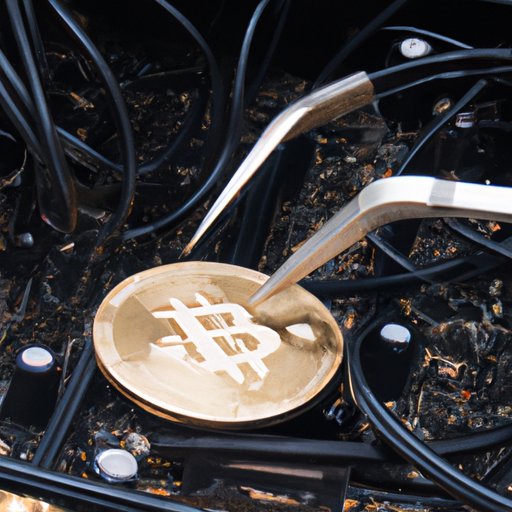
Mining Bitcoin involves a few steps: First, miners need to download and install a mining program on their computer. Once they have the program installed, they can start mining by connecting to a mining pool. A mining pool is a group of miners who share their computing power to increase the chances of earning rewards. After joining a mining pool, miners must set up their mining rig, which is the hardware used to mine Bitcoin. Finally, miners must configure their settings to ensure they are able to mine efficiently and maximize their rewards.
Understanding Bitcoin Mining Rewards
As mentioned previously, miners receive rewards in the form of newly minted Bitcoin when they successfully verify and add transactions to the blockchain. The amount of Bitcoin rewarded depends on the current difficulty of the network and the amount of computing power the miner is contributing. The rewards are halved every 210,000 blocks, which is roughly every four years.
How Many Bitcoins Have Been Mined So Far?
At the time of writing, there are approximately 18.4 million Bitcoins in circulation, out of a total of 21 million that will ever be mined. This means that around 87% of all Bitcoins have already been mined. As the difficulty of the network increases, it will become increasingly difficult to mine new Bitcoins, leading to a slow but steady decrease in the number of new Bitcoins entering circulation.
Analyzing the Impact of Mining Difficulty
As the difficulty of the network increases, miners must invest in more powerful hardware to remain competitive. This has led to a sharp increase in the cost of mining, as miners must invest in more expensive hardware to remain profitable. Additionally, as the difficulty of the network increases, the rewards miners receive when they successfully verify and add transactions to the blockchain decreases, making it less attractive to miners.
Examining the Risks Involved in Mining
Mining Bitcoin carries certain risks. Firstly, miners must invest in powerful hardware to remain competitive, which can be a costly endeavor. Additionally, the value of Bitcoin is highly volatile, meaning that miners may not always be able to recoup their investments. Finally, mining Bitcoin requires a large amount of electricity, which can be expensive in some areas. Although mining can be profitable, miners should be aware of the risks involved before investing in mining equipment.
Conclusion
Bitcoin mining is an important part of the cryptocurrency industry, as it helps to keep the network secure and add new coins to circulation. As the number of miners increases, the difficulty of the network increases as well, making it more difficult to earn rewards. Currently, around 87% of all Bitcoins have been mined, and this number is expected to continue to decline as the difficulty of the network increases. Although mining can be profitable, miners should be aware of the risks involved before investing in mining equipment.
(Note: Is this article not meeting your expectations? Do you have knowledge or insights to share? Unlock new opportunities and expand your reach by joining our authors team. Click Registration to join us and share your expertise with our readers.)