
Introduction
Having a tooth pulled is a common dental procedure that many people may need to have done at some point in their lives. The process of having a tooth removed can be an intimidating experience for many, so understanding the steps involved and the associated timescales can help alleviate anxiety and make the process easier. In this article, we will explore the process and timescales associated with getting a tooth pulled.

Exploring the Steps Involved in Getting a Tooth Pulled
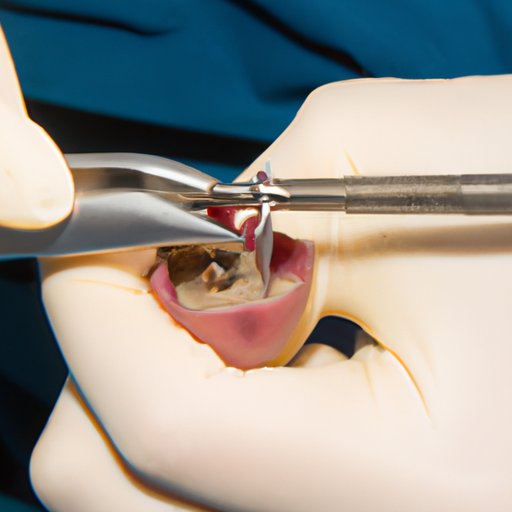
The process of getting a tooth pulled involves several steps. The first step is for the dentist to examine the tooth and take x-rays to determine the best way to remove it. Then, the area around the tooth is anesthetized with a local anesthetic, which numbs the area and helps reduce any discomfort during the procedure. The next step is to extract the tooth by either pulling or cutting it out. Finally, the socket where the tooth was removed is closed with sutures to prevent infection and facilitate healing.
Common Questions About Tooth Extraction: How Long Does it Take?
The average time for a tooth extraction is around 30 minutes, depending on the complexity of the case. However, there are a variety of factors that can affect the length of time for a tooth extraction, such as the type of tooth being extracted, its location in the mouth, and the severity of any infection present.
How to Prepare for a Tooth Extraction Procedure
Before undergoing a tooth extraction procedure, it is important to discuss your medical history with your dentist. This includes any medications you are taking, previous dental procedures, and any allergies you may have. Additionally, it is important to follow any pre-procedure instructions provided by your dentist, such as not eating or drinking anything 8 hours before the procedure. During the procedure, you can expect to feel pressure, but no pain, as the area will be numb from the anesthetic.
What Factors Determine the Length of Time it Takes to Get a Tooth Pulled?
The length of time it takes to get a tooth pulled depends on a variety of factors, including the type of tooth being extracted, its location in the mouth, and the severity of any infection present. For example, a simple extraction of a tooth near the front of the mouth may take less time than a more complex extraction of a molar located further back in the mouth. Additionally, if an infection is present, it may take longer to remove the tooth as the dentist will need to treat the infection first.

Breaking Down the Process of Getting a Tooth Pulled
The process of getting a tooth pulled involves several steps. Before the procedure, the dentist will examine the tooth and take x-rays to determine the best way to remove it. During the procedure, the area around the tooth is anesthetized with a local anesthetic, and then the tooth is extracted by either pulling or cutting it out. After the tooth is removed, the socket is closed with sutures to prevent infection and facilitate healing.

An Overview of the Time Involved in Having a Tooth Removed
The time involved in getting a tooth pulled varies depending on the complexity of the extraction. Simple extractions, which involve removing a tooth that is visible in the mouth, typically only take a few minutes. Complex extractions, which involve surgically removing a tooth that is impacted or embedded in the jawbone, can take up to an hour or longer.
The Different Types of Tooth Extractions and Their Associated Timescales
There are two main types of tooth extractions: simple extractions and surgical extractions. Simple extractions involve removing a tooth that is visible in the mouth and typically take 5-20 minutes. Surgical extractions involve surgically removing a tooth that is impacted or embedded in the jawbone and usually take 30 minutes to an hour.
Conclusion
In conclusion, getting a tooth pulled is a relatively straightforward process that typically takes around 30 minutes. However, the length of time for a tooth extraction can vary depending on the complexity of the case, the type of tooth being extracted, its location in the mouth, and the severity of any infection present. It is important to discuss your medical history and follow any pre-procedure instructions provided by your dentist to ensure a successful outcome.
(Note: Is this article not meeting your expectations? Do you have knowledge or insights to share? Unlock new opportunities and expand your reach by joining our authors team. Click Registration to join us and share your expertise with our readers.)