
Introduction
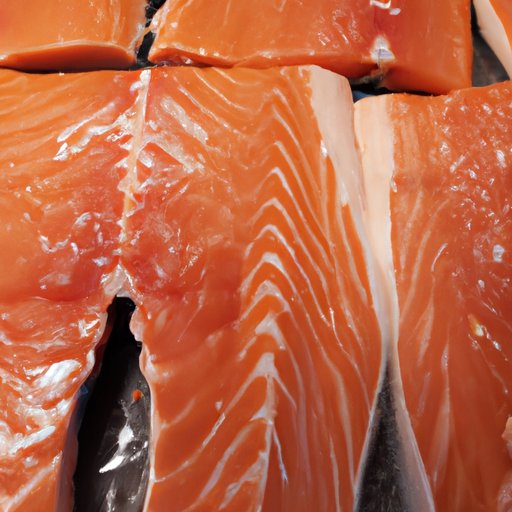
Salmon is an oily fish that is loaded with nutrients and provides many health benefits. It is a popular food among many cultures, and for good reason. Salmon is rich in protein, healthy fats, vitamins and minerals. Eating salmon regularly can help improve heart health, brain function, joint health, and may even reduce the risk of certain diseases. In this article, we’ll explore the health benefits of eating salmon and discuss how to incorporate it into a balanced diet.

Benefits of Eating Salmon for Optimal Health
Nutritional Profile of Salmon and its Health Benefits
Salmon is a nutrient-dense food, meaning it contains a large amount of essential vitamins, minerals, and other important compounds. According to the American Heart Association, one 3.5 ounce serving of cooked salmon has 17g of protein, 3.2g of omega-3 fatty acids, and only 2g of saturated fat. It also contains Vitamin B12, niacin, selenium, and phosphorus.
The high levels of omega-3 fatty acids found in salmon are associated with numerous health benefits, such as improved heart health, lower triglyceride levels, and reduced inflammation. A study published in the journal Nutrients found that omega-3 fatty acids found in salmon can help reduce the risk of cardiovascular disease, stroke, and atherosclerosis. Additionally, the high levels of protein in salmon can help build and repair muscle, while the vitamin B12 helps support neurological function.
Different Types of Salmon and their Effects on Health
There are several types of salmon available, each with its own unique nutritional profile. These include wild salmon, farmed salmon, sockeye salmon, pink salmon, chum salmon, and Atlantic salmon. Wild salmon tends to be higher in omega-3s than farmed salmon, and sockeye salmon has the highest levels of omega-3s out of all the types of salmon.
Wild salmon is generally considered the healthiest type of salmon due to its higher levels of omega-3s and lower levels of contaminants. Farmed salmon, while still healthy, can contain higher levels of contaminants such as PCBs, which can negatively affect health. Therefore, it is important to choose wild salmon whenever possible.
Omega-3 Benefits of Eating Salmon
Omega-3 fatty acids are essential fatty acids that cannot be produced by the body and must be obtained through diet. Salmon is one of the best sources of omega-3 fatty acids, containing more than other types of fish. These fatty acids are associated with numerous health benefits, including reduced inflammation, improved cognitive function, and a lower risk of heart disease.
A study published in the journal Nutrients found that omega-3 fatty acids found in salmon can help reduce the risk of cardiovascular disease, stroke, and atherosclerosis. Additionally, these fatty acids have been found to reduce symptoms of depression and anxiety, and may even reduce the risk of certain cancers. The American Heart Association recommends eating at least two servings of fatty fish per week to get the recommended amount of omega-3s.
The Role of Salmon in a Healthy Diet
Guidelines for How Much Salmon to Eat
The American Heart Association recommends eating at least two servings of fatty fish per week to get the recommended amount of omega-3s. One serving of salmon is 3.5 ounces, or about the size of a deck of cards. It is important to note that some types of salmon are higher in omega-3s than others, so it is best to choose wild salmon whenever possible.
Ways to Incorporate Salmon into a Balanced Diet
Salmon can easily be incorporated into a balanced diet. It can be enjoyed grilled, baked, smoked, poached, or cooked in a variety of other ways. Salmon is also versatile and can be paired with a wide range of flavors and ingredients. It pairs well with fresh vegetables, whole grains, and other healthy foods. Additionally, it can be added to salads, sandwiches, wraps, and other meals.

How Cooking Methods Affect the Healthiness of Salmon
Healthiest Ways to Cook Salmon
When it comes to cooking salmon, it is important to choose healthy cooking methods. The healthiest ways to cook salmon are baking, grilling, poaching, steaming, and stir-frying. These methods help preserve the nutrients in the salmon and keep the fish from becoming dry or tough. Additionally, it is important to avoid adding too much fat or oil when cooking salmon, as this can add unnecessary calories.
Unhealthy Ways to Cook Salmon
On the other hand, it is important to avoid unhealthy cooking methods when preparing salmon. Deep-frying, pan-frying, and coating salmon in breadcrumbs or batter should be avoided, as these methods can increase the fat and calorie content of the fish. Additionally, it is important to avoid adding too much salt or sugar to the salmon, as this can cause it to become overly salty or sweet.
Conclusion
Salmon is a nutrient-dense food that provides numerous health benefits. It is rich in protein, healthy fats, vitamins and minerals, and is especially high in omega-3 fatty acids. Eating salmon regularly can help improve heart health, brain function, joint health, and may even reduce the risk of certain diseases. When choosing salmon, it is best to opt for wild salmon whenever possible. Additionally, it is important to choose healthy cooking methods, such as baking, grilling, poaching, steaming, or stir-frying, and avoid deep-frying, pan-frying, or coating the salmon in breadcrumbs or batter.
Incorporating salmon into a balanced diet is easy and can provide numerous health benefits. The American Heart Association recommends eating at least two servings of fatty fish per week to get the recommended amount of omega-3s. Salmon can be enjoyed grilled, baked, smoked, poached, or cooked in a variety of other ways. It pairs well with fresh vegetables, whole grains, and other healthy foods, and can be added to salads, sandwiches, wraps, and other meals.
Overall, salmon is a healthy food that can be enjoyed as part of a balanced diet. It is rich in protein, healthy fats, vitamins and minerals, and is especially high in omega-3 fatty acids. Eating salmon regularly can help improve heart health, brain function, joint health, and may even reduce the risk of certain diseases. When choosing salmon, it is best to opt for wild salmon whenever possible, and choose healthy cooking methods to preserve the nutrients in the fish.
(Note: Is this article not meeting your expectations? Do you have knowledge or insights to share? Unlock new opportunities and expand your reach by joining our authors team. Click Registration to join us and share your expertise with our readers.)