
Introduction
The human visual system is an incredibly complex network of organs, muscles, and nerves that work together to allow us to see. The eye is the organ responsible for capturing light and sending signals to the brain, which then processes the information to create images. The purpose of this article is to explore how vision works and provide a step-by-step guide to understanding the anatomy of the eye and how light interacts with the retina to create clear vision.

Exploring the Anatomy of the Eye and How Vision Works
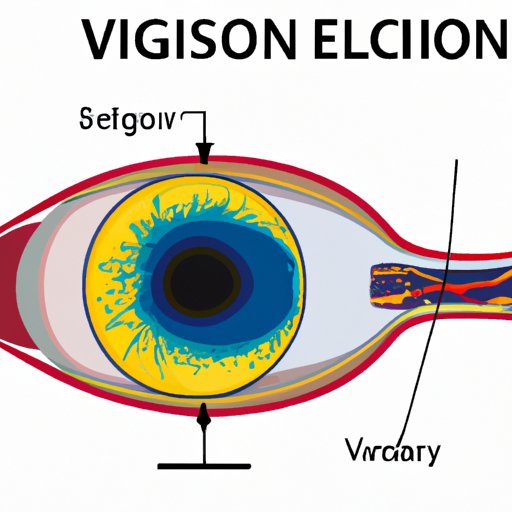
The eye is made up of several components that work together to capture light and transmit the information to the brain. The structure of the eye includes the cornea, lens, iris, sclera, retina, and optic nerve. The cornea is the outermost layer of the eye and helps to focus light. The lens is located behind the cornea and helps to further focus light. The iris is the colored portion of the eye and helps to control the amount of light that enters the eye. The sclera is the white, outer layer of the eye and helps protect the inner structures. The retina is the innermost layer of the eye and contains photoreceptors that detect light and convert it into electrical signals. Finally, the optic nerve carries these signals from the retina to the brain, where they are processed.
The retina is essential for vision as it contains photoreceptors that detect light and convert it into electrical signals. These signals are transmitted through the optic nerve to the brain, where they are processed to create images. The retina is composed of two types of photoreceptors: rods and cones. Rods are sensitive to dim light and are used for night vision. Cones are sensitive to bright light and are used for color vision.

An Overview of the Human Visual System: How Eyesight Works
The human visual system is made up of three parts: the eyes, the optic nerve, and the brain. Light is the stimulus that triggers the visual process. When light enters the eye, it passes through the cornea, lens, and iris before reaching the retina. The light is then refracted and focused onto the retina, which contains photoreceptors that detect the light and convert it into electrical signals. These signals are then transmitted through the optic nerve to the brain, where they are processed to create images.
The brain plays an important role in vision. It interprets the visual stimulus and processes the information to create images. The visual cortex is the part of the brain that is responsible for processing visual information. It receives signals from the optic nerve and uses them to construct a representation of the world around us.

The Science Behind Vision: How the Brain Processes What We See
In order to understand how vision works, it is important to understand how the brain processes visual information. The visual cortex is the part of the brain responsible for interpreting visual stimulus. It receives signals from the optic nerve and uses them to construct a representation of the world around us. This representation is then sent to other parts of the brain for further processing.
The brain is able to interpret visual information because of its ability to recognize patterns. For example, if you look at a chair, your brain will recognize the shape of the chair and be able to identify it as such. This ability to recognize patterns and objects is known as pattern recognition and is an essential part of vision.
A Step-by-Step Guide to Understanding How Our Eyes Work
To better understand how vision works, it is helpful to take a step-by-step approach to exploring the anatomy of the eye and how light interacts with the retina to create clear vision. Here is a brief overview of the steps involved in vision:
- Light Reaches the Retina: Light enters the eye and passes through the cornea, lens, and iris before reaching the retina. The light is then refracted and focused onto the retina.
- Refraction and Focusing of Light: The lens and cornea help to refract and focus the light onto the retina, which contains photoreceptors that detect the light and convert it into electrical signals.
- Transmission of Visual Information to the Brain: The signals from the retina are transmitted through the optic nerve to the brain, where they are processed to create images.
How Light Interacts with the Retina to Create Clear Vision
The retina is the innermost layer of the eye and contains photoreceptors that detect light and convert it into electrical signals. These signals are then transmitted through the optic nerve to the brain, where they are processed to create images. The retina is composed of two types of photoreceptors: rods and cones. Rods are sensitive to dim light and are used for night vision. Cones are sensitive to bright light and are used for color vision.
Cones contain pigments that allow them to detect different wavelengths of light, which allows us to see colors. There are three types of cones, each of which is sensitive to a different wavelength of light. This allows us to distinguish between different colors. In addition to color vision, cones also allow us to see detail and contrast.
Conclusion
The human visual system is an incredibly complex network of organs, muscles, and nerves that work together to allow us to see. The anatomy of the eye, its purpose, and how light interacts with the retina to create clear vision are essential aspects of understanding how vision works. By taking a step-by-step approach to understanding the science behind vision, we can gain a greater appreciation of the complexity of this amazing sense.
The retina is essential for vision as it contains photoreceptors that detect light and convert it into electrical signals. The lens and cornea help to refract and focus the light onto the retina, which contains photoreceptors that detect the light and convert it into electrical signals. The brain then interprets the visual stimulus and processes the information to create images. Understanding how vision works can help us to appreciate the intricate workings of this amazing sense.
(Note: Is this article not meeting your expectations? Do you have knowledge or insights to share? Unlock new opportunities and expand your reach by joining our authors team. Click Registration to join us and share your expertise with our readers.)