
Introduction
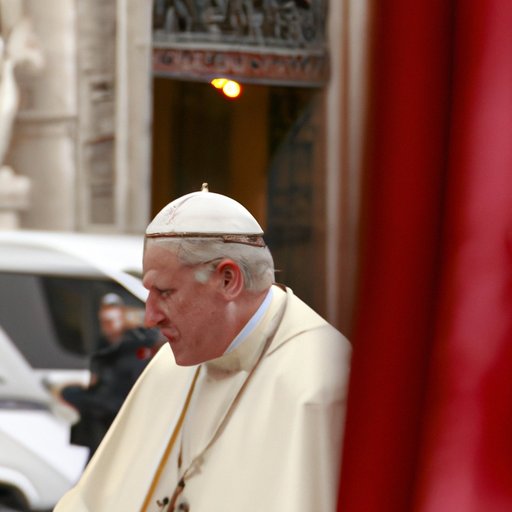
The papal election process is one of the most complex and important procedures within the Catholic Church. This article provides a comprehensive overview of the process, including its historical background, the role of the College of Cardinals, the purpose of the conclave, the rules and procedures of the election, the roles of the Holy See and Vatican City State, and the consequences of a papal election.
Historical Overview of the Papal Selection Process
The papal election process has undergone many changes over the centuries. Initially, the selection was done by the Roman people, who chose the pope from among the leaders of the Church in Rome. In 1059, this process was changed to an election by the College of Cardinals, which had been established by Pope Stephen IX in 1049. The College of Cardinals is composed of cardinals appointed by the pope, who serve as his closest advisors and are responsible for electing a new pope when the existing one dies or resigns.
Over the centuries, the rules and procedures for the papal election have evolved. In 1274, Pope Gregory X issued the bull Ubi Periculum, which set out the first formal rules for the conclave, including the sequestration of all participants until a decision was reached. This bull also stipulated that cardinals should be elected by a two-thirds majority vote. In 1996, Pope John Paul II issued the Apostolic Constitution Universi Dominici Gregis, which further refined the rules and procedures of the papal election.
Explaining the Role of the College of Cardinals in the Selection
The College of Cardinals plays an essential role in the papal election process. The college is responsible for selecting the new pope and is composed of cardinals appointed by the pope who serve as his closest advisors. The College of Cardinals is headed by the Dean, who is elected by the other cardinals. The College of Cardinals is divided into three orders: the episcopal order, the cardinal priests, and the cardinal deacons.
The College of Cardinals elects a new pope through a process known as a conclave. The conclave is a secret meeting of the College of Cardinals, held in the Sistine Chapel at the Vatican, where they cast their ballots for the next pope. The conclave is presided over by the Dean of the College of Cardinals, and all participants must take an oath of secrecy before it begins.
Describing the Conclave and Its Purpose
A conclave is a secret meeting of the College of Cardinals, held in the Sistine Chapel at the Vatican, where they cast their ballots for the next pope. The conclave is presided over by the Dean of the College of Cardinals, and all participants must take an oath of secrecy before it begins. The purpose of the conclave is to select a new pope by a two-thirds majority vote. The voting is conducted by secret ballot, and the cardinals can choose any baptized Catholic male who meets the requirements for the office.
If no candidate receives the required two-thirds majority, additional ballots may be taken. If, after several ballots, no candidate has been chosen, the cardinals may agree to accept a simple majority or even a plurality of votes. After the election of a new pope, the Dean of the College of Cardinals announces the result to the people gathered in St. Peter’s Square.
Examining the Papal Election Rules and Procedures
The papal election process is governed by a set of rules and procedures outlined in the Apostolic Constitution Universi Dominici Gregis. These rules and procedures include the following:
- A two-thirds majority is required for the election of a new pope.
- Voting is conducted by secret ballot.
- The cardinals may choose any baptized Catholic male who meets the requirements for the office.
- If no candidate receives the required two-thirds majority, additional ballots may be taken.
- If, after several ballots, no candidate has been chosen, the cardinals may agree to accept a simple majority or even a plurality of votes.
There are also a number of factors that can influence the papal election process. These include the age and health of the cardinals, the candidates’ qualifications, the political and social climate of the time, and the preferences of the cardinals. For example, the cardinals may favor a candidate whose views reflect their own, or whose policies will benefit the Church.

Outlining the Roles of the Holy See and Vatican City State in the Selection
The Holy See is the central governing body of the Catholic Church, and is headed by the Pope. The Holy See is responsible for appointing cardinals, promulgating laws, and representing the Church in diplomatic relations. The Holy See does not play an active role in the papal election process, but it does provide legal counsel and advice to the College of Cardinals during the conclave.
Vatican City State is a sovereign city-state located within Rome, Italy. The state is ruled by the Pope and serves as the headquarters of the Catholic Church. Vatican City State has a limited role in the papal selection process, but it provides logistical support to the College of Cardinals and assists with the organization of the conclave.
Looking at the Consequences of a Papal Election
The election of a new pope has far-reaching implications for the Catholic Church and the world. The selection of a new pope can affect the Church’s stance on issues such as abortion, same-sex marriage, and contraception. It can also affect the Church’s relationship with other religions and governments. The election of a new pope is a cause for celebration for Catholics around the world, as it marks the beginning of a new era in the history of the Church.
Conclusion
The papal selection process is a complex and important procedure within the Catholic Church. The selection is done by the College of Cardinals, who are responsible for electing a new pope when the existing one dies or resigns. The cardinals elect a new pope through a process known as a conclave, which is presided over by the Dean of the College of Cardinals. The conclave is held in the Sistine Chapel at the Vatican, and voting is conducted by secret ballot. The election process is governed by a set of rules and procedures outlined in the Apostolic Constitution Universi Dominici Gregis. The Holy See and Vatican City State both play a limited role in the selection process, providing legal counsel and logistical support respectively. The election of a new pope has far-reaching consequences for the Catholic Church and the world, and is a cause for celebration for Catholics around the world.
(Note: Is this article not meeting your expectations? Do you have knowledge or insights to share? Unlock new opportunities and expand your reach by joining our authors team. Click Registration to join us and share your expertise with our readers.)