
Introduction
Cancer is one of the leading causes of death worldwide, with an estimated 18 million new cases and 9.6 million deaths in 2018 alone. Despite advancements in research and treatments, the disease remains largely incurable and challenging to treat. But researchers are increasingly turning to technology for help in detecting and treating cancer, making it possible to diagnose the disease earlier and provide more personalized treatments.
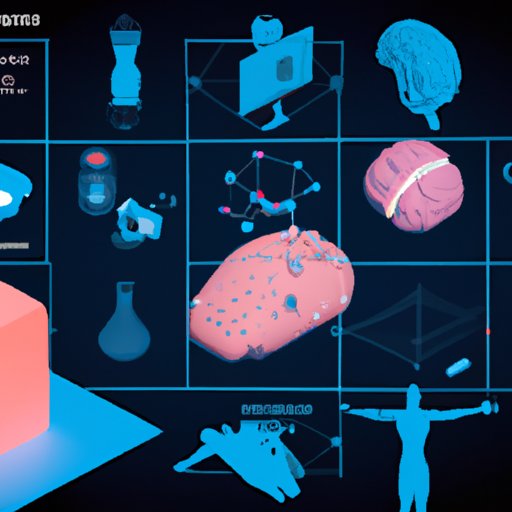
This article will explore how different technologies are being used to detect and treat cancer, from medical imaging technology to robotic-assisted surgery to artificial intelligence (AI) and 3D printing. We’ll evaluate the benefits and challenges of each technology, as well as their potential impact on cancer care.
Exploring Medical Imaging Technology
Medical imaging technology is a powerful tool for diagnosing and managing cancer. The most common forms of medical imaging include x-rays, computed tomography (CT) scans, magnetic resonance imaging (MRI), positron emission tomography (PET) scans, ultrasound, and mammograms.
These imaging techniques allow doctors to view detailed images of the body’s internal organs and structures. They can be used to detect tumors, measure tumor size, and monitor changes in the tumor over time. They can also be used to identify metastases, or the spread of cancer to other parts of the body.
Early detection of cancer is critical for successful treatment, and the use of medical imaging technology has been found to increase early detection rates. According to a study published in the journal Clinical Breast Cancer, the use of mammography screening was associated with a 27% reduction in mortality from breast cancer. In addition, the American Cancer Society reports that regular screening tests can lead to a 20% reduction in death from colorectal cancer.
However, medical imaging technology also has some limitations. For example, it is not always accurate in detecting small tumors, and it may miss some cancers or give false positives. In addition, radiation exposure during medical imaging procedures can increase the risk of developing some types of cancer, so it is important to weigh the risks and benefits of any imaging procedure before undergoing it.
Investigating Robotic-Assisted Surgery
Robotic-assisted surgery is another technology being used to detect and treat cancer. This type of surgery uses robots to perform precise and complex surgical procedures, often with minimal invasiveness. The use of robots allows surgeons to make smaller incisions, reduce blood loss, and minimize post-operative pain and recovery time.
Robotic-assisted surgery has been used to treat a variety of cancers, including prostate, gynecological, and colorectal cancers. Studies have shown that robotic-assisted surgery can improve outcomes and reduce complications compared to traditional open surgery. A 2017 study published in the journal Urology found that robotic-assisted laparoscopic prostatectomy had higher rates of positive margins and lower rates of urinary incontinence than open radical prostatectomies.
Although robotic-assisted surgery offers many advantages, it does have some drawbacks. These surgeries are expensive and require specialized training for surgeons. In addition, the use of robots can limit the surgeon’s dexterity and range of motion, which can make it difficult to access certain areas of the body.
Examining the Role of Artificial Intelligence
Artificial intelligence (AI) is another technology that is being used to aid in the diagnosis and treatment of cancer. AI can be used to analyze large amounts of data, such as imaging scans, lab results, and patient records, to identify patterns and correlations that might not be obvious to the human eye.
AI can also be used to help doctors make more accurate and informed decisions about diagnosis and treatment. For example, AI algorithms have been developed to detect lung cancer from chest x-rays, as well as to predict the effectiveness of different treatments. A 2018 study published in the journal Nature Medicine showed that an AI algorithm was able to accurately predict response to chemotherapy in patients with advanced non-small cell lung cancer.
The use of AI can help reduce errors and improve accuracy in diagnosis and treatment decisions. In addition, AI can help speed up the process of analyzing data and identifying trends, allowing doctors to make decisions faster and with greater confidence.
Examining the Use of 3D Printing Technology
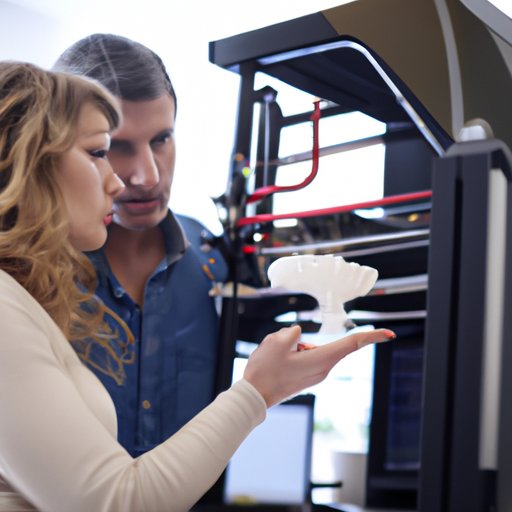
3D printing technology is being used to produce customized prosthetics and implants for cancer patients. This technology allows doctors to create custom-made implants that can fit perfectly into the patient’s body, reducing the risk of infection and providing superior comfort and function. 3D printing is also being used to create models of tumors and organs that can be used to plan and practice surgeries.
Using 3D printing technology to create custom implants and models can reduce the cost and complexity of surgery, resulting in shorter hospital stays and quicker recovery times. It can also help increase accuracy in surgery by providing doctors with a better understanding of the anatomy prior to the procedure.
Evaluating Big Data Analytics
Big data analytics is being used to identify correlations between lifestyle factors and cancer risk. By analyzing large datasets of medical records and health information, researchers are able to identify patterns and trends that can help inform prevention strategies and treatment plans.
Big data analytics can also be used to identify genetic markers that can help predict a person’s risk of developing certain types of cancer. This information can be used to develop personalized treatments and interventions that are tailored to an individual’s unique needs and risk factors.
Big data analytics can also be used to identify the most effective treatments for different types of cancer. By analyzing the outcomes of different treatments, researchers can identify which ones are most likely to result in positive outcomes and develop more targeted therapies.
Conclusion
Technology is playing an increasingly important role in detecting and treating cancer. From medical imaging to robotic-assisted surgery to AI and 3D printing, these technologies are helping to improve diagnosis and treatment decisions, as well as reduce costs and recovery times. Big data analytics is also being used to identify correlations between lifestyle factors and cancer risk, as well as to identify the most effective treatments.
By leveraging the power of technology, it is possible to detect cancer earlier and provide more personalized treatments. This could have a significant impact on reducing cancer mortality rates and improving quality of life for those affected by the disease.
(Note: Is this article not meeting your expectations? Do you have knowledge or insights to share? Unlock new opportunities and expand your reach by joining our authors team. Click Registration to join us and share your expertise with our readers.)