

Introduction
The advancement of technology has drastically changed the way we live our lives. From communication to entertainment, technology has made it easier for us to do things that would otherwise take a lot of time and effort. It has also revolutionized the medical industry, making healthcare more accessible and efficient. This article will explore how technology continues to improve medical care today.
Impact of Artificial Intelligence (AI) on Medical Care
Artificial intelligence (AI) is the development of computer systems that can think and act like humans. AI is used in many industries, including healthcare, to automate manual tasks and reduce costs. In the medical field, AI is used to analyze large amounts of data, diagnose diseases, and provide personalized treatments. AI-enabled devices can also monitor vital signs and alert doctors if any changes occur.
One example of an AI application in the medical field is IBM Watson Health. This platform uses AI to analyze and interpret medical data, such as patient records, lab results, and imaging scans. It can then give recommendations based on the data and help clinicians make decisions. Another example is Google DeepMind, which uses AI to detect breast cancer at early stages. It can also identify patients who are at risk for developing certain conditions.
Using AI in healthcare has numerous advantages. It can help reduce errors, increase accuracy, and improve the speed of diagnosis. AI can also help reduce the cost of healthcare by automating mundane tasks and freeing up resources for more complex procedures. Additionally, AI can help doctors make better decisions by providing insights from large amounts of data.
How Wearable Technology Enhances Patient Management
Wearable technology is a type of device that is worn on the body, such as watches and fitness trackers. These devices are used to measure and monitor health indicators, such as heart rate and blood pressure. They can also be used to provide reminders to take medications or exercise. Wearable technology makes it easier for patients to track their health and receive feedback from their healthcare providers.
The use of wearable technology in healthcare offers numerous benefits. It helps to reduce hospital visits, as patients can monitor their health from home. It also allows healthcare providers to access real-time data, which can help them make more informed decisions. Additionally, wearable technology can help to improve patient engagement, as patients are more likely to follow through with treatment plans if they can track their progress.
Examples of wearable technology used in medical care include smartwatches, fitness trackers, and glucose monitors. Smartwatches are used to track activity levels and monitor vital signs. Fitness trackers can be used to encourage physical activity and monitor progress. Glucose monitors can be used to measure and monitor blood sugar levels in diabetic patients.
Exploring the Benefits of Telemedicine
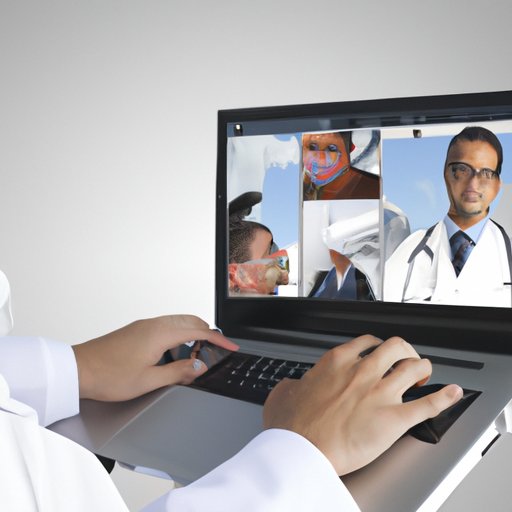
Telemedicine is the use of technology to deliver medical services remotely. It allows patients to consult with doctors online, eliminating the need for in-person visits. Telemedicine also enables healthcare providers to share medical information, such as images and test results, quickly and securely.
Telemedicine offers numerous advantages. It increases access to healthcare, as patients can consult with doctors from anywhere in the world. It also reduces wait times and costs, as patients no longer have to travel to see a doctor. Additionally, telemedicine can help to reduce the transmission of infectious diseases, as patients can consult with doctors without having to physically visit a hospital or clinic.
Examples of telemedicine applications include video conferencing, remote monitoring, and electronic prescribing. Video conferencing allows doctors and patients to communicate via video chat. Remote monitoring enables healthcare providers to collect health data from patients remotely. Electronic prescribing allows doctors to send prescriptions directly to pharmacies.
Augmented Reality’s Role in Surgery
Augmented reality (AR) is a technology that overlays digital information onto the real world. It is used in many industries, including healthcare, to provide an enhanced view of a person’s anatomy. In surgery, AR can be used to visualize organs and body structures in greater detail, allowing surgeons to perform more precise operations.
The use of AR in surgery has numerous advantages. It can help reduce the duration of operations, as surgeons can locate and reach target areas more quickly. It can also help to reduce the risk of complications, as surgeons can see exactly where to cut and avoid damaging surrounding tissue. Additionally, AR can help to reduce the cost of surgery, as it eliminates the need for costly imaging equipment.
Examples of how AR is used in surgery include virtual reality simulators, holographic displays, and surgical navigation systems. Virtual reality simulators allow surgeons to practice complex procedures in a simulated environment. Holographic displays enable surgeons to view detailed 3D images of a patient’s anatomy. Surgical navigation systems guide surgeons during complex operations.
Robotics and Automation in Healthcare
Robotics and automation are technologies that are used to automate tasks and reduce human labor. In healthcare, robotics and automation are used to streamline processes, such as drug delivery, specimen collection, and patient monitoring. Robotics and automation can also be used to assist surgeons during complex operations.
The use of robotics and automation in healthcare has numerous benefits. It can help to reduce costs, as robots can perform tedious tasks more quickly and accurately than humans. It can also help to reduce the risk of errors, as robots are not prone to fatigue or distraction. Additionally, robots can be used to assist surgeons during complex procedures, allowing them to perform operations more safely and efficiently.
Examples of robotics and automation used in healthcare include robotic arms, automated drug delivery systems, and robotic surgery systems. Robotic arms are used to move objects in a sterile environment. Automated drug delivery systems can be used to dispense medication quickly and accurately. Robotic surgery systems can be used to assist surgeons during complex operations.

Big Data and Predictive Analytics in Medicine
Big data and predictive analytics are technologies used to analyze large amounts of data and make predictions about future outcomes. In medicine, these technologies are used to identify patterns in patient data and predict disease progression. They can also be used to recommend treatments and monitor patient health.
The use of big data and predictive analytics in healthcare has numerous advantages. It can help to reduce costs, as it eliminates the need for costly clinical trials. It can also help to improve accuracy, as it can identify patterns in patient data that may not be visible to the naked eye. Additionally, it can help to improve the speed of diagnosis, as it can provide insights from large amounts of data quickly and accurately.
Examples of big data and predictive analytics used in healthcare include natural language processing, machine learning algorithms, and patient risk scores. Natural language processing is used to extract meaning from unstructured text data. Machine learning algorithms can be used to identify patterns in patient data. Patient risk scores can be used to predict the likelihood of a patient developing a certain condition.
3D Printing in Medical Care
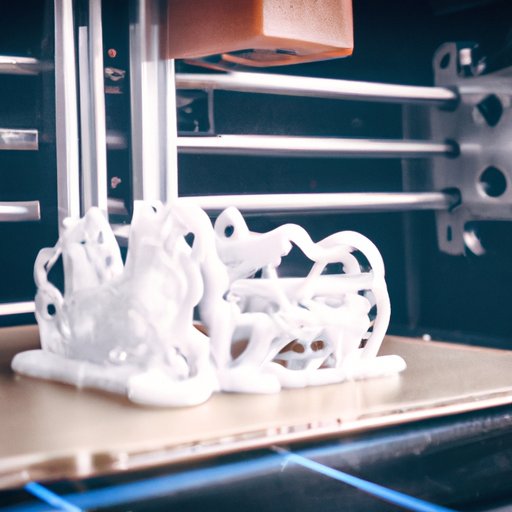
3D printing is a process of creating three-dimensional objects from digital models. In medicine, it is used to create custom prosthetics, implants, and surgical tools. It can also be used to produce drugs, tissues, and organs for transplantation.
The use of 3D printing in medical care has numerous advantages. It can help to reduce costs, as it eliminates the need for expensive manufacturing processes. It can also help to reduce the risk of errors, as it produces precise and accurate results. Additionally, it can help to reduce the time it takes to produce medical devices, as it can print objects quickly and efficiently.
Examples of 3D printing used in medical care include prosthetic limbs, dental implants, and surgical tools. Prosthetic limbs can be customized to fit a patient’s body. Dental implants can be printed to match a patient’s exact specifications. Surgical tools can be printed to meet specific requirements for a particular procedure.
Conclusion
Technology has revolutionized the medical industry, from the use of artificial intelligence to enhance patient management to the utilization of 3D printing in medical care. AI can help to reduce errors, increase accuracy, and improve the speed of diagnosis. Wearable technology can help to reduce hospital visits and improve patient engagement. Telemedicine can increase access to healthcare and reduce the transmission of infectious diseases. Augmented reality can help to reduce the duration of operations and the risk of complications. Robotics and automation can help to reduce costs and the risk of errors. Big data and predictive analytics can help to improve accuracy and the speed of diagnosis. And 3D printing can help to reduce costs and the time it takes to produce medical devices. As technology continues to advance, it will only further improve medical care.
(Note: Is this article not meeting your expectations? Do you have knowledge or insights to share? Unlock new opportunities and expand your reach by joining our authors team. Click Registration to join us and share your expertise with our readers.)