
Introduction
Bitcoin mining is the process of verifying and adding transactions to the public ledger (blockchain) of a cryptocurrency. It involves solving complex mathematical problems in order to create new blocks, which are then added to the chain and rewarded with newly created bitcoins. The process of mining requires specialized hardware and software, as well as an understanding of the economics involved. This article will provide an overview of the basics of Bitcoin mining, as well as the steps involved and the potential risks and rewards.
Explaining the Basics of Bitcoin Mining
Before we dive into the specifics of mining, it’s important to understand what cryptocurrencies are and how they work. Cryptocurrencies are digital currencies that use cryptography to secure transactions and control the creation of new units. Bitcoin is the first and most widely used cryptocurrency, and its blockchain is maintained by a decentralized network of computers around the world.
The process of mining Bitcoin involves solving complex mathematical problems in order to create new blocks, which are then added to the chain and rewarded with newly created bitcoins. This process is known as “proof-of-work” and is essential for keeping the network secure and preventing double spending. It also serves to incentivize miners to continue their work, as they are rewarded with freshly minted coins for each successful block they create.

Outlining the Steps Involved in Mining Bitcoin
Mining Bitcoin can be broken down into four main steps: setting up a mining rig, choosing a mining pool and software, running the mining software, and collecting rewards. Each step requires specific hardware and/or software in order to be successful.
Setting Up a Bitcoin Mining Rig
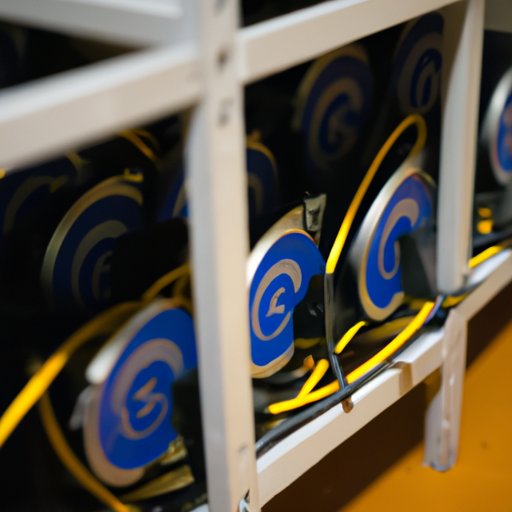
The first step in mining Bitcoin is to set up a mining rig, which is essentially a computer system designed specifically for mining purposes. It should have a powerful processor, a reliable power supply, and enough memory and storage to support the software and hardware being used. The mining rig should also have multiple GPUs for better performance.
Choosing a Mining Pool and Software
Once the mining rig is set up, miners need to choose a mining pool and software. Mining pools are groups of miners who combine their computing power in order to increase their chances of successfully mining a block. Popular mining software includes CGMiner, BFGMiner, and EasyMiner. These programs allow users to monitor their hardware and adjust settings in order to maximize their profits.
Running the Mining Software
Once the mining pool and software are chosen, miners can begin running the software. This allows them to connect to the mining pool and start mining. The software will automatically detect the hardware and adjust the settings accordingly in order to maximize efficiency and profitability.
Collecting Rewards
The final step in mining Bitcoin is collecting the rewards. Miners are rewarded with newly created coins for each successful block they create. They can then exchange these coins for cash or other cryptocurrencies. Some miners also choose to “hodl” their coins and hope that their value will increase over time.
Describing the Hardware and Software Requirements for Bitcoin Mining
In order to successfully mine Bitcoin, miners need to have the right hardware and software. The type of hardware required depends on the type of mining being done. For example, solo mining requires more powerful hardware than pool mining. Common hardware includes Graphics Processing Units (GPUs), Application Specific Integrated Circuits (ASICs), and Field Programmable Gate Arrays (FPGAs).
In addition to hardware, miners also need to have the right mining software. Popular mining software includes CGMiner, BFGMiner, and EasyMiner. These programs allow users to monitor their hardware and adjust settings in order to maximize their profits.
Comparing Different Types of Bitcoin Mining
There are two main types of Bitcoin mining: solo mining and pool mining. Solo mining requires more powerful hardware and is more difficult, but it also has the potential to be more profitable. Pool mining requires less powerful hardware and is easier, but it also has lower returns. In addition, there are two other types of mining: cloud mining and traditional mining. Cloud mining is a way to rent computing power from a third party, while traditional mining refers to using one’s own hardware and software to mine.

Analyzing the Economics of Bitcoin Mining
In order to determine whether mining is economically viable, miners need to calculate their expected returns. This involves taking into account the cost of hardware and electricity, as well as the current price of Bitcoin and the difficulty of mining. Miners also need to understand transaction fees, which are paid to miners for processing transactions on the Bitcoin network.

Highlighting the Risks and Rewards of Bitcoin Mining
The risks and rewards of Bitcoin mining depend on the type of mining being done, as well as the current market conditions. Potential risks include the cost of hardware and electricity, as well as the volatility of the cryptocurrency market. Potential rewards include the newly created coins, transaction fees, and the potential for long-term gains if the value of the coin increases over time.
Conclusion
Bitcoin mining is the process of verifying and adding transactions to the public ledger (blockchain) of a cryptocurrency. It involves solving complex mathematical problems in order to create new blocks, which are then added to the chain and rewarded with newly created bitcoins. The process of mining requires specialized hardware and software, as well as an understanding of the economics involved. This article provides an overview of the basics of Bitcoin mining, as well as the steps involved and the potential risks and rewards.
(Note: Is this article not meeting your expectations? Do you have knowledge or insights to share? Unlock new opportunities and expand your reach by joining our authors team. Click Registration to join us and share your expertise with our readers.)