
Introduction
A heat pump is a device that transfers heat energy from one place to another. It can be used to both cool and heat a space by transferring thermal energy between two locations. Heat pumps are becoming increasingly popular as an energy-efficient alternative to traditional HVAC systems. This article will explore how a heat pump works and examine its components, benefits, and cost savings.
Explaining Heat Pump Fundamentals
Heat pumps use the same principles of physics to transfer heat energy from one location to another. They are powered by electricity and work by transferring heat from a source (such as the air or ground) to a destination (such as your home). Heat pumps are most commonly used in residential and commercial settings for heating and cooling applications.
Understanding the Different Types of Heat Pumps
There are two main types of heat pumps: air-source and geothermal. Air-source heat pumps use the outside air temperature to transfer heat into or out of a building. Geothermal heat pumps use the constant temperature of the earth’s core to transfer heat into or out of a building. Both types of heat pumps are highly efficient and can help reduce energy costs when used to replace traditional HVAC systems.
Examining the Benefits of Using a Heat Pump
Heat pumps offer several advantages over traditional HVAC systems. They are more energy efficient, which means they can save you money on your energy bills. Heat pumps also require less maintenance than other HVAC systems and are quieter in operation. Additionally, heat pumps are better for the environment since they don’t produce any harmful emissions.

Examining the Components of a Heat Pump
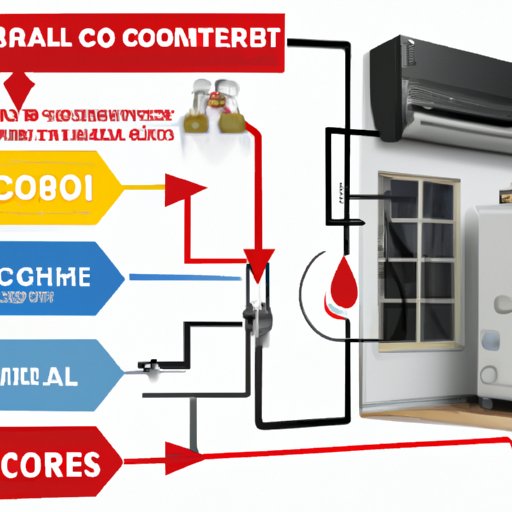
A heat pump system consists of several key components. These include an outdoor condenser, indoor evaporator, compressor, expansion valve, and refrigerant lines. The condenser is located outside and absorbs heat from the air. The evaporator is located inside and releases heat into the air. The compressor pumps the refrigerant through the system and the expansion valve regulates the flow of refrigerant. The refrigerant lines connect the components and allow the heat to be transferred.
Illustrating the Operation of a Heat Pump
In order to understand how a heat pump works, it is important to understand the basic principles of thermodynamics. Heat pumps use a process called the refrigeration cycle to transfer heat energy. The refrigeration cycle works by compressing a gas, allowing it to absorb heat, and then releasing the heat at a higher temperature. This process is repeated over and over again, resulting in a continuous flow of heat energy.

Comparing Heat Pumps to Traditional HVAC Systems
Heat pumps are more energy efficient than traditional HVAC systems. This is because they use the outside air temperature rather than burning fuel to generate heat. Heat pumps are also more reliable and require less maintenance than other HVAC systems. Additionally, heat pumps are quieter in operation and are better for the environment since they don’t produce any harmful emissions.

Describing the Benefits of Using a Heat Pump
Heat pumps offer many benefits over traditional HVAC systems. They are more energy efficient, which means they can save you money on your energy bills. Heat pumps also require less maintenance than other HVAC systems and are quieter in operation. Additionally, heat pumps are better for the environment since they don’t produce any harmful emissions.
According to a study conducted by the U.S. Department of Energy, “Heat pumps are estimated to be up to 200% more efficient than traditional furnace and air conditioning systems, meaning they can provide twice the amount of energy for the same amount of electricity.”

Analyzing How Heat Pumps Operate in Different Climates
The effectiveness of a heat pump depends on the climate. In areas with mild climates, heat pumps are very efficient and can provide significant savings on energy costs. In areas with extreme temperatures, however, heat pumps may not be as effective due to the need for supplemental heating or cooling. Additionally, heat pumps tend to operate best when temperatures are between 40°F and 90°F.
Calculating the Cost Savings of Installing a Heat Pump
Installing a heat pump can result in significant cost savings over time. According to the U.S. Department of Energy, “Heat pumps typically have lower operating costs than other heating and cooling systems, especially when temperatures remain above freezing.” Additionally, heat pumps are eligible for rebates and tax credits that can further reduce the cost of installation.
Conclusion
Heat pumps are a highly efficient and cost-effective alternative to traditional HVAC systems. They are more energy efficient and require less maintenance than other HVAC systems. Heat pumps also offer environmental benefits since they don’t produce any harmful emissions. Finally, installing a heat pump can result in significant cost savings over time.
In conclusion, heat pumps are a great option for those looking for an energy-efficient and cost-effective way to heat and cool their homes. With the right system and proper installation, heat pumps can provide significant savings on energy costs while also helping to protect the environment.
(Note: Is this article not meeting your expectations? Do you have knowledge or insights to share? Unlock new opportunities and expand your reach by joining our authors team. Click Registration to join us and share your expertise with our readers.)