
Introduction
Electric bikes, or e-bikes as they are commonly called, are becoming increasingly popular among commuters, fitness enthusiasts, and outdoor adventurers alike. These innovative bikes look just like traditional bicycles but come equipped with a battery-powered electric motor that provides pedal assistance, enabling riders to travel faster and further with less effort. In this article, we will delve into the inner workings of e-bikes to help you understand how they work, and explore the benefits, trends, and safety tips associated with using them.
Key Components of an E-Bike
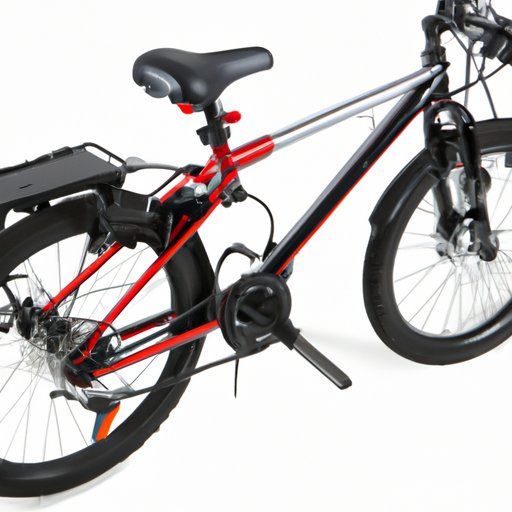
E-bikes rely on three main components to function: the battery, motor, and control system. The battery provides power to the motor, and the control system manages how much assistance the motor provides to the rider. Let’s take a closer look at each of these components.
The battery: E-bike batteries are typically lithium-ion and are mounted on the frame or integrated into the frame’s design. The battery provides power to the motor and can be charged from a regular household outlet. The range of an e-bike depends on the battery’s capacity measured in watt-hours (Wh). Higher capacity batteries offer more range per charge, but also add to the overall weight of the bike.
The motor: E-bike motors can be either hub motors or mid-drive motors. Hub motors are mounted either in the rear or front wheel and provide assistance directly to the wheel’s rotation. Mid-drive motors, on the other hand, are mounted on the bike’s frame by the cranks, providing assistance to the chain’s rotation. The motor’s power is measured in watts (W), ranging from 250 watts to 750 watts, and determines how much assistance the rider receives.
The control system: The control system is comprised of a sensor and a controller. The sensor measures the rider’s pedaling cadence and torque, while the controller interprets the data and determines how much assistance the motor provides. The control system can be either cadence-based or torque-based, with torque-based systems offering more responsive and efficient pedaling assistance.
E-Bikes vs. Traditional Bicycles
The key difference between e-bikes and traditional bicycles is that e-bikes have a motor that provides assistance to the rider, making pedaling less strenuous and difficult. This assistance enables e-bike riders to cover greater distances, climb hills with ease, and ride faster than traditional bicycles. The added benefit of the electric motor allows more people to enjoy cycling, regardless of age or fitness level. However, e-bikes are often heavier and more expensive than traditional bikes, making them a less feasible option for some.
Building Your Own E-Bike
Building an e-bike from scratch can be a cost-effective alternative to purchasing a pre-built e-bike. However, it requires specific knowledge and expertise. To build an e-bike from scratch, you will need a frame, motor, battery, control system, and other necessary components such as a throttle, display, and wiring. You can source these components from multiple suppliers online or from a local bike shop. Building an e-bike requires a thorough understanding of electrical and mechanical engineering principles, so it is essential to have a basic knowledge of these principles to ensure safety and proper operation.
Latest E-Bike Trends and Technologies
As the popularity of e-bikes continues to grow, several advancements and innovations are being developed to improve their functionality and performance. Some of the latest trends and technologies include:
– Increased range and battery life: Battery technology is advancing, with many manufacturers increasing the range of their e-bikes to up to 100 miles per charge.
– Lightweight design: As bikes become heavier with the addition of the battery and motor, lightweight materials such as carbon fiber and aluminum are being utilized to reduce overall weight and improve handling.
– Smart technology: Many new e-bikes come equipped with smart technology such as automatic gear shifting, GPS navigation, and touch screen displays.
Safety Tips for Riding an E-Bike
To remain safe while riding an e-bike, it is important to adhere to the following safety tips:
– Wear a helmet: E-bikes can reach speeds of up to 20 mph, so it is crucial to wear a helmet for protection.
– Perform a pre-ride check: Before heading out, check the brakes, tires, and lights to ensure they are in good working order.
– Observe traffic laws: E-bikes are subject to the same traffic laws as traditional bicycles. Obey all traffic signals and signs.
– Use appropriate protective gear: Use reflective clothing and lights to improve visibility, especially when riding at night.
Environmental and Social Benefits of E-Bikes
E-bikes offer various environmental and social benefits, including:
– Reduced carbon emissions: By using an e-bike instead of a car, you can significantly reduce carbon emissions which is good for the environment.
– Healthier communities: E-bikes encourage people to spend more time outside riding, promoting a healthier, more active lifestyle.
– Cost-effective: Compared to a car, e-bikes are an affordable way to get around, especially for short commutes, which can help reduce transportation expenses.
Conclusion
E-bikes are an innovative and exciting way to get around while promoting a healthier and more sustainable mode of transportation. Understanding how they work and their benefits is an essential part of utilizing them to their full potential. By keeping safety in mind and enjoying the ride, e-bikes can offer a powerful solution to transportation needs today and in the future.
(Note: Is this article not meeting your expectations? Do you have knowledge or insights to share? Unlock new opportunities and expand your reach by joining our authors team. Click Registration to join us and share your expertise with our readers.)