
Introduction
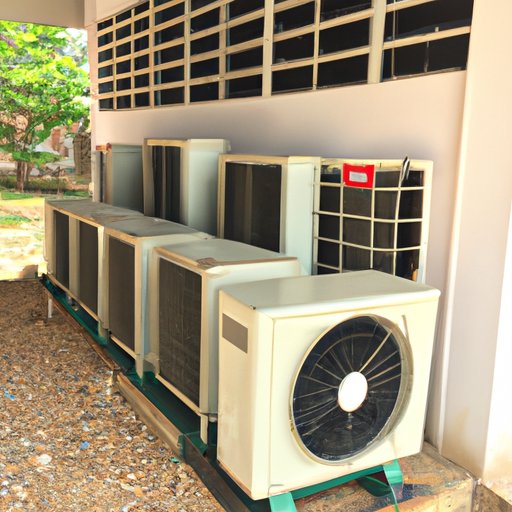
An air conditioner is a device that cools air by removing heat from the air and transferring it outside the room or building. It works by circulating refrigerant through a closed-loop system of coils and a compressor. The purpose of this article is to provide a step-by-step guide on how air conditioners work and the science behind their cooling power.
Step-by-Step Guide to Understanding How Air Conditioners Work
In order to understand how an air conditioner works, it is important to first understand the components of the system. The four main components of an air conditioner are the compressor, condenser, expansion valve, and evaporator.
The compressor is the heart of the air conditioner and is responsible for compressing the refrigerant gas and circulating it throughout the system. The condenser is a coil of tubing that is used to release the heat from the refrigerant. The expansion valve is a device that regulates the flow of refrigerant and helps maintain the desired temperature. Finally, the evaporator is a coil of tubing that absorbs the heat from the air and transfers it to the refrigerant.
What’s Behind the Cooling Power of Air Conditioners?
The cooling power of an air conditioner comes from two main elements: refrigerant and heat exchange. Refrigerant is a chemical compound that is used to absorb heat from the air and transfer it outside the room or building. Heat exchange is the process in which heat is transferred from one source to another.

Exploring the Science Behind Air Conditioner Cooling
The science behind air conditioner cooling is based on the principles of thermodynamics. Thermodynamics is the study of energy and its transformation between different forms. In an air conditioner, energy is transferred from the air inside the room to the refrigerant in the form of heat. This heat is then transferred to the outside air, cooling the air inside the room.
The process of air conditioning is also based on the relationship between pressure and temperature. As the pressure of the refrigerant increases, so does the temperature. This allows the air conditioner to cool the air inside the room by reducing the pressure of the refrigerant and thus lowering the temperature.

The Basics of Air Conditioner Operation
The first step in understanding how air conditioners work is to understand the basics of air conditioner operation. When the air conditioner is turned on, the compressor starts up and begins to circulate the refrigerant through the system. The refrigerant is then compressed, causing it to become hotter and increase in pressure. The hot, high-pressure refrigerant is then passed through the condenser where the heat is released into the outside air.
Once the refrigerant has been cooled, it is then passed through the expansion valve. This valve reduces the pressure of the refrigerant, causing it to become cooler. The cooled refrigerant is then passed through the evaporator where it absorbs the heat from the air inside the room. The cooled air is then circulated back into the room, cooling it down.
In addition to these basic steps, the air conditioner also has the ability to set the temperature as well as regulate the humidity levels in the room. This is done by controlling the amount of refrigerant that is circulated through the system and the speed of the compressor.
An Inside Look at How Air Conditioners Function
When it comes to understanding how air conditioners work, it is important to look at the different types of air conditioners and the components that make them up. There are three main types of air conditioners: window units, split systems, and central air conditioners. Each of these has different components that are responsible for cooling the air.
The components of an air conditioner include the compressor, condenser, expansion valve, and evaporator. The compressor is responsible for compressing the refrigerant and circulating it throughout the system. The condenser is a coil of tubing that is used to release the heat from the refrigerant. The expansion valve is a device that regulates the flow of refrigerant and helps maintain the desired temperature. Finally, the evaporator is a coil of tubing that absorbs the heat from the air and transfers it to the refrigerant.
Once all of the components have been assembled, the air conditioner is ready to start cooling the air. When the air conditioner is turned on, the compressor starts up and begins to circulate the refrigerant through the system. The refrigerant is then compressed, causing it to become hotter and increase in pressure. The hot, high-pressure refrigerant is then passed through the condenser where the heat is released into the outside air. Once the refrigerant has been cooled, it is then passed through the expansion valve where it is reduced in pressure and cooled further. The cooled refrigerant is then passed through the evaporator where it absorbs the heat from the air inside the room. The cooled air is then circulated back into the room, cooling it down.
Conclusion
Understanding how air conditioners work is essential for proper maintenance and operation of the system. By understanding the components of the air conditioner and the science behind its cooling power, it is possible to ensure that the air conditioner is running efficiently and providing maximum cooling power. Additionally, understanding the basics of air conditioner operation can help to troubleshoot any issues that may arise with the system.
By taking the time to understand how air conditioners work, homeowners can save money in the long run by avoiding costly repairs and ensuring that their air conditioner is running efficiently. Knowing how air conditioners work can also help homeowners make informed decisions when purchasing a new system.
(Note: Is this article not meeting your expectations? Do you have knowledge or insights to share? Unlock new opportunities and expand your reach by joining our authors team. Click Registration to join us and share your expertise with our readers.)