
Introduction
Acupuncture is a type of traditional Chinese medicine that has been practiced for over 2,000 years. It involves the insertion of thin needles into specific points on the body to stimulate the flow of energy and promote healing. While the effectiveness of acupuncture remains controversial, numerous studies have found evidence to support its use for certain conditions. In this article, we will explore the scientific evidence behind acupuncture, its history, how it works, and its potential benefits.

Traditional Chinese Medicine and How Acupuncture Works
Traditional Chinese medicine (TCM) is a holistic approach to health and wellness that seeks to treat the whole person rather than just the symptoms of a disease. According to TCM, all aspects of a person’s life—including physical, mental, emotional, and spiritual—are interconnected and must be balanced in order to achieve optimal health. Acupuncture is one of the core therapies used in TCM.
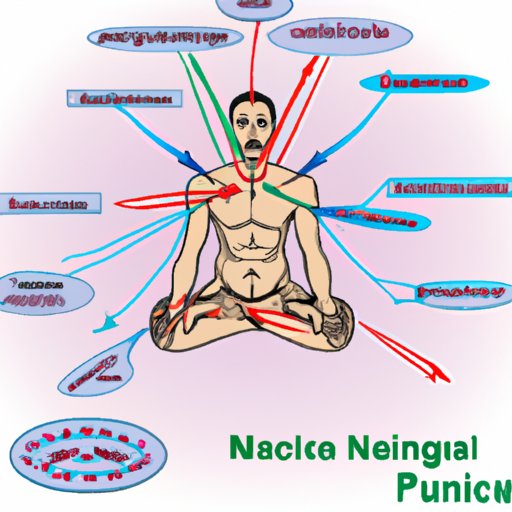
At the heart of acupuncture is the concept of qi (pronounced “chee”), which is translated as “vital energy” or “life force.” According to TCM, qi flows through the body along pathways known as meridians. When these pathways become blocked or out of balance, illness and pain can occur. Acupuncture is thought to restore balance to the body by unblocking these pathways and stimulating the flow of qi.
The process of acupuncture involves inserting very thin needles into specific points on the body known as acupoints. These points are located along the meridians, and each point is believed to correspond to a particular organ or bodily function. The needles are typically left in place for 10-20 minutes while the patient relaxes. Some practitioners may also apply heat, pressure, or electrical stimulation to further enhance the healing effects of the treatment.

Benefits of Acupuncture for Pain Management
One of the most common uses of acupuncture is for pain relief. Numerous studies have demonstrated its effectiveness in treating a wide range of conditions, including chronic back pain, neck pain, osteoarthritis, migraine headaches, and postoperative pain. According to a systematic review published in the Cochrane Database of Systematic Reviews, “Acupuncture is effective for the treatment of chronic pain and is therefore a reasonable referral option.”
So how does acupuncture work to relieve pain? Studies suggest that acupuncture stimulates the release of endorphins, the body’s natural painkillers. Endorphins act on the opioid receptors in the brain to reduce pain signals. Acupuncture has also been found to activate the autonomic nervous system and increase blood circulation, both of which can help reduce pain.

Effects of Acupuncture on the Nervous System
In addition to relieving pain, acupuncture has also been found to have positive effects on the nervous system. A study published in the journal Neuroscience Letters found that acupuncture can modulate neurochemical activity in the central nervous system. Specifically, it was found to increase the levels of neurotransmitters such as serotonin, dopamine, and noradrenaline, which are associated with improved mood and reduced anxiety.
Another study published in the Journal of Alternative and Complementary Medicine found that acupuncture can reduce stress and anxiety. The researchers concluded that “acupuncture is an effective intervention for reducing psychological distress and improving quality of life.”
Role of Meridians in Acupuncture
As mentioned earlier, meridians play an important role in acupuncture. Meridians are channels of energy that run throughout the body and are thought to connect all of the organs and bodily systems. Practitioners believe that when the flow of energy along these pathways becomes blocked, illness and pain can occur. By inserting needles into specific points along the meridians, acupuncture is thought to restore balance and harmony to the body.
The theory of meridians is supported by recent research. A study published in the Journal of Alternative and Complementary Medicine found that acupuncture points are associated with areas of increased electrical conductance, suggesting that there may be a relationship between acupuncture points and the flow of energy along the meridians.
Conclusion
Acupuncture has been used as a form of healing for thousands of years, and modern science is beginning to uncover the potential benefits of this ancient practice. Research suggests that acupuncture can be an effective treatment for pain, stress, and anxiety and can have a positive effect on the nervous system. Furthermore, the recent discovery of increased electrical conductance at acupuncture points lends support to the theory of meridians and the importance of restoring balance to the body. While more research is needed to fully understand the mechanisms of acupuncture, the evidence so far suggests that it can be an effective and safe therapy for many conditions.
(Note: Is this article not meeting your expectations? Do you have knowledge or insights to share? Unlock new opportunities and expand your reach by joining our authors team. Click Registration to join us and share your expertise with our readers.)