
Introduction
A heat pump is a device that utilizes energy from the air or ground to heat and cool indoor spaces. Heat pumps are an efficient way to regulate temperature in homes and businesses, as they use less energy than other heating and cooling systems. This article will explore the components of a heat pump, how it works, its efficiency compared to other heating methods, and tips for proper maintenance.
Exploring the Components of a Heat Pump
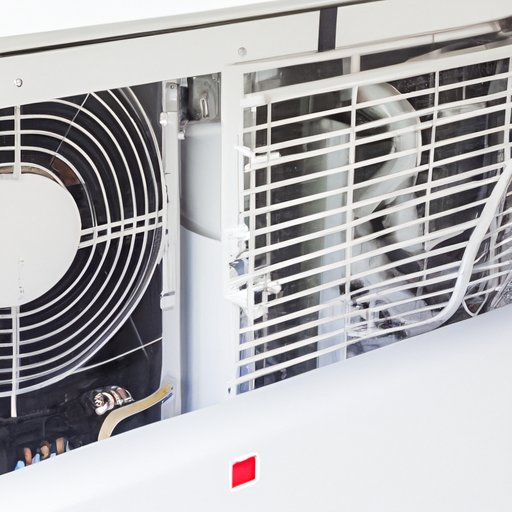
The components of a heat pump include a refrigerant, compressor, condenser, expansion valve, and evaporator. The refrigerant is a chemical compound that absorbs heat energy when it evaporates and releases heat energy when it condenses. The compressor is responsible for compressing the refrigerant, which increases its temperature and pressure. The condenser then transfers the heat from the refrigerant to either the inside or outside of the building depending on if the heat pump is set to heat or cool. The expansion valve controls the flow of the refrigerant and regulates its pressure.
The evaporator is located inside the building and is responsible for absorbing heat energy from the air. As the refrigerant passes through the evaporator, it absorbs heat energy and evaporates into a gas. This process causes the air inside the building to be cooled.

Understanding How Heat Pumps Work
Heat pumps utilize a process known as the refrigeration cycle to transfer heat energy from one place to another. This is done by using a compressor to pressurize the refrigerant and cause it to become hot. The refrigerant is then passed through a heat exchanger, where it transfers its heat energy to either the inside or the outside of the building depending on the setting of the heat pump. The refrigerant is then passed through the expansion valve, which reduces its pressure and allows it to become cold. Finally, the refrigerant is passed through the evaporator, where it absorbs heat energy from the air inside the building and evaporates.
The refrigerant then returns to the compressor to begin the cycle again. This process causes the air inside the building to be heated or cooled depending on the setting of the heat pump. As the refrigerant cycles through this process, it continually transfers heat energy from one place to another.
Comparing Heat Pump Efficiency to Other Heating Methods
Heat pumps are more efficient than electric resistance heating and gas furnaces, as they use less energy to heat and cool indoor spaces. According to the U.S. Department of Energy, “Heat pumps typically use 25 to 50 percent less energy than electric resistance heating to generate the same amount of heat.” Heat pumps are also more efficient than geothermal systems, as they do not require underground piping and can be installed in almost any location.

Examining Common Problems with Heat Pumps
Heat pumps can suffer from a variety of common problems, such as low refrigerant levels, frozen coils, faulty fan motors, and blocked filters. Low refrigerant levels can cause the heat pump to run inefficiently, while frozen coils can prevent the heat pump from transferring heat energy. Faulty fan motors can cause the heat pump to run noisily, and blocked filters can reduce airflow and decrease the efficiency of the heat pump.

Tips for Maintaining Your Heat Pump
Proper maintenance is essential for keeping your heat pump running efficiently. It is important to regularly check and change the filters, as clogged filters can reduce airflow and decrease the efficiency of the heat pump. It is also important to inspect the outdoor unit, as debris can block air flow and cause the heat pump to run inefficiently. Additionally, it is important to monitor the refrigerant levels and have a professional service visit annually.
Conclusion
In conclusion, heat pumps are an efficient way to heat and cool indoor spaces. They utilize a refrigeration cycle to transfer heat energy from one place to another, and are more efficient than other heating methods. Common problems with heat pumps can be avoided by properly maintaining the system, which includes regularly checking and changing the filters, inspecting the outdoor unit, monitoring refrigerant levels, and having a professional service visit annually.
(Note: Is this article not meeting your expectations? Do you have knowledge or insights to share? Unlock new opportunities and expand your reach by joining our authors team. Click Registration to join us and share your expertise with our readers.)