
Introduction
Honey is a sweet, viscous fluid produced by certain species of bees. It has been used throughout history for its medicinal properties, as well as for its unique flavor and texture. Bees are essential for honey production, as they are the only creatures capable of collecting nectar from flowers and transforming it into honey. In this article, we will explore how a bee makes honey, from their anatomy and behavior to the role of pollination, climate change and commercial beekeeping.
Exploring the Anatomy of a Bee and How It Produces Honey
Bees have several unique features that enable them to produce honey. The most important of these is their proboscis, which is a long, tube-like organ that they use to collect nectar from flowers. Bees also have special glands in their bodies that secrete enzymes, which help to break down the nectar into simple sugars. These sugars are then stored in the bees’ “honey stomachs” and transported back to the hive.
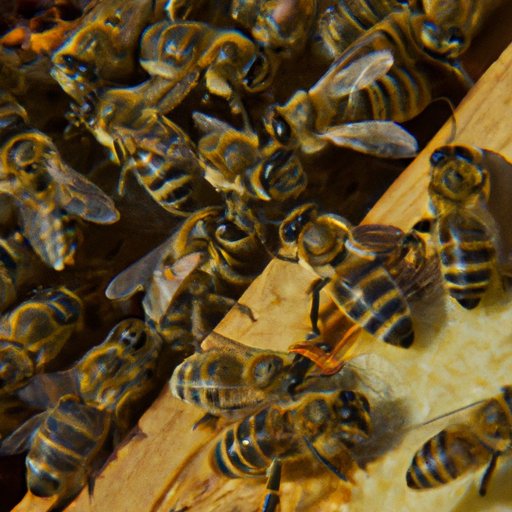
Once the nectar is back at the hive, the bees regurgitate it into the cells of the comb. Here, the bees fan their wings to evaporate the moisture from the nectar, turning it into a thick syrup known as honey. This honey is then capped with wax to seal it for storage.

Examining the Role of Pollination in Honey Production
Pollination plays an important role in honey production. Bees visit flowers to collect nectar, but in the process they also transfer pollen from one flower to another. This helps to fertilize plants, which produces fruits and vegetables that provide food for both humans and animals. Without pollination, there would be far less food available and honey production would suffer.
The relationship between flowers and bees is mutually beneficial. Flowers provide nectar, which the bees need to produce honey, while the bees help to pollinate the flowers, ensuring their continued reproduction. This symbiotic relationship is essential for the survival of both organisms.
Investigating the Behavioral Patterns of Bees That Lead to Honey Production
Bees are highly social creatures and live in colonies consisting of a queen bee, worker bees and drones. The queen bee is responsible for laying eggs and producing new generations of bees, while the worker bees do all the hard work of gathering food, building the hive and caring for the young. Drones are male bees whose sole purpose is to mate with the queen.
Each type of bee has a specific role in the production of honey. Worker bees are responsible for gathering nectar and bringing it back to the hive, while the queen bee lays eggs and maintains the order of the colony. Drones do not contribute directly to honey production, but they are essential for the survival of the colony.

Comparing Different Types of Honeys and Their Sources
There are many different types of honey available, each with its own distinct flavor and texture. Raw honey is unprocessed and contains natural enzymes, antioxidants and vitamins. Processed honey is heated and filtered, removing any impurities and making it easier to spread. Some honeys are sourced from specific flowers or plants, while others are a mix of different nectars.
Honey can also be classified according to its color and flavor. Light-colored honeys tend to have a milder flavor, while darker varieties are more robust and intense. Different types of honey are also used for different purposes, such as baking, cooking or medicinal uses.

Analyzing the Benefits of Eating Honey for Human Health
Eating honey can have many health benefits. It is a good source of energy, as it contains natural sugars that are easily digested and absorbed by the body. It also contains antioxidants, which can help to protect the body against free radical damage. Additionally, honey may help to boost the immune system and reduce inflammation.
Raw honey is considered to be the most beneficial, as it still contains the natural enzymes and vitamins that are lost during processing. However, it is important to note that honey should not be given to children under the age of one, as it can contain bacteria that may cause illness.

Investigating the Impact of Climate Change on the Production of Honey
Climate change is having a significant impact on honey production. Rising temperatures and changing weather patterns can affect the availability of flowers, thus reducing the amount of nectar available to bees. Additionally, extreme weather events such as floods and droughts can damage hives and disrupt the pollination process.
However, there are ways to mitigate the effects of climate change on honey production. Planting native flowers and trees can provide a reliable source of nectar for bees, while providing habitats for other pollinators. Additionally, sustainable beekeeping practices can help to ensure the health and vitality of bee populations.
Exploring the Role of Commercial Beekeeping in Honey Production
Commercial beekeeping is becoming increasingly common, as it enables large-scale honey production. In this form of beekeeping, beekeepers manage large colonies of bees in specially designed hives. The bees are fed a diet of sugar water and pollen, and the honey is harvested from the hives on a regular basis.
While commercial beekeeping can be beneficial for large-scale honey production, it can also have negative impacts. For example, the use of pesticides and chemicals can harm bee populations, and the relocation of hives can disrupt the local ecosystem. Additionally, the use of antibiotics and other treatments can reduce the quality of the honey produced.
Conclusion
In conclusion, understanding how a bee makes honey is essential for appreciating the complexity of honey production. Bees have unique anatomy and behavior that enable them to collect nectar from flowers and transform it into honey. Pollination is essential for honey production, as it ensures the continued reproduction of flowers. Additionally, climate change and commercial beekeeping can have a significant impact on honey production.
By understanding the intricacies of honey production, we can better appreciate the importance of bees and the role they play in our lives. We can also take steps to protect and preserve bee populations, ensuring that we can continue to enjoy the sweet taste of honey for years to come.
(Note: Is this article not meeting your expectations? Do you have knowledge or insights to share? Unlock new opportunities and expand your reach by joining our authors team. Click Registration to join us and share your expertise with our readers.)