
Introduction
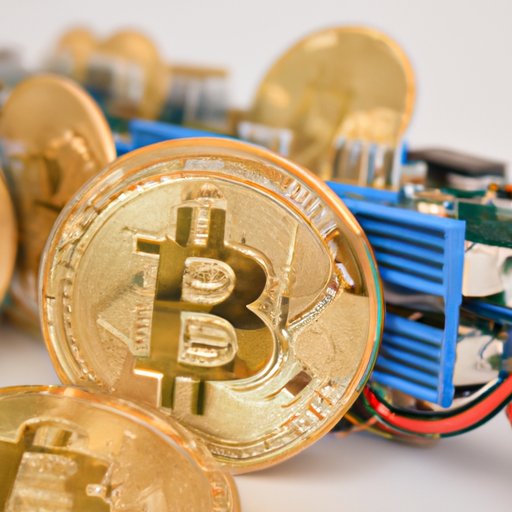
Bitcoin mining is the process of verifying and adding transaction records to the public ledger (blockchain) of past Bitcoin transactions. It is also the process through which new Bitcoins are released into circulation. In order to be able to mine Bitcoin, you need to have access to specialized hardware and software that can help you solve complex mathematical problems and generate new blocks of Bitcoin transactions.
Explaining the Basics of Bitcoin Mining
Before delving into the details of Bitcoin mining, it is important to understand what Bitcoin is and how it works. Bitcoin is a digital currency created in 2009 by an anonymous individual or group known as Satoshi Nakamoto. Bitcoin transactions are recorded on a public ledger, referred to as the blockchain, which is maintained by a network of computers around the world. Transactions are verified by miners who use specialized software to solve complex mathematical equations, and when a miner successfully solves an equation, they are rewarded with newly minted Bitcoins.
In order to be able to mine Bitcoin, you need to have access to specialized hardware and software. The most commonly used hardware for mining Bitcoin is a specialized computer called an ASIC miner, which stands for Application Specific Integrated Circuit. ASIC miners are designed specifically for the purpose of mining Bitcoin, and they are much more powerful than regular computers. Additionally, miners need to have access to specialized software such as the Bitcoin Core client or any other compatible software that can help them solve the complex mathematical problems associated with Bitcoin mining.
Bitcoins are used for various purposes, including buying goods and services, trading, and investing. They can also be used to purchase other cryptocurrencies, and some people even use them to pay for goods and services online. As the popularity of Bitcoin has grown, so has the value of the currency, making it an attractive option for investors and traders.
Outlining the Necessary Equipment for Bitcoin Mining
In order to start mining Bitcoin, you will need to have access to specialized hardware and software. ASIC miners are the most commonly used hardware for mining Bitcoin, and they are designed specifically for the purpose of mining Bitcoin. These miners are much more powerful than regular computers, and they are capable of solving the complex mathematical problems associated with Bitcoin mining. Additionally, you will need to have access to specialized software such as the Bitcoin Core client or any other compatible software that can help you solve the equations required for mining.
In addition to the hardware and software needed to mine Bitcoin, you will also need to have access to a reliable internet connection and a wallet to store your mined Bitcoin. A wallet is a secure digital storage system that allows you to store, send, and receive Bitcoin. There are many different types of wallets available, and it is important to choose one that is secure and reliable.
Describing the Different Types of Mining Pools
Mining pools are groups of miners who join forces to increase their chances of successfully mining Bitcoin. There are two main types of mining pools: solo mining and pooled mining. Solo mining is when a miner mines Bitcoin by themselves, while pooled mining is when a group of miners work together to increase their chances of successfully mining Bitcoin. Pooled mining is usually more profitable than solo mining, but it requires more resources and coordination.

Analyzing the Profitability of Bitcoin Mining
The profitability of mining Bitcoin depends on several factors, including the cost of the hardware and software, the amount of electricity consumed, and the current market price of Bitcoin. Calculating the profitability of mining Bitcoin can be complicated, as there are many variables that need to be taken into account. It is important to do your research and understand all of the factors that affect the profitability of mining before investing in hardware or software.
Investigating the Energy Consumption of Bitcoin Mining
The energy consumption of Bitcoin mining is an important factor to consider when assessing the profitability of mining. Estimating the actual energy consumption of Bitcoin mining can be difficult, as there are many variables that need to be taken into account. Additionally, measuring the carbon footprint of Bitcoin mining is important, as it can help to inform decisions about the sustainability of the activity.
Comparing Cloud Mining vs Traditional Mining
Cloud mining is a type of mining that involves using remote data centers to mine Bitcoin instead of using local hardware and software. Cloud mining can be more convenient than traditional mining, as it does not require the user to purchase or maintain any hardware or software. However, cloud mining can also be more expensive, as the user needs to pay a fee to the cloud mining service. Additionally, users need to be aware of the potential security risks associated with cloud mining.
Traditional mining is when a miner uses their own hardware and software to mine Bitcoin. This type of mining can be more cost-effective, as the user does not need to pay any fees. Additionally, the user has full control over their hardware and software, which can reduce the risk of security breaches. However, traditional mining requires the user to purchase and maintain their own hardware and software, which can be costly.
Examining the Legal Implications of Bitcoin Mining
The legality of Bitcoin mining varies from country to country, and it is important to understand the regulations in your area before engaging in mining activity. Additionally, it is important to be aware of the tax implications of mining Bitcoin, as it is considered to be taxable income in some countries.
Conclusion
Bitcoin mining is an important part of the Bitcoin ecosystem, and it can be a lucrative endeavor if done correctly. In order to mine successfully, you need to have access to specialized hardware and software, and it is important to understand the legal and taxation implications of mining in your area. Additionally, it is important to understand the energy consumption and carbon footprint of mining, as this can help inform decisions about the sustainability of the activity.
(Note: Is this article not meeting your expectations? Do you have knowledge or insights to share? Unlock new opportunities and expand your reach by joining our authors team. Click Registration to join us and share your expertise with our readers.)