

Exploring the Basics of Area Measurement in Rectangles
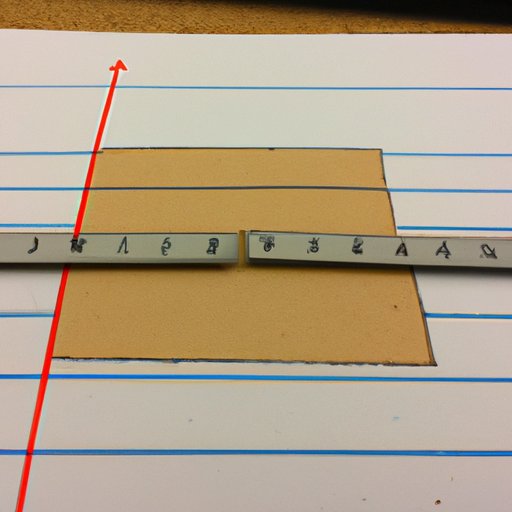
When it comes to understanding how to measure the area of any shape, rectangles are one of the most basic shapes to grasp. The concept of finding the area of a rectangle is relatively straightforward and easy to understand but can become more complex when dealing with longer equations and other shapes. To understand how to calculate the area of a rectangle, it’s important to first understand the basics of area measurement and the relationship between length and width.
Definition of Area
In mathematics, area is defined as the space inside or around a two-dimensional figure. According to MathIsFun.com, “The area tells us the size of the shape.”1 When measuring the area of a rectangle, this means measuring the space that the rectangle takes up on a two-dimensional surface.
Understanding Length and Width
When calculating the area of a rectangle, it’s important to understand what length and width mean. Length is defined as the longest side of a rectangle and width is defined as the shortest side of a rectangle.2 When finding the area of a rectangle, it’s essential to know the measurements of both the length and the width.
Utilizing Length and Width to Calculate the Area of a Rectangle
Once you have an understanding of what area is and the measurements of the length and width of a rectangle, you can begin to use those measurements to calculate the area. To do so, you will need to use a specific formula.
Using the Formula for Calculating Area
The formula for calculating the area of a rectangle is A = L x W, which stands for area equals length times width. This formula is based on the fact that the area of a rectangle is equal to the product of its length and width.3 So, if you want to calculate the area of a rectangle, simply take the length of the rectangle and multiply it by the width.
Visual Example of How to Use the Formula
To better understand how to use the formula for finding the area of a rectangle, let’s look at a visual example. Let’s say we have a rectangle with a length of 10 cm and a width of 5 cm. To find the area of this rectangle, we would use the formula A = L x W. So, in this case, the area would be 10 cm x 5 cm = 50 cm2. This means that the area of the rectangle is 50 cm2.
Breaking Down the Formula for Finding Area in a Rectangle
Now that you understand the basics of the formula for calculating the area of a rectangle, let’s break down the formula further. To do this, let’s look at some examples of how to use the formula.
Explanation of the Formula
The formula for calculating the area of a rectangle is A = L x W, which stands for area equals length times width. This formula is based on the fact that the area of a rectangle is equal to the product of its length and width. So, if you want to calculate the area of a rectangle, simply take the length of the rectangle and multiply it by the width.
Examples of How to Use the Formula
Let’s look at some examples of how to use the formula for calculating the area of a rectangle. For example, if you have a rectangle with a length of 8 cm and a width of 4 cm, the area of the rectangle would be 8 cm x 4 cm = 32 cm2. Similarly, if you have a rectangle with a length of 12 cm and a width of 3 cm, the area of the rectangle would be 12 cm x 3 cm = 36 cm2. As you can see, the formula for calculating the area of a rectangle is relatively simple and straightforward.
Understanding the Relationship Between Sides and Area in Rectangles
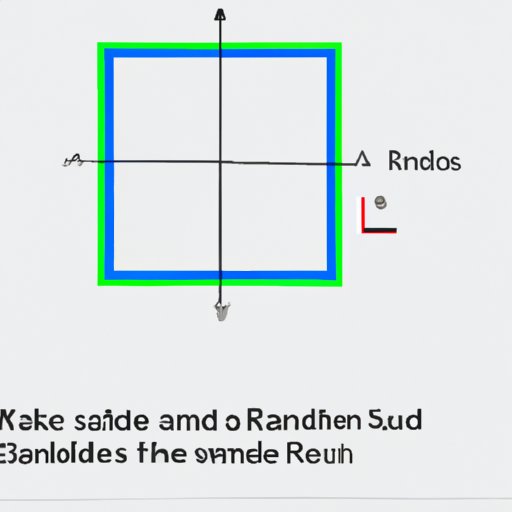
Now that you understand how to use the formula for calculating the area of a rectangle, it’s important to understand the relationship between the sides of a rectangle and its area. This is because the area of a rectangle is directly proportional to the length and width of the rectangle.
Explaining the Relationship Between Different Sides and Their Effect on the Area
When it comes to understanding the relationship between different sides and their effect on the area of a rectangle, it’s important to remember that the area of a rectangle is directly proportional to the length and width of the rectangle. This means that if you increase the length or width of a rectangle, the area of the rectangle will also increase. Similarly, if you decrease the length or width of a rectangle, the area of the rectangle will also decrease.
Examples of How Different Side Lengths Affect the Area
To better understand how different side lengths affect the area of a rectangle, let’s look at some examples. For example, if you have a rectangle with a length of 10 cm and a width of 5 cm, the area of the rectangle would be 10 cm x 5 cm = 50 cm2. However, if you were to increase the length of the rectangle to 15 cm and keep the width at 5 cm, the area of the rectangle would increase to 15 cm x 5 cm = 75 cm2. On the other hand, if you were to decrease the length of the rectangle to 5 cm and keep the width at 10 cm, the area of the rectangle would decrease to 5 cm x 10 cm = 50 cm2.
Using a Calculator or Online Tool to Quickly Find the Area of a Rectangle
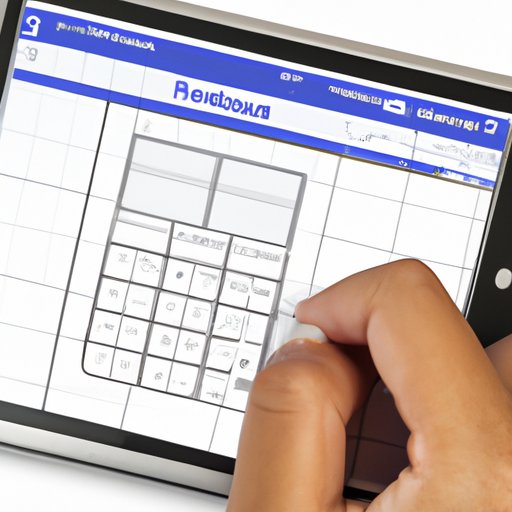
In addition to using the formula for calculating the area of a rectangle, there are also other methods you can use to quickly and easily find the area of a rectangle. One such method is to use a calculator or an online tool.
Explaining Why Using a Calculator or Online Tool Is Beneficial
Using a calculator or an online tool can be beneficial when trying to find the area of a rectangle because it allows you to quickly and easily calculate the area without having to do any complex calculations. Additionally, many calculators and online tools allow you to input multiple measurements, which makes finding the area of a rectangle even easier.
Steps to Take When Using a Calculator or Online Tool
When using a calculator or an online tool to find the area of a rectangle, the steps you need to take are relatively simple. First, you will need to input the measurements of the length and width of the rectangle into the calculator or online tool. Once you have done this, the calculator or online tool will then calculate the area of the rectangle for you.
Putting It All Together: How to Find the Area of Any Rectangle
Now that you understand the basics of area measurement, the formula for calculating the area of a rectangle, the relationship between sides and area in rectangles, and how to use a calculator or online tool to quickly find the area of a rectangle, you can put it all together to find the area of any rectangle. To do this, simply follow these steps:
- Measure the length and width of the rectangle.
- Use the formula A = L x W to calculate the area of the rectangle.
- If needed, use a calculator or online tool to quickly and easily calculate the area.
Final Tips for Finding the Area of a Rectangle
When finding the area of a rectangle, there are a few final tips to keep in mind. First, make sure you measure the length and width accurately so that your calculations will be correct. Second, double check your calculations to make sure they are accurate. Finally, if you are having trouble understanding the formula or calculating the area, don’t hesitate to reach out for help.
Finding the area of a rectangle may seem like a daunting task, but with the right knowledge and tools, it can be a relatively simple process. Now that you understand the basics of area measurement, the formula for calculating the area of a rectangle, the relationship between sides and area in rectangles, and how to use a calculator or online tool to quickly find the area of a rectangle, you have all the information you need to find the area of any rectangle.
1Math Is Fun, Area Definition, Accessed May 2021 (Note: Is this article not meeting your expectations? Do you have knowledge or insights to share? Unlock new opportunities and expand your reach by joining our authors team. Click Registration to join us and share your expertise with our readers.)
2Math Open Reference, Rectangle Length and Width, Accessed May 2021
3Khan Academy,