
Introduction
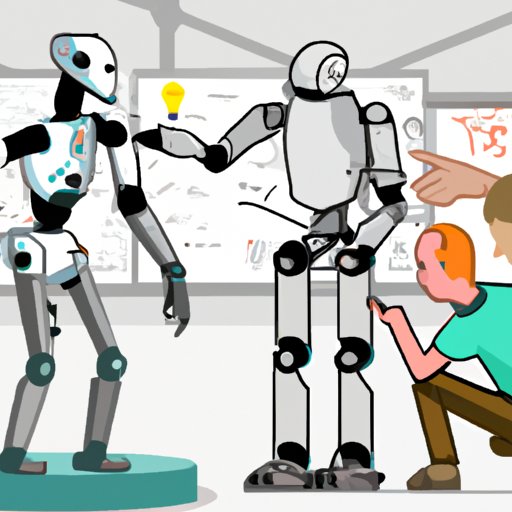
Robots are machines that are programmed to perform specific tasks autonomously or with minimal human input. They are becoming increasingly sophisticated and can be found performing a wide range of tasks in many industries, such as manufacturing, healthcare, agriculture, and transportation. However, for robots to be effective, they must be able to learn how to do things – and this is where the challenge lies.
In this article, we explore the different types of learning algorithms used by robots, investigate the role of sensors in robot learning, examine machine and deep learning techniques for robots, evaluate the impact of human-robot interaction on learning, analyse how robotics research is advancing autonomous learning, and understand the relationship between AI and robotics in learning.

Exploring Different Types of Learning Algorithms Used by Robots
Robots use various learning algorithms to acquire new skills and knowledge. These algorithms can be broadly classified into three main categories: supervised learning, unsupervised learning, and reinforcement learning.
Supervised Learning
Supervised learning algorithms are based on the idea of providing “inputs” (i.e., data) and “outputs” (i.e., desired results) to the robot. The robot then uses these inputs and outputs to “learn” the desired behavior. For example, a robot might be given a set of images and told which ones are cats and which ones are dogs. After enough training, the robot should be able to correctly identify cats and dogs without being told which is which.
Unsupervised Learning
Unsupervised learning algorithms are used when there is no clear input or output. Instead, the robot must “explore” its environment and make predictions based on what it finds. For example, a robot may be placed in a room and asked to “discover” the objects in it. By exploring the room and making observations, the robot can learn to recognize and identify the objects it encounters.
Reinforcement Learning
Reinforcement learning algorithms are used when the robot needs to take action in order to achieve a goal. In this type of learning, the robot is rewarded when it takes the correct action and punished when it takes the wrong action. Over time, the robot learns which actions lead to success and which actions lead to failure. For example, a robot may be tasked with navigating a maze. By trial and error, the robot can learn which paths lead to the end of the maze and which paths lead to dead ends.
Examining the Role of Sensors in Robot Learning
Sensors play an essential role in robot learning. They provide the robot with the information it needs to interact with its environment and make decisions. There are three main types of sensor inputs that robots use to learn: sensor inputs, sensor fusion, and sensor outputs.
Sensor Inputs
Sensor inputs are the raw data that the robot receives from its environment. This data can include visual, auditory, and tactile information. For example, a robot may use a camera to receive visual input, a microphone to receive auditory input, and touch sensors to receive tactile input.
Sensor Fusion
Sensor fusion is the process of combining multiple sensor inputs to create a more detailed picture of the environment. For example, a robot may combine visual and auditory input to better understand its surroundings. By using sensor fusion, the robot can detect objects more accurately and respond more quickly to changes in its environment.
Sensor Outputs
Sensor outputs are the responses that the robot gives based on the data it has received. This can include physical movements, such as turning a motor, or verbal commands, such as speaking a phrase. By analyzing the data from its sensors and responding accordingly, the robot can learn how to interact with its environment.

Investigating Machine and Deep Learning Techniques for Robots
In addition to traditional learning algorithms, robots can also use machine and deep learning techniques to acquire new skills and knowledge. These techniques are based on artificial intelligence (AI) and involve the use of neural networks. Neural networks are computer algorithms that are designed to mimic the way the human brain processes information. Here, we look at three common types of neural networks used for robot learning: neural networks, convolutional neural networks, and recurrent neural networks.
Neural Networks
A neural network is a type of AI algorithm that consists of interconnected layers of “neurons” that process data. Neural networks can be used to classify data, predict outcomes, and detect patterns. For example, a robot may use a neural network to determine if an object is a chair or a table.
Convolutional Neural Networks
A convolutional neural network is a type of neural network specifically designed for image recognition. It uses a series of filters to identify objects in an image. For example, a robot may use a convolutional neural network to identify a particular person’s face in a crowd.
Recurrent Neural Networks
Recurrent neural networks are a type of neural network that is used for sequence data, such as text or speech. They are designed to remember previous inputs, which allows them to better understand context and predict future outcomes. For example, a robot may use a recurrent neural network to understand spoken commands.
Evaluating Human-Robot Interaction and Its Impact on Learning
Human-robot interaction (HRI) is a key factor in robot learning. HRI involves the robot interacting with humans in order to understand their behaviors and intentions. This can help the robot to better understand its environment and make better decisions. In addition, HRI can also improve the robot’s ability to imitate human behavior, which can further enhance its learning capabilities.
The Role of Imitation in Robot Learning
Imitation is an important part of HRI and can help robots to learn by observing and mimicking human actions. For example, a robot may observe a human picking up a cup and then imitate the same action. Through imitation, the robot can learn how to interact with its environment and perform tasks more effectively.
Applications of Human-Robot Interaction
HRI can be used in a variety of applications, from healthcare and education to entertainment and home automation. For example, robots can be used to assist elderly people with daily activities, such as grocery shopping and medication reminders. In addition, robots can also be used to teach children about science and technology in a fun and engaging way.

Analysing How Robotics Research is Advancing Autonomous Learning
Robotics research is advancing autonomous learning by developing algorithms and techniques that allow robots to learn independently. Autonomous learning involves the robot taking action on its own in order to achieve a goal. This type of learning requires the robot to be able to perceive its environment, reason about it, and make decisions in order to complete a task. Here, we look at some of the technologies and processes involved in autonomous learning.
Autonomous Learning Processes
Autonomous learning processes involve the robot collecting data from its environment, analyzing it, and making decisions based on what it has observed. For example, a robot may use machine learning algorithms to analyze data from its sensors and determine the best path to take through a maze. By using autonomous learning processes, robots can become more efficient and accurate over time.
Autonomous Robotic Systems
Autonomous robotic systems are self-contained units that are capable of functioning without human input. These systems use onboard sensors and computers to collect and process data in real-time. They are typically used for complex tasks, such as navigating unknown environments or identifying objects. By using autonomous robotic systems, robots can become more independent and adaptable.
Challenges in Autonomous Learning
Despite the advances in autonomous learning, there are still challenges that need to be addressed. For example, robots must be able to accurately perceive their environment and make decisions based on what they have observed. In addition, robots must be able to handle unexpected events and react appropriately. Finally, robots must be able to learn from mistakes in order to become more effective over time.
Understanding the Relationship Between AI and Robotics in Learning
AI and robotics are two closely related fields that are both essential for robot learning. AI provides the algorithms and techniques that enable robots to learn, while robotics provides the hardware and software necessary to build and operate robots. Here, we look at the fundamentals of both AI and robotics, as well as how they can be combined to create smarter, more autonomous robots.
AI Fundamentals
AI refers to the development of computer algorithms that can think and act like humans. These algorithms are used to solve complex problems, understand language, and recognize patterns. AI is essential for robot learning because it enables robots to process data and make decisions in real-time.
Robotics Fundamentals
Robotics is the study of robots and how they can be used to automate tasks. Robotics involves the design, construction, operation, and application of robots. Robotics is essential for robot learning because it provides the hardware and software necessary for robots to interact with their environment and carry out tasks.
AI and Robotics Integration
AI and robotics can be combined to create smarter, more autonomous robots. By combining AI algorithms and robotics hardware and software, robots can learn to do things on their own, such as navigating unknown environments or recognizing objects. This integration is essential for creating robots that can operate independently and adapt to changing situations.
Conclusion
Robots learn to do things by using a variety of learning algorithms, sensors, and machine and deep learning techniques. Human-robot interaction plays an important role in robot learning, as it enables robots to imitate human behavior and better understand their environment. Robotics research is advancing autonomous learning, which involves robots taking action on their own to achieve a goal. Finally, AI and robotics are two closely related fields that are essential for robot learning.
In conclusion, robots are becoming increasingly sophisticated and can be used for a wide range of tasks. However, for robots to be effective, they must be able to learn how to do things. As such, it is essential to understand the different types of learning algorithms, sensors, and machine and deep learning techniques used by robots. Additionally, human-robot interaction and autonomous learning are key factors in robot learning, as they enable robots to better understand their environment and make decisions on their own. Finally, the combination of AI and robotics is essential for creating smarter, more autonomous robots.
(Note: Is this article not meeting your expectations? Do you have knowledge or insights to share? Unlock new opportunities and expand your reach by joining our authors team. Click Registration to join us and share your expertise with our readers.)