
Introduction
In today’s digital age, technology is an integral part of everyday life. It has revolutionized the way we communicate, work, and learn. Technology has also become an essential component of education, providing students and teachers with a wealth of learning opportunities. Incorporating technology into the classroom can create engaging, interactive learning experiences that are both fun and informative.
But what exactly is technology in education? According to the International Society for Technology in Education (ISTE), technology in education is “the use of technology resources — computers, mobile devices like smartphones and tablets, digital cameras, social media platforms and networks, software applications, the Internet, etc. — in school settings in order to enhance student learning and enrich teaching methods.”
In this article, we’ll explore how technology can be used in the classroom and discuss the benefits of incorporating technology into education. We’ll also provide examples of popular technologies and their applications in the classroom.

Utilizing Online Collaboration Tools for Group Projects
Online collaboration tools can help students work together on group projects without having to be in the same physical space. These tools allow students to share documents, edit them in real-time, and communicate with each other via chat or video conferencing.
According to the University of Central Florida, there are several benefits to using online collaboration tools in the classroom. These include increased engagement, improved communication skills, and enhanced problem solving abilities. Online collaboration tools also allow teachers to provide feedback on student work in real-time, enabling them to guide students as they work on projects.
Examples of popular online collaboration tools include Google Docs, Microsoft Teams, and Slack. All of these tools allow users to share documents, collaborate in real-time, and communicate with each other.
Incorporating Virtual Field Trips
Virtual field trips are another great way to bring the world into the classroom. Through virtual field trips, students can explore places they may never have the opportunity to visit in person. They can learn about different cultures, ecosystems, and historical sites without ever leaving the comfort of the classroom.
Research has shown that virtual field trips can improve student engagement and increase knowledge retention. According to a study published by the American Journal of Distance Education, students who took a virtual field trip were more likely to remember the information they learned than those who did not take a virtual field trip.
There are a number of providers that offer virtual field trips, including Google Expeditions, Discovery Education, and National Geographic. These providers offer a range of virtual field trips to destinations all over the world, from the depths of the ocean to the surface of Mars.
Creating Digital Presentations
Digital presentations are another great way to engage students in the classroom. With digital presentations, students can create multimedia projects that combine text, images, audio, and video to tell a story or present an argument. Digital presentations also allow students to express their creativity and hone their presentation skills.
Research has shown that digital presentations can improve student engagement and performance. A study conducted by the British Educational Research Association found that students who used digital presentations performed better than those who used traditional presentations. The study also found that digital presentations increased student engagement, which led to higher levels of understanding and knowledge retention.
Popular presentation software includes PowerPoint, Prezi, and Google Slides. All of these programs allow users to create interactive, multimedia presentations with ease.

Using Educational Apps and Software
Educational apps and software can provide students with a wealth of learning opportunities. These apps and software can be used to supplement traditional instruction, allowing students to explore topics in greater depth and at their own pace. Educational apps and software can also be used to reinforce concepts, allowing students to practice what they have learned.
Research has shown that educational apps and software can improve student engagement and performance. A study conducted by the University of Michigan found that students who used educational apps and software outperformed those who did not. The study also found that students who used educational apps and software were more engaged and motivated to learn.
Some popular educational apps and software include Khan Academy, Duolingo, and Code Academy. All of these programs provide students with engaging, interactive learning experiences.
Exploring 3D Printing
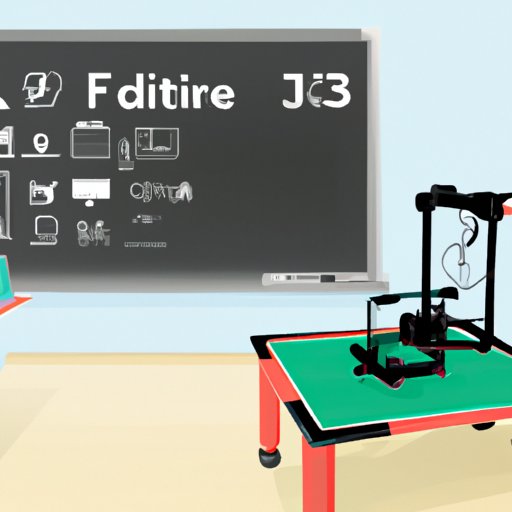
3D printing is another great way to bring technology into the classroom. With 3D printing, students can create physical objects that demonstrate their understanding of a concept or a process. 3D printing can also be used to create models of historical structures, animals, plants, and more.
Research has shown that 3D printing can improve student engagement and performance. A study conducted by the University of Colorado found that students who used 3D printing performed better than those who did not. The study also found that 3D printing increased student engagement, which led to higher levels of understanding and knowledge retention.
Popular 3D printing applications include TinkerCad, Autodesk Fusion 360, and Blender. All of these applications allow users to design and print 3D objects with ease.
Implementing Interactive Whiteboards
Interactive whiteboards are another great way to engage students in the classroom. These whiteboards allow teachers to create interactive lessons that combine text, images, audio, and video. Interactive whiteboards also allow teachers to draw diagrams, highlight important points, and even annotate documents.
Research has shown that interactive whiteboards can improve student engagement and performance. A study conducted by the University of North Carolina found that students who used interactive whiteboards performed better than those who did not. The study also found that interactive whiteboards increased student engagement, which led to higher levels of understanding and knowledge retention.
Examples of popular interactive whiteboard technologies include SMART Boards, Promethean Boards, and MimioTeach. All of these technologies allow teachers to create interactive lessons with ease.

Integrating Robotics into Learning
Robotics is another great way to bring technology into the classroom. Robotics can be used to teach students a variety of subjects, from computer programming to engineering. Robotics can also be used to reinforce concepts and encourage creative problem solving.
Research has shown that robotics can improve student engagement and performance. A study conducted by the University of California found that students who used robotics performed better than those who did not. The study also found that robotics increased student engagement, which led to higher levels of understanding and knowledge retention.
Examples of popular robotic technologies include LEGO Mindstorms, Wonder Workshop, and VEX Robotics. All of these technologies allow users to create and program robots with ease.
Conclusion
Technology can provide students and teachers with a wealth of learning opportunities. From online collaboration tools and virtual field trips to educational software and 3D printing, technology can be used in a variety of ways to create engaging, interactive learning experiences. By incorporating technology into the classroom, teachers can foster a love of learning in their students and prepare them for success in the digital age.
(Note: Is this article not meeting your expectations? Do you have knowledge or insights to share? Unlock new opportunities and expand your reach by joining our authors team. Click Registration to join us and share your expertise with our readers.)