
Introduction
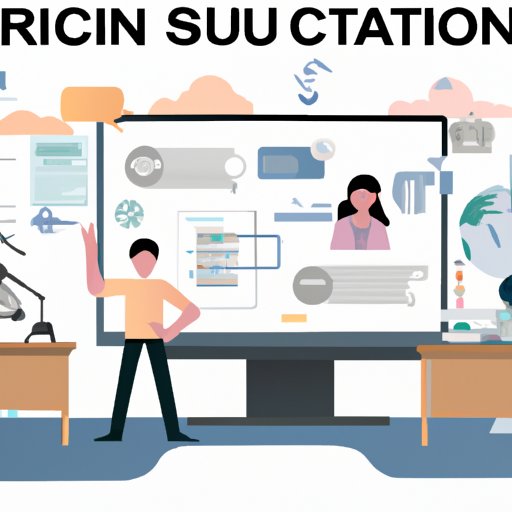
In today’s digital age, technology has become an integral part of our lives. It is no surprise then that technology is also becoming increasingly prevalent in classrooms around the world. From digital learning platforms to virtual reality tools, there are many ways technology can be used to enhance the learning experience. In this article, we will explore how technology can be used in the classroom and the benefits it can offer.
Utilizing Digital Learning Platforms
One way to incorporate technology into the classroom is by using digital learning platforms. These platforms provide students with access to educational materials such as videos, quizzes, and lecture notes. They also allow teachers to track student progress and assign tasks. Some of the most popular digital learning platforms include Google Classroom, Canvas, and Edmodo.
Digital learning platforms have several advantages. They make it easier for teachers to manage their classes and keep track of student progress. Additionally, they can help engage students by providing interactive content and making it easier for them to collaborate with their peers. Finally, digital learning platforms make learning more accessible, as students can access their materials from anywhere with an internet connection.

Using Video Conferencing to Enhance Collaborative Learning
Video conferencing is another way to use technology in the classroom. This tool allows teachers to connect with their students remotely and facilitate collaborative learning. Students can participate in discussions, ask questions, and work together on projects. It also enables teachers to give lectures and demonstrations virtually.
Video conferencing has several benefits. It provides a convenient way for teachers to connect with their students without having to be in the same physical space. Additionally, it encourages collaboration and can help create a more engaging learning environment. Finally, it can be useful for connecting students with experts in different fields.
When implementing video conferencing in the classroom, it is important to set clear expectations for students and ensure that everyone is comfortable with the technology. Additionally, it is important to ensure that all students have access to the necessary equipment and bandwidth.

Incorporating Online Quizzes and Testing
Online quizzes and tests are another way to use technology in the classroom. These tools allow teachers to quickly and easily assess student understanding of material. They also provide students with instant feedback, which can be helpful for identifying areas where they need to improve.
Setting up online quizzes and tests is relatively straightforward. First, you will need to create the test or quiz using a platform such as Google Forms or SurveyMonkey. Then, you will need to share the link with your students. Finally, you will need to set up a system for grading the tests or quizzes.
Exploring Virtual Reality in the Classroom
Virtual reality (VR) is becoming increasingly popular in the classroom. VR tools allow students to explore the world without leaving their desks. For example, they can take virtual field trips to places like the Great Wall of China or the Louvre Museum. They can also explore science concepts in a three-dimensional environment, such as looking at cells under a microscope.
Using VR in the classroom has several benefits. It can help make abstract concepts more concrete, as students can interact with objects in a three-dimensional environment. Additionally, it can help engage students who may otherwise struggle to stay focused in traditional classrooms. Finally, it can be a fun and exciting way to learn.
There are several tools available for creating VR experiences in the classroom. Google Expeditions, for example, is a popular platform for virtual field trips. There are also tools for creating your own 3D models, such as Google Blocks and Tilt Brush.

Integrating Augmented Reality into Lesson Plans
Augmented reality (AR) is another way to use technology in the classroom. AR tools allow students to interact with digital objects in the real world. For example, they can explore the inner workings of a car engine or examine the anatomy of a frog. They can also explore historical events in a more immersive way, such as walking through a virtual version of ancient Rome.
Using AR in the classroom has several advantages. It can help make complex topics more accessible, as students can interact with objects in a three-dimensional environment. Additionally, it can help engage students and make learning more fun. Finally, it can help develop problem-solving and critical thinking skills.
There are several tools available for creating AR experiences in the classroom. Aurasma, for example, is a popular platform for creating interactive AR experiences. There are also tools for creating your own AR objects, such as HP Reveal and Zappar.
Implementing Robotics and Automation
Robotics and automation can also be used in the classroom. These tools allow students to explore engineering concepts in a hands-on way. For example, they can build robots that can sense their environment and respond to commands. They can also design automated systems to perform tasks such as sorting objects or navigating a maze.
Using robotics and automation in the classroom has several benefits. It can help make STEM concepts more accessible, as students can apply their knowledge in a practical setting. Additionally, it can help foster creative thinking, as students are encouraged to come up with their own solutions to challenges. Finally, it can be a fun and exciting way to learn.
There are several tools available for implementing robotics and automation in the classroom. Arduino and Raspberry Pi are popular platforms for building robots and automated systems. There are also tools for programming robots and automating processes, such as Blockly and Scratch.
Conclusion
In conclusion, technology can be a powerful tool for enhancing the learning experience. From digital learning platforms to virtual reality tools, there are many ways to incorporate technology into the classroom. By doing so, teachers can engage their students in new and exciting ways, while providing them with the skills they need to succeed in the digital age.
The benefits of using technology in the classroom are clear. It can help make concepts more concrete, engage students, and provide them with valuable skills. Additionally, it can make learning more accessible and enjoyable. Ultimately, technology can be a powerful tool for transforming the classroom into an innovative and collaborative learning environment.
(Note: Is this article not meeting your expectations? Do you have knowledge or insights to share? Unlock new opportunities and expand your reach by joining our authors team. Click Registration to join us and share your expertise with our readers.)