
Introduction
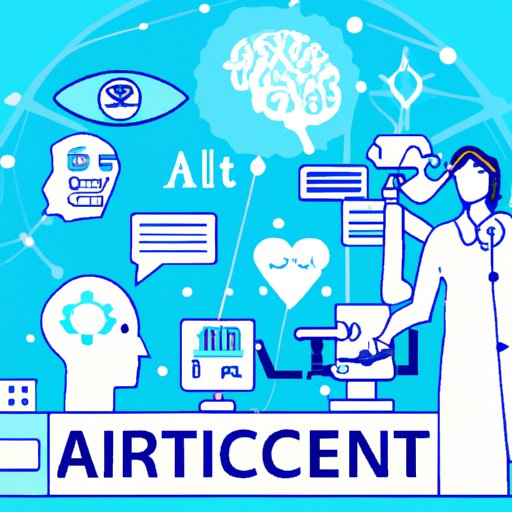
Artificial intelligence (AI) is a rapidly-evolving technology that has the potential to revolutionize the healthcare industry. AI involves computer systems that are capable of performing complex tasks like recognizing patterns, understanding natural language, and making decisions, all with minimal human input. By leveraging machine learning algorithms and big data, AI can be used to improve the accuracy and speed of diagnosis, provide greater access to care, automate mundane tasks, and more.
Exploring the Benefits of AI for Diagnosis and Treatment
AI has already begun to make an impact on the practice of medicine, especially in terms of diagnosis and treatment. The use of AI in healthcare can help improve the accuracy and speed of diagnosis, as well as provide greater access to care. AI-powered tools can quickly analyze medical images and identify potential issues, allowing for faster and more accurate diagnoses. AI can also be used to automate mundane tasks such as entering data, freeing up time for providers to focus on more important tasks. Additionally, AI-based solutions can help increase access to care by providing remote consultations and second opinions.
Examining the Impact of AI in Preventative Health Care
AI has the potential to revolutionize preventative health care by helping to identify potential health problems at an early stage. AI-driven predictive analytics can be used to identify risk factors and develop personalized preventative care plans to help patients avoid illnesses or reduce their risk of developing certain conditions. AI-enabled chatbots can also be used to provide personalized health advice and education to individuals, helping them stay informed and proactive about their health.

Analyzing How AI Can Streamline Administrative Tasks in Health Care Settings
AI can also be used to streamline administrative tasks in health care settings. Automating routine tasks such as patient scheduling and billing processes can help free up time for providers and staff, allowing them to focus on providing better patient care. AI can also improve data security and privacy by helping to detect anomalies and potential breaches. Additionally, AI-powered solutions can be used to enhance communication between providers and patients, improving the overall quality of care.

Investigating How AI Can Improve Patient Outcomes
In addition to streamlining administrative tasks, AI can be used to directly improve patient outcomes. AI-based solutions can help reduce medical errors by providing accurate and timely diagnoses. AI can also be used to increase patient adherence to treatments by providing reminders and tracking progress. Finally, AI can be used to develop personalized treatment plans tailored to each patient’s individual needs.

Assessing the Potential of AI to Enhance Research and Development in Healthcare
AI also has the potential to revolutionize research and development in healthcare. Leveraging big data and machine learning algorithms, AI can be used to develop new treatments, analyze medical images, and integrate with existing healthcare systems. AI-powered solutions can also be used to identify potential drug interactions and side effects, helping to ensure the safety of new drugs and treatments.
Conclusion
In conclusion, AI is transforming the healthcare industry, offering numerous benefits in terms of diagnosis and treatment, preventative health care, administrative tasks, and patient outcomes. It also has the potential to revolutionize research and development in healthcare. As the technology continues to evolve, we encourage healthcare providers to explore AI-powered solutions to improve patient care and outcomes.
(Note: Is this article not meeting your expectations? Do you have knowledge or insights to share? Unlock new opportunities and expand your reach by joining our authors team. Click Registration to join us and share your expertise with our readers.)