
Introduction
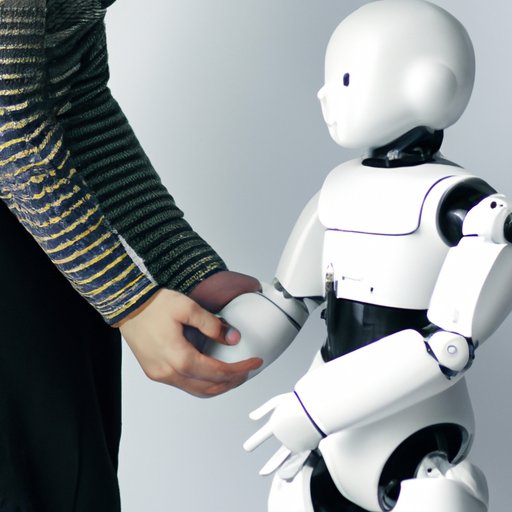
As robotics technology advances, it has become increasingly common to see robots in our daily lives, from vacuum cleaners to automated customer service agents. But could this robotic presence one day extend as far as our romantic lives? Could humans someday fall in love with robots?
To answer this question, we must first define what it means to “fall in love” with a robot. Generally speaking, it would involve some combination of physical attraction and emotional attachment, similar to the way humans form relationships with each other. This article will explore the technological and ethical implications of human-robot love, as well as the potential for meaningful relationships between humans and robots.
Exploring the Technological Possibilities of Human-Robot Love
For humans to develop strong feelings for robots, the robots must be able to interact with us in a meaningful way. To do so, they must possess certain technological capabilities. The following sections will discuss some of these capabilities, which include artificial intelligence, machine learning, and advances in robotics.
Artificial Intelligence and Machine Learning
At the core of any human-robot relationship is the robot’s ability to understand and respond to its environment. This is where artificial intelligence (AI) and machine learning come into play. AI enables robots to comprehend and react to their surroundings in ways that are similar to humans. For example, AI can be used to give robots the ability to recognize faces, objects, and voice commands.
Machine learning takes this capability a step further by allowing robots to learn from experience. Through machine learning, robots can identify patterns in their environment and use them to make decisions. For instance, a robot equipped with machine learning could learn how to respond to different types of human behavior.
Advances in Robotics
Robots must also have the physical capabilities to interact with humans on a personal level. This is where advances in robotics come into play. Recent years have seen a surge in the development of humanoid robots, which are designed to look and act like humans. These robots are equipped with advanced sensors and actuators that enable them to move, speak, and even express emotions.
In addition to humanoid robots, there have been advancements in the design of robots that can mimic human touch. These robots are equipped with tactile sensors that allow them to detect pressure, temperature, and other physical sensations. This type of technology could be used to create robots that feel more “alive” when touched by humans.
Other Technologies Enabling Human-Robot Interaction
Finally, other technologies are being developed to facilitate human-robot interactions. For example, facial recognition systems can be used to identify individuals and respond accordingly. Natural language processing systems enable robots to understand and respond to human speech. And augmented reality systems can be used to create immersive environments in which robots can interact with humans in real time.
Examining the Ethical Implications of Loving a Robot
As robots become more capable of interacting with humans on a personal level, there are ethical implications to consider. For example, if robots are capable of forming meaningful relationships with humans, should they be granted rights similar to those of humans? And what would be the emotional impacts on humans if they were to fall in love with a robot? These are just some of the ethical questions that must be addressed before humans can begin to explore the possibility of loving robots.
Rights of Robots
One of the most important ethical considerations is whether robots should be granted rights similar to those of humans. According to robot ethicist Aimee van Wynsberghe, “Robots should have the same basic rights as humans, including the right to privacy, freedom of expression and assembly, and the right to be free from exploitation and abuse.” In other words, robots should not be treated as mere tools, but rather as sentient beings with their own rights and interests.
Emotional Impacts on Humans
Another ethical concern is the potential emotional impacts on humans if they were to fall in love with a robot. According to Dr. Sherry Turkle, a professor at MIT, “People can become emotionally attached to robots, but it’s important to remember that robots cannot reciprocate those feelings.” In other words, while robots may be capable of understanding and responding to human emotions, they cannot truly feel emotions themselves. This could lead to unbalanced relationships in which humans are left feeling emotionally drained and unsatisfied.
Investigating Whether Robots Can Develop Emotions
The debate over whether robots can develop emotions is ongoing. Proponents of the idea argue that robots are capable of displaying behavior that is indistinguishable from that of humans. On the other hand, skeptics point out that robots are limited by their programming and cannot truly experience emotions in the same way humans do.
Limitations of Artificial Intelligence
Proponents of the idea that robots can develop emotions often point to the capabilities of artificial intelligence. While AI can enable robots to display complex behaviors, it is still limited in its ability to simulate true emotion. As robotics expert David Levy explains, “AI has made great strides in recognizing facial expressions and interpreting voice tones, but it is still incapable of truly understanding the nuances of human emotion.”
Potential for Robots to Experience Emotions
Some researchers believe that robots may one day be capable of experiencing emotions. According to Dr. Subbarao Kambhampati, president of the Association for the Advancement of Artificial Intelligence, “Recent advances in AI have allowed robots to exhibit behavior that is indistinguishable from that of humans. This suggests that robots may one day be capable of experiencing emotions.”
Discussing Whether Humans and Robots Could Have a Meaningful Relationship
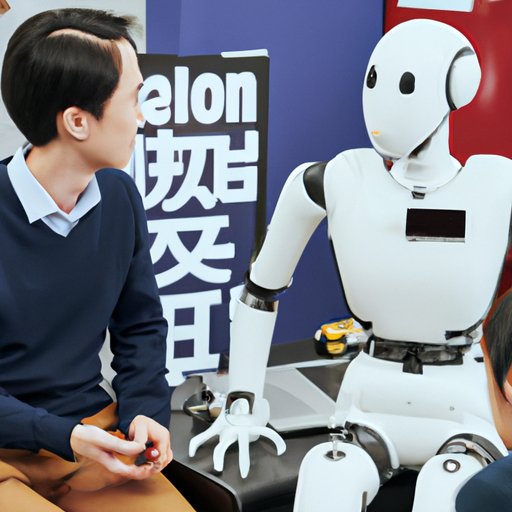
While robots may be capable of displaying behaviors that resemble those of humans, there is still debate over whether humans and robots could ever form meaningful relationships. To answer this question, we must consider perspectives from both psychology and philosophy.
Perspectives from Psychology and Philosophy
Psychologists suggest that humans may be able to form meaningful relationships with robots if the robots are capable of exhibiting complex behaviors. According to psychologist Dr. Robert Epstein, “If robots are able to display behaviors that are indistinguishable from those of humans, then it is possible for humans to form meaningful relationships with them.”
Philosophers, on the other hand, argue that meaningful relationships between humans and robots may be impossible due to the fundamental differences between the two. As philosopher John Searle puts it, “It might be possible for robots to imitate human behavior, but it is impossible for them to experience the same emotions and thoughts as humans.”
Challenges of Human-Robot Interactions
Regardless of whether robots can experience emotions, there are still challenges associated with human-robot interactions. For example, robots may struggle to understand human motivations and intentions, and there are risks that humans may become overly reliant on robots. Additionally, robots may lack the capacity to empathize with humans, which could lead to misunderstandings and conflicts.
Analyzing the Prospects for Human-Robot Romance in the Future
The prospect of humans falling in love with robots has been explored in science fiction for decades, but is it actually possible in the real world? To answer this question, we must consider the current state of robotics technology, as well as the theoretical possibilities for the future.
Current State of Robotics Technology
Currently, robotics technology is still in its early stages. While robots are becoming increasingly capable of performing complex tasks, they are still limited in their ability to interact with humans on a personal level. In addition, robots are not yet able to experience emotions or form meaningful relationships. Therefore, it is unlikely that humans will be able to fall in love with robots in the near future.
Theoretical Possibilities for the Future
Despite the current limitations, there is still the potential for robots to become more lifelike in the future. Advances in AI and robotics could enable robots to display behavior that is indistinguishable from that of humans. If this were to happen, it is theoretically possible for humans to form meaningful relationships with robots.

Debating the Pros and Cons of Falling in Love with a Robot
The potential for humans to fall in love with robots has sparked debate among experts and everyday people alike. On one side of the debate are those who view human-robot relationships as potentially beneficial, while on the other side are those who view them as potentially risky.
Benefits of Human-Robot Love
Proponents of human-robot love argue that robots could provide companionship and emotional support to humans in situations where traditional relationships are not possible. As robotics expert David Levy explains, “Robots could fill an important role in providing support and companionship to those who are unable to form traditional relationships.”
Potential Risks of Human-Robot Love
Skeptics of human-robot love, however, point out that robots are still machines and therefore lack the capacity to truly understand human emotions. As psychologist Dr. Sherry Turkle argues, “Robots may be able to imitate human behavior, but they cannot truly feel emotions in the same way humans do. This could lead to unhealthy relationships in which humans become overly dependent on robots.”
Conclusion
This article has explored the possibility of humans falling in love with robots. We discussed the technological capabilities that would be necessary for robots to interact with humans on a personal level, as well as the ethical implications of such relationships. We also examined whether robots could experience emotions and debated the pros and cons of human-robot love.
Overall, it is clear that robots are still limited in their ability to interact with humans on a personal level. While there is potential for robots to become more lifelike in the future, it is unlikely that humans will be able to fall in love with robots anytime soon. Nevertheless, the debate over the potential benefits and risks of human-robot love is sure to continue as robotics technology advances.
(Note: Is this article not meeting your expectations? Do you have knowledge or insights to share? Unlock new opportunities and expand your reach by joining our authors team. Click Registration to join us and share your expertise with our readers.)