
Introduction
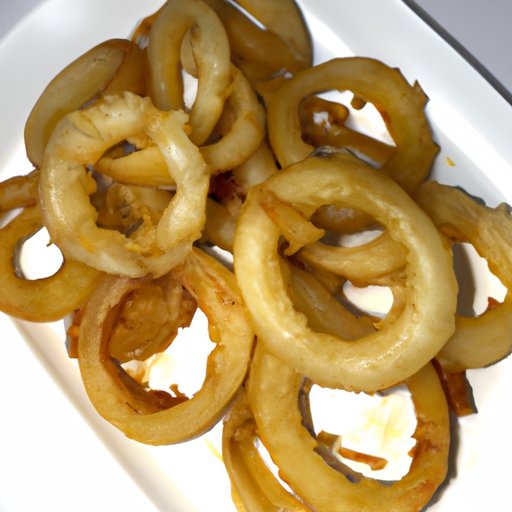
Onion rings are a popular fried food traditionally made from thin slices of onion coated in breadcrumbs or batter and deep-fried until golden brown. They are often served as an accompaniment to burgers and other fast foods, but can also be served as a side dish or snack. But are onion rings healthy? In this article, we’ll explore the nutritional value of onion rings and examine their potential health benefits and risks.
Examining the Nutritional Value of Onion Rings
Onion rings are typically high in calories, fat, and sodium. A single serving (about 6 to 8 pieces) contains about 250 to 350 calories, 11 to 15 grams of fat, and 350 to 500 milligrams of sodium. The majority of calories come from carbohydrates, with about 20 to 25 grams per serving. Protein content is generally low, at around 3 to 5 grams per serving.
Onion rings are also a source of several essential vitamins and minerals. A single serving provides about 10% of your daily recommended intake of Vitamin C, 4% of your Vitamin B6, and 2% of your Iron. Additionally, they provide small amounts of calcium, magnesium, potassium, and zinc.

Exploring the Health Benefits and Risks of Eating Onion Rings
While onion rings are not considered a “health food,” they do provide some potential health benefits. For example, studies have shown that eating onions can reduce inflammation, lower blood pressure, and improve heart health. Onions are also rich in antioxidants, which help protect against disease and promote overall health.
However, there are some potential risks associated with eating onion rings. Fried foods are high in trans fats, which have been linked to an increased risk of heart disease. Additionally, onion rings are usually high in sodium, which can lead to high blood pressure and other health problems. Finally, because they are deep-fried, onion rings are high in calories and may contribute to weight gain if consumed in large quantities.

Comparing Onion Rings to Other Fried Foods
When comparing onion rings to other fried foods, it’s important to consider both the nutritional value and health benefits and risks. In terms of nutrition, onion rings are typically higher in calories than french fries and other fried foods, but they also contain more vitamins and minerals. In terms of health benefits and risks, fried foods are generally considered to be unhealthy due to their high fat and sodium content.
In terms of taste, many people prefer onion rings over french fries and other fried foods. This is likely due to the fact that onion rings are usually prepared with a light coating of breading or batter, which adds flavor and texture. Additionally, the onions themselves add a unique flavor that many people find enjoyable.
Analyzing the Impact of Onion Rings on Weight Loss Goals
If you’re trying to lose weight, onion rings should be eaten in moderation. While they are not necessarily “fattening,” they are high in calories and can easily contribute to weight gain if consumed in large quantities. Additionally, fried foods are typically less filling than other types of food, so you may end up consuming more calories than you need.
When counting calories for weight loss, it’s important to pay attention to portion sizes. A single serving of onion rings is usually about 6 to 8 pieces, so it’s best to stick to this amount when eating onion rings. Additionally, it’s important to balance your diet with other sources of nutrition, such as fruits, vegetables, lean proteins, and whole grains.
Debunking Common Myths About Onion Rings and Health
There are several common misconceptions about onion rings and health. One myth is that onion rings are unhealthy. While they are not considered a “health food,” they do provide some potential health benefits, such as reducing inflammation and providing antioxidants. Additionally, they contain several essential vitamins and minerals.
Another myth is that onion rings are fattening. While they are high in calories, they are not necessarily “fattening” if eaten in moderation. The key is to pay attention to portion sizes and balance your diet with other nutritious foods.
Finally, some people believe that onion rings are high in sodium. While this is true, the sodium content varies depending on the brand and recipe. Some brands are lower in sodium than others, so it’s important to read the nutrition label before purchasing.
Conclusion
Onion rings can be enjoyed as part of a balanced diet, but it’s important to keep in mind their nutritional value and potential health benefits and risks. They are high in calories, fat, and sodium, but also provide some essential vitamins and minerals. Additionally, fried foods are generally considered to be unhealthy, so it’s important to pay attention to portion sizes and balance your diet with other nutritious foods.
Overall, onion rings can be a tasty and enjoyable snack, but they should be consumed in moderation. When eaten responsibly, they can be a part of a healthy diet.
(Note: Is this article not meeting your expectations? Do you have knowledge or insights to share? Unlock new opportunities and expand your reach by joining our authors team. Click Registration to join us and share your expertise with our readers.)