
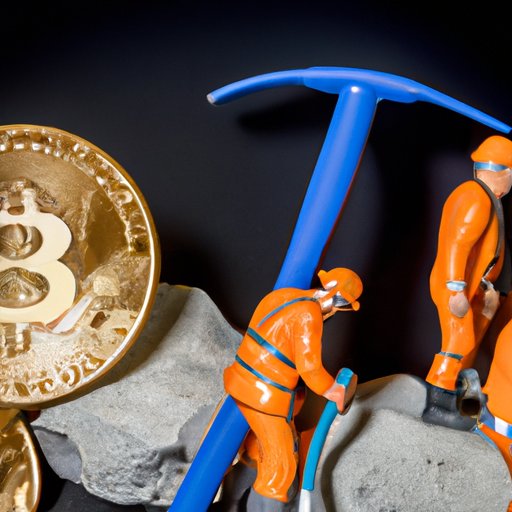
Introduction
Bitcoin is a digital currency that enables anonymous, decentralized transactions over the internet. It has become increasingly popular since its launch in 2009 and continues to be a hot topic among investors and tech enthusiasts. But how does it work? The answer lies in the process of “mining”, which involves verifying and processing Bitcoin transactions on the blockchain.
What is Bitcoin Mining?
In simple terms, Bitcoin mining is the process of verifying and adding new transactions to the blockchain, the public ledger of all Bitcoin transactions. In exchange for their efforts, miners receive newly created bitcoins as a reward. It is important to note that miners are not actually creating new bitcoins; rather, they are rewarded for their efforts with a newly generated amount based on predetermined rules.
Overview of the Process
The mining process begins with identifying a block of transactions. Miners then verify these transactions by solving complex cryptographic puzzles. Once the puzzle is solved, the block of transactions is added to the blockchain and the miner receives a reward in the form of newly generated bitcoins. This process is repeated over and over again until all of the transactions are verified and added to the blockchain.
Explaining the Bitcoin Mining Process Step-by-Step
The process of Bitcoin mining can be broken down into four steps:
Identifying a Block
The first step in the mining process is to identify a block of transactions. This is done by collecting all of the unconfirmed transactions from the network and organizing them into a list. Miners then take this list and select a set of transactions to add to the block. This selection is based on a variety of criteria, including transaction fees and the age of the transactions.
Verifying Transactions
Once the block is selected, miners must verify each transaction in order to ensure that it is valid. This involves checking the sender’s address, the recipient’s address, the amount being sent, and any other associated data. If the transaction is found to be valid, it is added to the block.
Solving Complex Puzzles
Once all of the transactions have been verified, miners must solve a complex mathematical puzzle in order to create a unique identifier for the block. This unique identifier is known as the “hash” and it is used to ensure that no two blocks are the same. The hash also serves to protect the integrity of the blockchain by making it difficult to alter or tamper with existing blocks.
Creating New Bitcoins
Once the hash is computed, the block is officially added to the blockchain and the miner is rewarded with a certain number of newly created bitcoins. This is done to incentivize miners to continue verifying and processing transactions on the network.
Reaping the Reward
The final step in the mining process is to reap the rewards. Miners will receive their reward in the form of newly created bitcoins, which can then be exchanged for cash or used to purchase goods and services. Additionally, some miners may choose to keep the bitcoins they have mined as an investment.

Comparing Traditional Mining to Bitcoin Mining
Though the concepts of traditional mining and Bitcoin mining are similar, there are several key differences between the two. These include energy consumption, cost involved, and the potential benefits of mining.
Energy Consumption
Traditional mining requires large amounts of energy to power the machinery used to extract resources from the earth. In comparison, Bitcoin mining consumes significantly less energy, making it more sustainable and environmentally friendly.
Cost Involved
Traditional mining requires significant capital investment in equipment and infrastructure. On the other hand, Bitcoin mining can be done with relatively low cost home computers. This makes it easier for individuals to get started with mining.
Benefits of Bitcoin Mining
Unlike traditional mining, Bitcoin mining offers the potential for financial rewards. This makes it a popular option for individuals looking to make money through mining. Additionally, mining helps to secure the Bitcoin network and prevents fraud and double spending.

Discussing the Different Types of Miners and Their Roles
There are three main types of miners: solo miners, pool miners, and cloud miners. Each type of miner plays an important role in the mining process.
Solo Miners
Solo miners are individual miners who use their own computer hardware to mine Bitcoin. They are responsible for verifying and processing transactions on the blockchain and receiving rewards in return. Solo miners are typically more experienced and have access to more powerful hardware.
Pool Miners
Pool miners are miners who join forces with other miners to combine their computing power. By joining a mining pool, miners increase their chances of finding blocks and receiving rewards. Pool miners share the rewards proportional to their contribution.
Cloud Miners
Cloud miners are miners who rent out their computing power to others. They provide their computing power to the mining pool and receive a portion of the rewards in return. Cloud mining is a good option for those who do not want to invest in expensive hardware but still want to participate in the mining process.

Examining the Energy Consumption and Costs Involved in Mining
Mining requires electricity and specialized hardware. As such, miners must consider the energy consumption and costs associated with mining before deciding to get involved.
Electricity Costs
The amount of electricity required for mining depends on the type of hardware being used. Miners must factor in the electricity costs when calculating their potential profits.
Equipment Costs
Mining hardware can range from a basic laptop to a powerful server. The cost of the hardware depends on the speed and power needed to mine effectively. Miners must carefully consider their budget and needs when selecting hardware.
Other Overhead Costs
In addition to electricity and hardware costs, miners must also consider other overhead costs such as cooling systems, storage space, and software. All of these costs must be taken into account when calculating potential profits.
Evaluating the Profitability of Bitcoin Mining
The profitability of mining depends on a variety of factors, including the cost of hardware, the price of Bitcoin, and the difficulty of the mining process. Miners must carefully evaluate these factors in order to determine if mining is worth the effort.
Calculating Profits
In order to calculate potential profits, miners must consider the cost of electricity and hardware, the amount of Bitcoin generated per block, and the current price of Bitcoin. By subtracting the costs from the amount of Bitcoin generated, miners can determine their potential profits.
Factors Affecting Profitability
The profitability of mining is affected by a variety of factors, including the cost of electricity, the price of Bitcoin, the difficulty of the mining process, and the cost of hardware. Miners must consider all of these factors when evaluating the potential profitability of mining.
Potential Drawbacks
Despite the potential rewards, there are several potential drawbacks to mining. These include the upfront costs of hardware and electricity, the fluctuating price of Bitcoin, and the unpredictable nature of the mining process.
Conclusion
Bitcoin mining is a complex process that involves verifying and processing Bitcoin transactions on the blockchain. Miners are rewarded for their efforts with newly generated bitcoins. There are several types of miners, each with their own roles and responsibilities. Mining requires energy and specialized hardware, and miners must consider the costs and potential profits before deciding to get involved. Ultimately, mining can be a lucrative endeavor, but it is important to weigh the risks and rewards before taking the plunge.
(Note: Is this article not meeting your expectations? Do you have knowledge or insights to share? Unlock new opportunities and expand your reach by joining our authors team. Click Registration to join us and share your expertise with our readers.)