
Introduction
Mexico is an incredibly diverse and vibrant country with a rich cultural heritage. From its ancient civilizations to its modern-day traditions, Mexican culture is defined by its people, their beliefs, and their customs. This article will explore the various aspects of Mexican culture, from art, music and cuisine to religion, family values and gender roles.
Exploring Mexican Art, Music and Cuisine
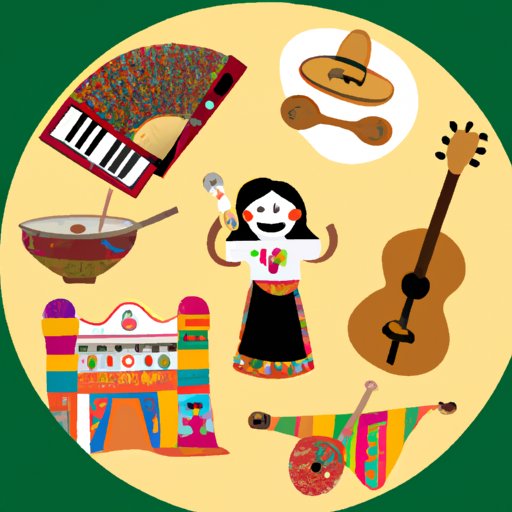
Mexican art is known for its bright colors, intricate designs and folk art motifs. From pre-Hispanic murals and sculptures to contemporary works of art, Mexican artists have created a variety of masterpieces that reflect the country’s history, culture and identity. Similarly, Mexican music is an eclectic mix of traditional instruments and sounds, ranging from mariachi and son jarocho to cumbia and reggaeton. Mexican cuisine is also renowned for its distinctive flavors and ingredients, such as mole, chiles and corn.

Examining the Influence of Religion on Mexican Society
Religion is an integral part of Mexican society, with Catholicism being the predominant faith. Other religions, including Protestantism, Judaism and Islam are practiced in certain parts of the country. Religion plays a significant role in Mexican life, from influencing political decisions to shaping social norms. For example, religious holidays are celebrated throughout the year, such as Easter and Christmas.

Understanding the Significance of Family Values in Mexican Culture
The concept of family is highly valued in Mexican culture. Families are typically large and extended, with multiple generations living together. The importance of family is evident in many aspects of Mexican life, from education and healthcare to employment opportunities and leisure activities. Family members are expected to look after one another, provide support and show respect.
Investigating the Role of Gender and Social Status in Mexican Culture
Gender roles and social status play an important role in Mexican culture. Men are traditionally viewed as the head of the household, while women are expected to take care of the home and children. Social class divisions are also apparent in Mexican society, with wealthier individuals having access to better education, healthcare and employment opportunities.
Conclusion
In conclusion, Mexican culture is a unique blend of ancient civilizations, modern-day traditions and diverse customs. From its vibrant art, music and cuisine to its religious beliefs and family values, Mexican culture is complex and multifaceted. Understanding this culture is essential for appreciating its beauty, respecting its people and recognizing its significance in the world today.
(Note: Is this article not meeting your expectations? Do you have knowledge or insights to share? Unlock new opportunities and expand your reach by joining our authors team. Click Registration to join us and share your expertise with our readers.)