
Introduction
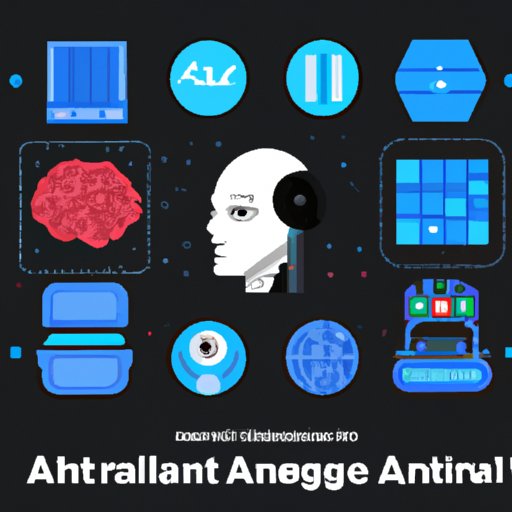
Artificial Intelligence (AI) is a rapidly growing field that has the potential to revolutionize how we interact with the world around us. With AI, machines can be programmed to perform tasks that were once thought impossible. From autonomous vehicles to intelligent personal assistants, AI is rapidly transforming our lives in ways unimaginable just a few years ago. But what do you need to know to get started in this exciting field? In this article, we will explore the basics of Artificial Intelligence and the various sub-domains that comprise it, as well as provide an overview of the different tools and technologies available for AI development.
What is Artificial Intelligence?
Artificial Intelligence is the science of creating machines that can think and act like humans. It involves the study of algorithms and data structures that enable computers to solve complex problems. The goal of AI is to design systems that can reason and make decisions on their own. AI is used in a variety of applications, from self-driving cars to voice recognition systems, and its potential is only now beginning to be explored.
Overview of AI Sub-Domains
Artificial Intelligence is composed of several sub-domains, each of which focuses on a specific area of AI research. These include: Programming Languages for AI Development; Machine Learning and Neural Networks; Natural Language Processing; Computer Vision and Image Recognition; Robotics; and Deep Learning Algorithms. We will explore each of these areas in greater detail below.
Section 1: Introduction to AI Basics
Before diving into the specifics of each AI sub-domain, it is important to first understand the basics of AI. This includes an overview of popular AI technologies, AI platforms, and programming languages for AI development.
Overview of AI Basics
Artificial Intelligence is based on the idea that machines can be programmed to mimic human behavior. This requires the use of algorithms and data structures to process large amounts of data and identify patterns and trends. AI is used in a variety of applications, such as speech recognition, facial recognition, natural language processing, and robotics.
Popular AI Technologies
There are a number of different AI technologies that are used in AI development. These include machine learning, deep learning, natural language processing, computer vision, and robotics. Each of these technologies has unique capabilities that allow them to solve different types of problems.
AI Platforms
In order to create AI applications, developers must have access to an AI platform. There are a number of different platforms available, such as Google Cloud AI, Amazon SageMaker, Microsoft Azure Machine Learning, IBM Watson, and Apple Core ML. Each platform has its own set of features and capabilities that make it suitable for different types of AI projects.
Section 2: Programming Languages for AI Development
AI applications are usually created using a combination of programming languages. The most popular languages for AI development include Python, Java, C++, R, and Prolog. Each language has its own set of advantages and disadvantages, so it is important to choose the right language for your project.
Python
Python is a popular language for AI development due to its easy-to-learn syntax and extensive libraries. Python is also widely used in data science and machine learning projects.
Java
Java is a popular language for AI development due to its object-oriented nature and support for distributed computing. Java is also widely used in web development and mobile application development.
C++
C++ is a powerful language for AI development due to its performance and low-level control. C++ is also widely used in game development and embedded systems.
R
R is a popular language for AI development due to its statistical analysis capabilities and wide range of packages. R is also widely used in data science and machine learning projects.
Prolog
Prolog is a logic-based language for AI development due to its ability to represent knowledge in the form of facts and rules. Prolog is also widely used in natural language processing and expert systems.
Section 3: Machine Learning and Neural Networks
Machine Learning and Neural Networks are two of the most important concepts in Artificial Intelligence. They are used to create algorithms that can learn from data and make predictions about future events. We will explore both of these topics in greater detail below.
Overview of Machine Learning
Machine Learning is a type of AI technology that enables computers to learn from data without being explicitly programmed. It uses algorithms to analyze large amounts of data and identify patterns and trends. There are several different types of Machine Learning algorithms, such as supervised learning, unsupervised learning, and reinforcement learning.
Types of Machine Learning Algorithms
There are several different types of Machine Learning algorithms, each of which has its own strengths and weaknesses. Some of the most common algorithms include decision trees, support vector machines, k-nearest neighbors, and random forests.
Neural Networks
Neural networks are a type of Machine Learning algorithm that is inspired by the structure of the human brain. They are composed of layers of neurons that are connected in a network and can learn from data. Neural networks are used in a variety of applications, such as image recognition, natural language processing, and autonomous navigation.
Section 4: Natural Language Processing
Natural Language Processing (NLP) is an AI technology that enables computers to understand and generate human language. It involves the use of algorithms to analyze text and audio data and identify patterns and trends. NLP is used in a variety of applications, such as voice recognition systems and chatbots. We will explore some of the key concepts in NLP below.
Overview of NLP
Natural Language Processing is a type of AI technology that enables computers to understand and generate human language. It involves the use of algorithms to analyze text and audio data and identify patterns and trends. NLP is used in a variety of applications, such as voice recognition systems and chatbots.
Speech Recognition
Speech recognition is a type of NLP technology that enables computers to recognize and interpret spoken language. It involves the use of algorithms to convert audio signals into text. Speech recognition is used in a variety of applications, such as voice assistants and automated customer service systems.
Text Analysis
Text analysis is a type of NLP technology that enables computers to analyze written language. It involves the use of algorithms to identify patterns and trends in text data. Text analysis is used in a variety of applications, such as sentiment analysis and automatic summarization.

Section 5: Computer Vision and Image Recognition
Computer Vision and Image Recognition are two of the most important concepts in Artificial Intelligence. They involve the use of algorithms to analyze images and identify objects, faces, and textures. We will explore both of these topics in greater detail below.
Overview of Computer Vision
Computer Vision is a type of AI technology that enables computers to see and interpret the world around them. It involves the use of algorithms to analyze images and identify objects, faces, and textures. Computer vision is used in a variety of applications, such as facial recognition systems and autonomous vehicles.
Object Detection
Object detection is a type of computer vision technology that enables computers to detect and classify objects in images. It involves the use of algorithms to identify objects in an image and output a bounding box around them. Object detection is used in a variety of applications, such as autonomous navigation and medical imaging.
Image Segmentation
Image segmentation is a type of computer vision technology that enables computers to separate objects in an image. It involves the use of algorithms to identify boundaries between different objects in an image and assign each pixel to a class. Image segmentation is used in a variety of applications, such as autonomous driving and medical imaging.
Section 6: Robotics
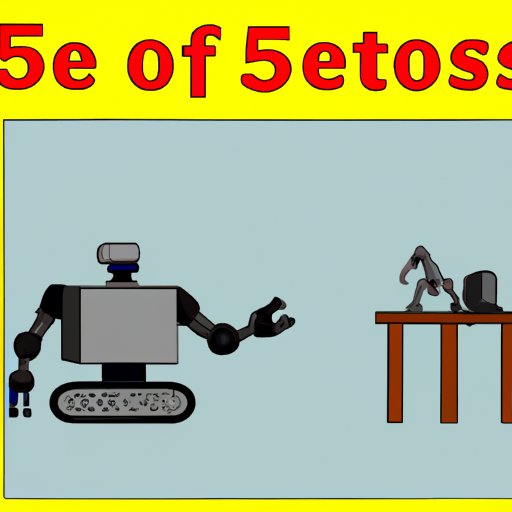
Robotics is an AI technology that enables machines to move and interact with the physical world. It involves the use of algorithms to control robots and automate processes. We will explore some of the key concepts in robotics below.
Overview of Robotics
Robotics is a type of AI technology that enables machines to move and interact with the physical world. It involves the use of algorithms to control robots and automate processes. Robotics is used in a variety of applications, such as manufacturing, healthcare, and autonomous navigation.
Types of Robots
There are a variety of different types of robots, each of which has its own unique capabilities and applications. Some of the most common types of robots include industrial robots, service robots, and humanoid robots.
Autonomous Navigation
Autonomous navigation is a type of robotics technology that enables robots to navigate their environment without human intervention. It involves the use of algorithms to map out a path and avoid obstacles. Autonomous navigation is used in a variety of applications, such as self-driving cars and drones.

Section 7: Deep Learning Algorithms
Deep Learning is a type of Machine Learning algorithm that is inspired by the structure of the human brain. It involves the use of neural networks to identify patterns and trends in data. We will explore some of the key concepts in Deep Learning below.
Overview of Deep Learning
Deep Learning is a type of Machine Learning algorithm that is inspired by the structure of the human brain. It involves the use of neural networks to identify patterns and trends in data. Deep Learning is used in a variety of applications, such as image recognition and natural language processing.
Convolutional Neural Networks
Convolutional Neural Networks (CNNs) are a type of Deep Learning algorithm that is specifically designed to process images. It involves the use of algorithms to identify patterns and features in images and output a prediction. CNNs are used in a variety of applications, such as image classification and object detection.
Recurrent Neural Networks
Recurrent Neural Networks (RNNs) are a type of Deep Learning algorithm that is specifically designed to process sequences of data. It involves the use of algorithms to identify patterns and trends in text and audio data and output a prediction. RNNs are used in a variety of applications, such as natural language processing and speech recognition.
Generative Adversarial Networks
Generative Adversarial Networks (GANs) are a type of Deep Learning algorithm that is specifically designed to generate new data. It involves the use of algorithms to generate new images, texts, and audio from existing data. GANs are used in a variety of applications, such as image generation and text generation.
Conclusion
In this article, we explored the basics of Artificial Intelligence and the various sub-domains that comprise it, as well as provided an overview of the different tools and technologies available for AI development. We also discussed the programming languages for AI development, Machine Learning and Neural Networks, Natural Language Processing, Computer Vision and Image Recognition, Robotics, and Deep Learning Algorithms. With this knowledge, you should have a better understanding of the topics necessary to learn and understand Artificial Intelligence.
(Note: Is this article not meeting your expectations? Do you have knowledge or insights to share? Unlock new opportunities and expand your reach by joining our authors team. Click Registration to join us and share your expertise with our readers.)